Why isn’t the PEACE Act law already?
Former Treasury official Gregory P. Wilson argues that Congress must urgently pass the bipartisan PEACE Act to repurpose frozen Russian assets for Ukraine’s military and financial needs amid ongoing warfare.
Ukraine is facing an urgent existential crisis on two inter-related fronts. Militarily, Russia has promised another brutal winter of warfare and daily war crimes without remorse for needless civilian casualties. Financially, despite massive assistance from its allies since 2022, Ukraine faces an estimated $35 billion budget gap as a direct result of Russia’s relentless illegal aggression in Europe.
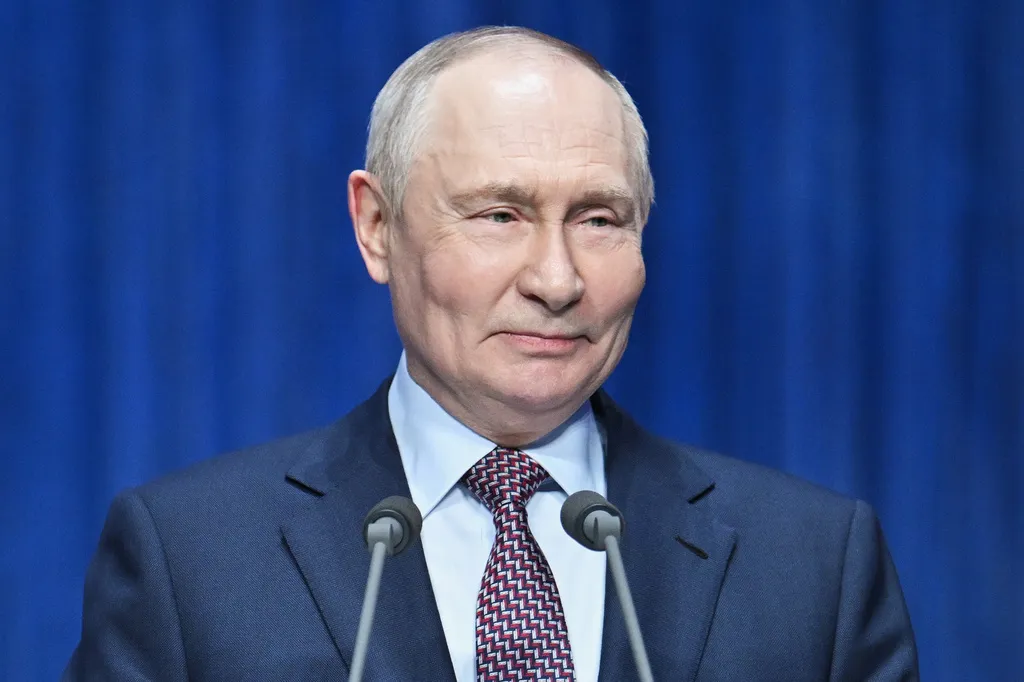
With President Trump’s appeasement of Russian dictator Vladimir Putin failing to bring Russia into serious peace negotiations, Congress needs to step up its game when it reconvenes and answer a perplexing question that directly addresses Ukraine’s dual threats: Why isn’t the pending PEACE Act of 2025 law already?
The bipartisan bill would help Ukraine meet its existential crisis by mandating the accelerated transfer and repurposing of all frozen Russian funds within U.S. jurisdiction to aid Ukraine and allow it to buy defensive weapons to better protect its citizens and defend civilian infrastructure such as its vital energy grid. No U.S. taxpayer funds would be required.
This strong 53-1 committee vote projects a veto-proof majority vote in the House of Representatives if a vote is scheduled during the lame-duck session. The bill could have easily passed already on the House’s suspension calendar — an expedited voting procedure requiring a two-thirds vote, no amendments, and limited debate.
Given Ukraine’s dire financial and military predicaments, we need an answer to the question of why hasn’t this wildly popular legislation already been enacted into law?
The reason the PEACE Act is not law is the Trump administration’s failure to use these Russian assets to negotiate a desperately needed peace from a position of real strength, not cowardly weakness. It is also a result of the House Republican leadership’s abject failure to act as a co-equal branch of the U.S. government under our Constitution and schedule a vote on this noncontroversial, bipartisan legislation.
Trump’s perpetual excuse has been that he is in the middle of peace negotiations with war criminal Putin . But those negotiations have already failed and, unfortunately, peace is nowhere in sight at this moment.
A related question is how much in frozen Russian sovereign assets is subject to U.S. jurisdiction that could be transferred to Ukraine under the PEACE Act?
In 2024, the U.S. Treasury Department reported to Congress that an estimated $5 billion in Russian central bank reserves are at the Federal Reserve. However, the total amount of all additional frozen funds sitting in American correspondent banks was classified by Treasury without explanation.
While the total amount still remains a public mystery, credible experts estimate the total amount of Russian funds here range from $19 billion to as much as $50 billion out of an estimated $300 billion immobilized globally in 2022. Just think about how that money could help Ukraine if it could close its budget gap and buy U.S.-made Patriot missile defense systems to better protect its citizens and defend its sovereign territory.
Speaking on the House floor during debate on June 4 on a bipartisan Russian sanctions bill the administration opposed, Hill publicly called for House Speaker Mike Johnson (R-La.) to schedule a vote. The Speaker still has not done so. Hill then attempted to add the PEACE Act as a bipartisan amendment to this year’s National Defense Authorization Act, but his continuing efforts were ignored twice by the House Rules Committee and, by extension, House Republican leadership.
Last year’s powerful 53-1 committee vote is indicative of a veto-proof House vote and subsequent Senate vote, but only if the Speaker schedules an immediate floor vote over White House illusive objections in light of Ukraine’s immediate plight.
Once enacted, the PEACE Act would not only materially assist Ukraine but also strike a decisive financial blow to Russia’s imperialism and hybrid warfare in the rest of Europe. Russia now is a belligerent on the side of Iran and thus partially responsible for U.S. Armed Forces casualties and destruction of our forward bases and military equipment in the Middle East war. Passing this bill before Congress adjourns for the year would be an overdue signal to our allies and warning to our adversaries.
Congress must reclaim and reassert its constitutional role as a separate and coequal branch of government. It must act now to punish Russia and help Ukraine meet its dual existential threats before the onslaught of another winter of senseless warfare and reprehensible war crimes.
The PEACE Act should already be law by now.
Gregory P. Wilson was a former deputy assistant secretary of the U.S. Department of the Treasury from 1986 to 1989.
Topics in this story
Gathered from external sources. Rights to this text belong to whoever originally published it.