Mom Tells 6-Year-Old Shaving Her Head Would Make the Hair Grow ‘Quicker,’ but 30 Years Later, It Never Grew Back (Exclusive)
Holly Faller, 35, spent years imagining she’d have hair by high school, graduation or even her wedding before realizing it wasn’t coming back
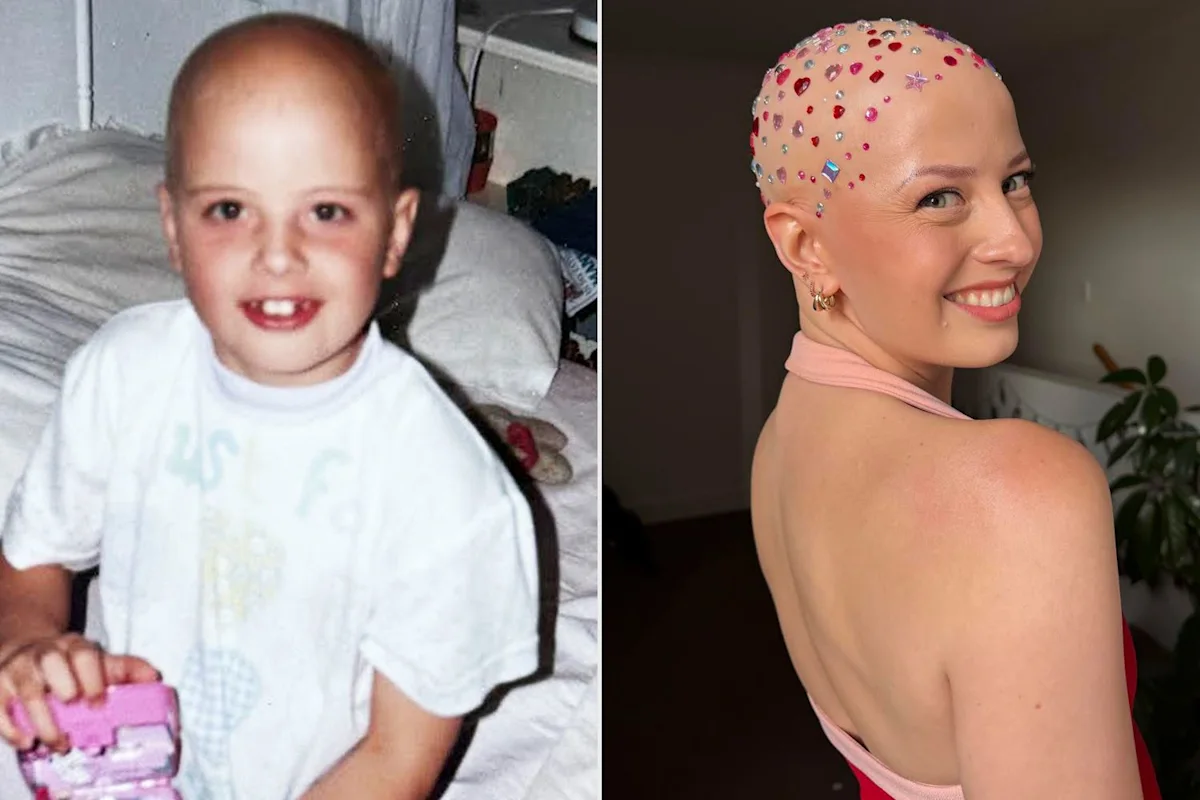
Holly Faller, 35, was 6 and already experiencing significant hair loss from alopecia when her mom tried an old wives' tale in hopes of helping
Although she began wearing wigs as a child, Holly remained convinced that her own hair would eventually return
More than three decades later, her relationship with being bald looks very different from the one she imagined as a little girl
For most of her childhood, Holly never pictured herself growing up bald. She pictured starting high school with hair, then graduating with it and, when neither happened, she became certain it would at least be there by the time she got married.
"As a young child, I only imagined myself starting high school with hair," Holly Faller tells PEOPLE exclusively. "As a teenager, I only imagined having hair at high school graduation. And even after graduating, I assumed my hair would at least come back by the time I got married."
That certainty stretched back to when Holly was 6, after small bald patches she'd had from a young age continued to grow larger. By then, so little hair remained that she describes it now as just a few "scraggly" tufts clinging to her head.
In a recent TikTok , the 35-year-old took viewers back to that time, first sharing a childhood photo of herself with hair before revealing the story behind what became her last haircut. "My mum shaved off all my hair when I was 6?!" she wrote, acknowledging that the confession sounded more dramatic than the reality.
Her mom had exhausted other options and wanted to do anything she could to help her daughter when she turned to an old wives' tale that cutting her hair could make it grow back faster. To 6-year-old Holly, there was no reason to question it.
"As a kid, I was very trusting, and I believed all adults knew everything," she says. "So, when my mum told me that 'hair grows quicker if you cut it,' I thought, well, of course we should do that then!"
Her mom shaved off what remained, but the hoped-for regrowth never came. Holly jokes in the TikTok that she could blame her mom for her baldness, before quickly setting the record straight: She would have been bald whether her mom shaved her head or not.
Holly has alopecia, an autoimmune condition that causes hair loss, and had already lost most of her hair before the clippers ever came out. Shaving the remaining tufts made so little difference to her appearance that Holly says it wasn't a particularly difficult decision at the time.
"I think Mum was really hoping it could be true; she just wanted to do anything she could to help me," Holly says. Her mom has since told her that after trying other options, shaving her daughter's head felt like the only option left.
Afterward, Holly put on a wig and carried on with school and childhood, remembering herself as a happy-go-lucky kid who tended to "roll with the punches." She didn't want to be bald, but she couldn't change it, and she remained convinced that what she was experiencing was temporary.
The years that followed slowly challenged that belief. High school arrived, then graduation, marriage and her first job, and the hair Holly had pictured alongside each new version of herself never did.
"Every big life milestone I reached, still bald, brought new grief," she says. "When I graduated, when I got married, when I got my first job ... each time I had to grieve my hair loss all over again."
By her early 20s, Holly began to understand that the hair she'd been waiting for since she was 6 wasn't coming back. The realization was devastating in part because she'd spent years attaching its return to the life she wanted to live.
"I wanted hair so that I could finally put myself out there with confidence, and I just sat on the sideline while I waited," she says. "I continued to hide myself away, thinking I couldn't live life to the full without hair."
Her outlook began to change after she joined online support groups for women with alopecia and found herself captivated by women who looked like her doing things she hadn't given herself permission to do. Seeing their lives challenged the belief she'd carried for years that she needed hair before her own could really begin.
"I used to believe that I wasn't complete without hair and that my life couldn't truly start until mine grew back," she says. "The women I was watching online proved to me that hair had absolutely nothing to do with it."
Still, there was a difference between showing her bald head online and letting strangers see it in the real world. Wigs had been Holly's "safety blanket" since childhood, and putting one on before leaving home eventually felt as ordinary as putting on shoes.
That began to shift at her birthday party last year, when Holly gave guests an unusual dress code: Anyone who wasn't already bald had to wear a bald cap. Holly covered her own head in rhinestones, and soon her friends were bedazzling their bald caps to match.
"I saw 'bald' through a totally different lens that night," she says. "Bald was suddenly something fun."
Most of the guests had seen Holly without a wig before, but she'd never been bald in front of such a large group at once. Instead of feeling like something she needed to conceal, her baldness became part of the celebration, with friends complimenting her rhinestones and how they matched her dress.
"It just made my baldness seem 'cool,' " she says. "It made me feel just a little more ready to face the world as a bald girl."
Holly documented what came next in a separate TikTok , explaining that after more than 30 years of wearing wigs every day, she'd made going bald in public her New Year's resolution. Her first attempt wasn't a restaurant, vacation or crowded night out; she started by taking the bins to the street.
From there came walks, cafes, restaurants, an interstate weekend and even a trip to the club with fellow bald friends. But on one of those early walks with her partner, Ryan, Holly was still so aware of being without a wig that every car and pedestrian seemed to prompt the same question.
"Every car that drove past us, every person that walked across the street, I'd say to Ryan, 'Do you think they know I'm bald?' " she recalls. "I was sure that any second, a car would accidentally run off the road due to my bald head distracting their driver."
The reality was considerably quieter. Holly says the experience was "actually all very unclimactic," and while she avoids looking for every stranger's reaction, the ones that have reached her directly have been kind, including older women complimenting her rhinestones at a cafe and retail assistants praising her look.
"The best way I can describe this to non-bald people is that it feels like going out naked," she says. Even now, going bald can require some mental preparation, while a wig remains the familiar option that doesn't require a second thought.
Holly hasn't stopped wearing wigs, nor does she want to. She still considers them a source of security and comfort, and when she's getting glammed up for a night with friends, her 26-inch blonde wig might be exactly what she wants.
What has changed is that she no longer feels she has to put one on every time she steps outside. "In the last year it has shifted from a necessity to an option," she says.
Never miss a story — sign up for PEOPLE's free daily newsletter to stay up-to-date on the best of what PEOPLE has to offer, from celebrity news to compelling human interest stories.
It's a choice Holly couldn't have imagined as the little girl who kept waiting for her hair to return before the rest of her life could begin. If she could speak to that 6-year-old now, she'd tell her there was never anything she needed to wait for.
"I would tell 6-year-old Holly that hair was never needed for her to be complete," she says. "She didn't have to hold herself back, missing out on things, waiting until she had hair."
Topics in this story
Gathered from external sources. Rights to this text belong to whoever originally published it.