Track Strait of Hormuz ship traffic as Trump blockades Iran ports
Traffic through the Strait of Hormuz has been at a near-standstill for weeks amid the Iran war, sending prices of oil and other key goods soaring.
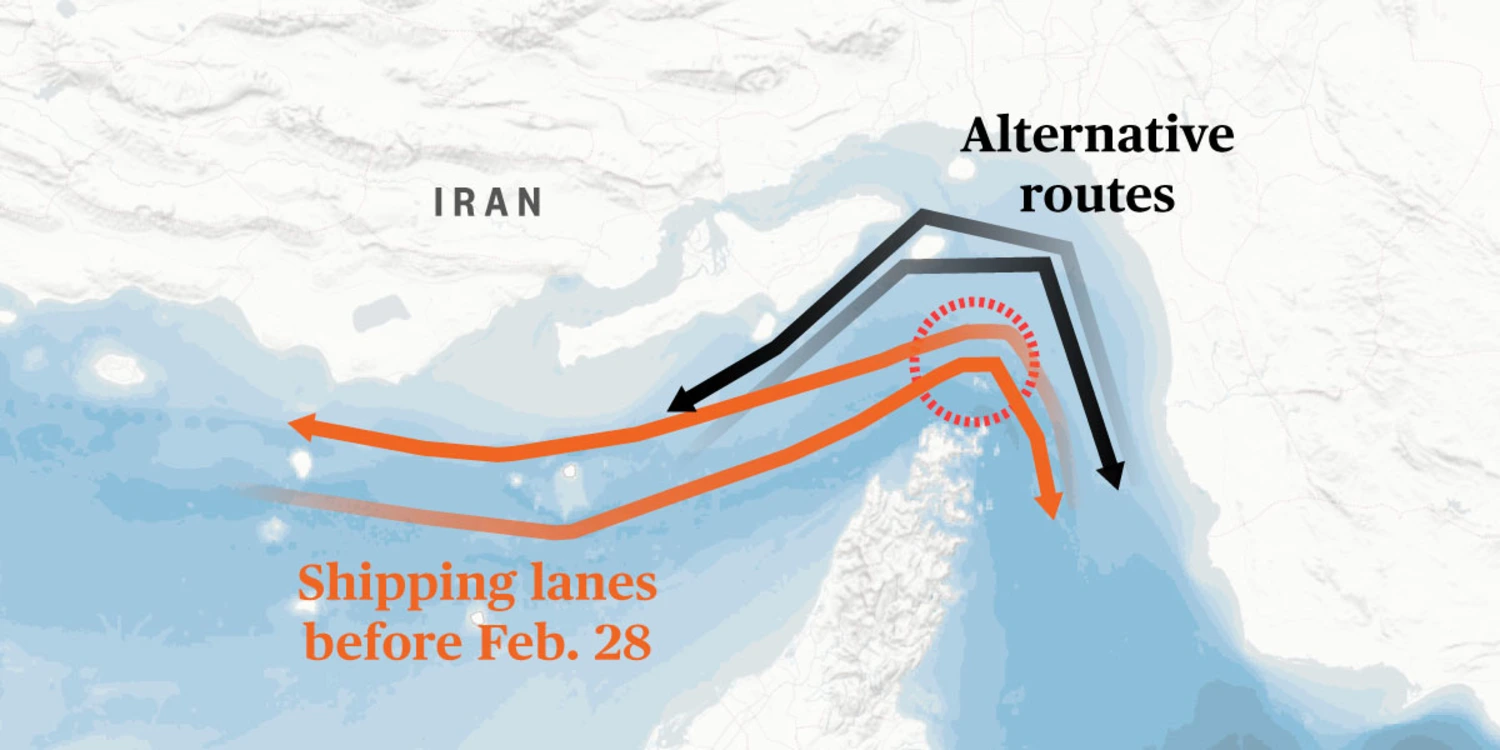
Traffic through the Strait of Hormuz is back down following a brief pick-up. After an almost daily back and forth over whether the strait is open or closed, blockaded or not, vessel traffic is nowhere near the hundred-plus ships a day that were traversing the strait before the war. NBC News is tracking the daily count of how many ships pass through the strait. Note that exact numbers may be higher; some ships manipulate their GPS trackers during transit. Iran launched strikes on ships and demanded tolls from vessels transiting the crucial waterway in the wake of the U.S.-Israeli attack on Feb. 28. This effectively shuttered a trade route through which some 20% of the world’s oil and natural gas once passed. Tehran has also suggested it may have mined the strait. Iranian media has published a map from Iran’s Islamic Revolutionary Guard Corps Navy suggesting safe inbound and outbound routes through the strait. Gas prices in the U.S. spiked in March as a result of the war, increasing more than 40% and topping an average of $4 per gallon. Prices in April declined for a time, then, in May, hit new highs. After declining in June to less than $4 a gallon, prices in July are back at that mark.
Topics in this story
Gathered from external sources. Rights to this text belong to whoever originally published it.