In 2012, Atlanta opened a major trail on abandoned freight corridors; by 2025, the BeltLine reported 2.5 million visits and an economic report linked the area to 91,000 jobs
Explore how Atlanta's BeltLine, born from a graduate thesis, has evolved into a transformative urban project, enhancing pedestrian mobility, boosting economic production, and impacting housing affordability by 2025.
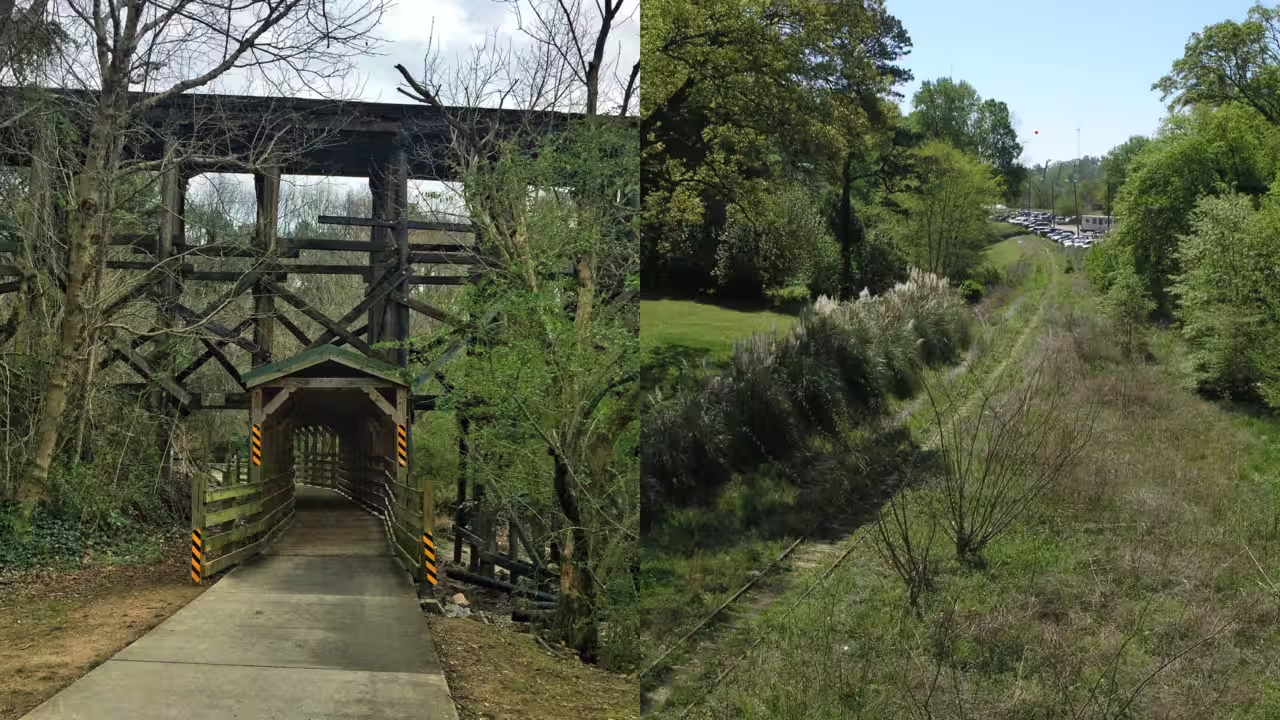
Atlanta has never been an easy city to walk through. Decades of highway construction and suburban growth had isolated many of its inner communities from each other, connected largely by highways meant for automobiles, not pedestrians. That gap lingered in the back of one graduate student's mind in the late 1990s as he investigated a loop of long abandoned freight rail routes surrounding the city's core, corridors that most Atlantans scarcely noticed even when they passed within walking distance of their houses. What began as an academic study would in a decade become one of the biggest urban reconstruction projects in the United States.A thesis that would not go to the archivesRyan Gravel presented his vision in a master’s thesis in 1999 while pursuing combined degrees in architecture and city planning at Georgia Tech. He suggested turning the unused rail loop around Atlanta into a continuous route of trails and light rail, uniting areas divided by infrastructure decisions made in previous decades. Gravel subsequently said he thought the document would sit on a shelf. Instead, a municipal councilwoman noticed, and by the mid-2000s the idea had blossomed into a genuine city-supported program with its own funding structure. Construction on the trail's first stages began in 2011 and 2012, transforming stretches of rusty track into paved walkways for cyclists, joggers and commuters within a few years.Tens of thousands of jobs, Millions of visitsIt is hard to overstate the scope of what has come since, more than a decade later. The Atlanta BeltLine marked the 20th anniversary of its founding as a formal city program in 2025, using the occasion to highlight how far the corridor has come, according to a press release from Atlanta BeltLine. In that same year, an economic-impact analysis by Philadelphia-based consultancy Econsult Solutions found that activity within the half-mile planning area surrounding the route sustained more than 91,000 jobs and generated roughly 23 billion dollars in yearly economic output for the city. Private investment along the route has reached roughly 14.2 billion dollars, surpassing the original 10 billion dollar private-investment target years ahead of the loop's 2030 completion date.Visitor numbers back up the scale of the transformation. In 2025, the corridor drew more than 2.5 million visits, and well over half came from Atlanta residents rather than tourists, a sign the path has become part of daily life for many citizens rather than just a novelty destination. Independent research groups analysing particular portions have identified similarly high usage patterns. A case study by the Landscape Architecture Foundation of the Eastside Trail found an average of roughly 3,000 users on an ordinary weekday and more than 10,000 on weekend days, as well as quantifiable benefits in tree cover and stormwater management along the route.Opinion divided on further growthNone of this development has come without consequences. Housing prices near finished pieces of the trail have skyrocketed, and long-time residents in numerous communities have expressed concerns over being pushed out of areas they helped to construct. City authorities have countered with affordable housing set aside funded through the project’s tax allocation district, but advocates say those measures still don’t address the displacement danger the path has helped generate. Even proponents of the project acknowledge that the strain is unlikely to ease as the final sections of the loop are completed towards a target date of 2030.What is tougher to argue with is the magnitude of change that one graduate thesis may effect. A circuit of freight lines that formerly carried little more than the occasional supply train now carries millions of pedestrians and cyclists each year, the light rail Gravel's original thesis envisioned still hasn't been built, though the BeltLine launched a small autonomous shuttle pilot, ATL Spoke, in June 2026 as its first operating transit connection. That’s one of the more dramatic changes in how Atlantans really move through their communities for a city long known for vehicle-dependent sprawl.You use AI every day. Now get your AI Quotient. Take the AIQ test.
Topics in this story
Gathered from external sources. Rights to this text belong to whoever originally published it.