In 2015, China replaced 20 cm of lime-stabilised soil beneath a 4.9-km expressway section with modified aluminium-industry waste; field tests measured a resilient modulus above 90 MPa and core samples recorded an average compressive strength of 2.4 MPa
Discover how China transformed industrial waste into a viable road construction material, enhancing resilience and environmental safety in the Ji-Qing Expressway project.
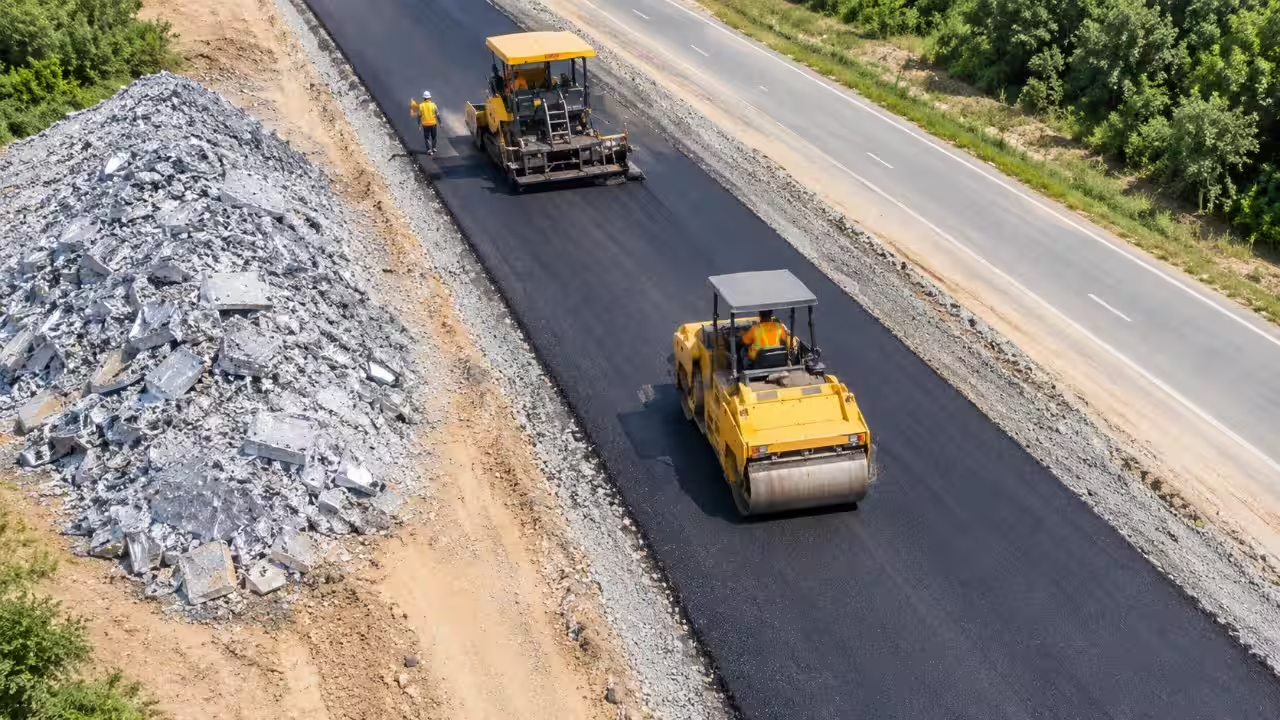
A closer look at the road surface shows a fresh underlay of modified red mud, a byproduct of aluminium production that was once difficult to store. Replaced a traditional soil layer along a 4.9 km stretch of the Ji-Qing Expressway reconstruction project. Field testing of the material used to replace the traditional soil layer found it had a higher resilient modulus of over 90 MPa and an average compression strength of 2.4 MPa. The stretch of road was built in 2015, and the study published by the Shandong Transportation Research Institute showed how troublesome industrial byproducts could be turned into a viable road construction material.How aluminium industry waste became a road construction material Red mud, also known as bauxite residue, is waste that forms after the extraction of alumina from bauxite ore. This material contains several metal oxides, such as iron oxide, aluminium oxide, and silicon dioxide. While there is potential to reuse this waste material in various industries, its inherent characteristics as industrial waste make it difficult for direct use in the construction of roads. The waste material has high moisture content, small particle size, low water stability, and high water alkalinity, which gives rise to concern regarding the potential transfer of certain chemicals to the environment.The study also estimates that around 1 to 1.8 tonnes of red mud are produced for every tonne of alumina through the Bayer process. The researchers looked for ways to solve the problems and developed a chemical modification method using cement, phosphogypsum, and a polymer stabiliser. The mixture was able to bind the small particles, strengthen the material, and limit the transfer of dangerous substances. The team tested different amounts of the mixture ranging from 4 to 12% of the weight of the red mud. They found that the optimal dose is around 8%, resulting in the material reaching a compressive strength of 3 megapascals after three days of curing.A 4.9-kilometre expressway section puts the material to the testThis was demonstrated during the reconstruction and widening of the Ji-Qing Highway in Shandong Province. The existing four-lane road was expanded to eight lanes to accommodate increasing traffic volume. A test was selected between K289+090.5 and K294+385, with K289+090.5 marking the beginning section. The road was about 4900 m long, 11 m wide, and had a modified red mud filling thickness of 20 cm. The material replaced the lime-stabilised soil layer in this section.The mixture was not designed on the road, but at a central plant. The treated residue was delivered to the site and spread over the prepared surface using vibrating equipment, then compacted. Once the final compaction and curing were completed by the workers, the next layer of construction was laid. Quality control was a concern because varying levels of moisture content and the dosage of the modified agent used could have an impact on the strength of the treated residue, and the construction standard stipulated that the mixture should be compacted within four hours of mixing. The surface also had to be covered or watered during the curing process.Field results highlight strength and environmental considerationsAfter seven days of moist curing, the roadbed was tested with a bearing plate test, a portable falling-weight device, and a falling-weight deflectometer. All but one of the measuring points showed a resilient modulus greater than 90 MPa. The dynamic deformation modulus was greater than 140 MPa, and the deflection was less than 100 units of 0.01 millimetres. This suggested that the modified material would provide sufficient support for the road. Samples from the finished section were then subjected to more compaction tests. The average unconfined compressive strength of the samples was 2.4 MPa, with the lowest value being 2.06 MPa and the highest 2.77 MPa, all within the estimated 95% confidence interval.Environmental monitoring was also a key part of the test. Four groundwater monitoring wells were installed around the demonstration sections, and samples were taken both before and after construction. The pH of the monitored groundwater eventually remained between 7 and 8, and the concentration of various potentially harmful materials remained below the relevant limits, with no deviation from the red mud section. The findings are consistent with wider research into the reuse of industrial residue in infrastructure. A review published in Minerals also demonstrated the use of treated red mud in road applications to help meet the required earthworks specification in place of using ordinary soil and other natural materials. This also provided an economic incentive for usage.In the study by the institute, applying locally treated red mud to compacted earthworks resulted in savings of about 10 yuan per ton of compacted earthworks as opposed to using ordinary lime and cement-stabilised soil, over a distance between 15 and 20 km. This does not mean untreated red mud can be used on highways, because its chemical properties, stability, and environmental impacts still need thorough evaluation. However, with proper treatment and groundwater monitoring, industrial waste can be repurposed for some applications.You use AI every day. Now get your AI Quotient. Take the AIQ test.
Topics in this story
Gathered from external sources. Rights to this text belong to whoever originally published it.