During WWII, Cpl. John Hartley filmed a message home from Burma; more than 70 years later, the daughter who never met him finally saw him speaking on screen
Discover the emotional story of Ann Alsop, who, over 70 years after her father's passing, views his WWII film message from Burma, unveiling family secrets and bridging generations.
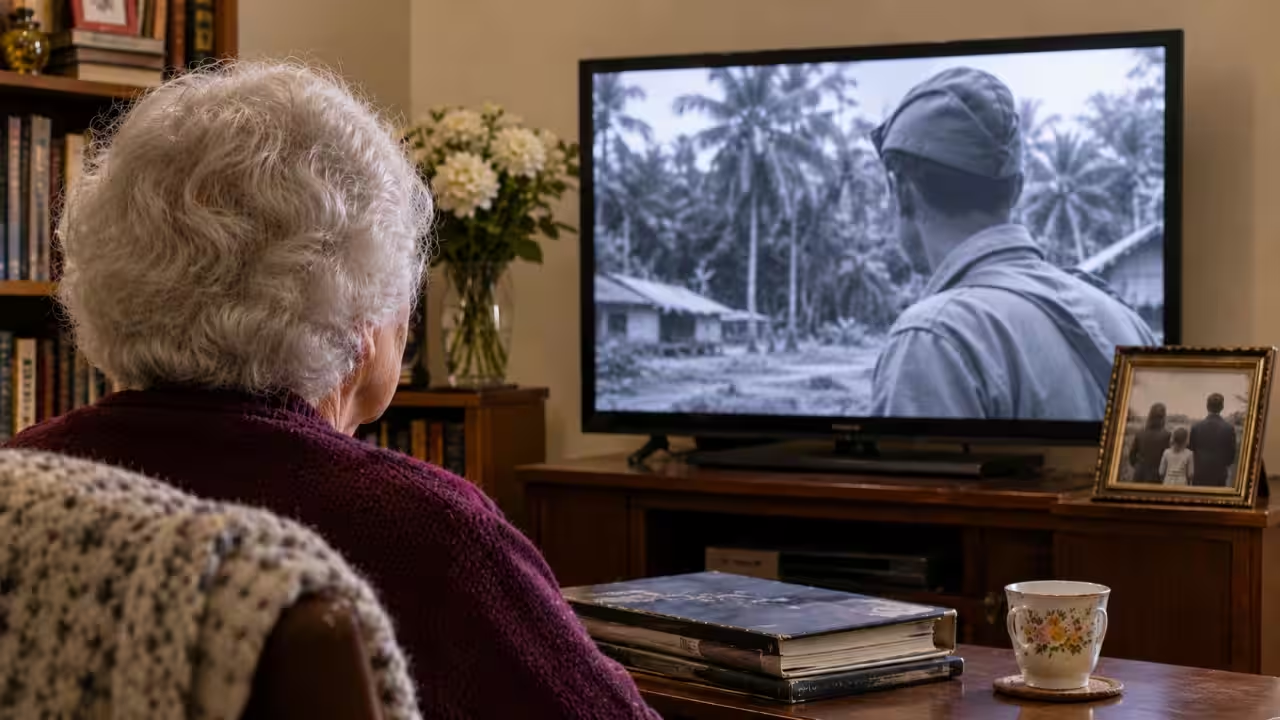
During the Second World War, messages from the front frequently took weeks to reach families in Britain. Letters offered a way to establish a little thread of continuity. But a series of short films provided a more visceral, tethered message. This gave families the chance to see servicemen speaking on screen, sending greetings and brief messages from across the world. These films, known as Calling Blighty, were shown at special screenings across the country, according to the Daily Mail. Decades later, hundreds of these recordings surfaced in rusting film cans with their messages still intact.A message from BurmaAccording to the Daily Mail, Corporal John Hartley had a daughter he wasn’t destined to meet. When his short message addressed to his family was recorded in Burma during the Second World War, Ann Alsop was not yet born. Fast forward to decades later, that surviving footage bridged a generational chasm, allowing her a poignant first encounter with her father, whom she never met.Hartley was among the British servicemen who took part in the Calling Blighty films. The recordings featured men serving in Burma, part of what became known as the Forgotten Army. It was a moniker that stuck because their campaign received less attention than the war in Europe. Each film contained short portraits of servicemen addressing people they had left behind. Hartley’s contribution was brief. Looking towards the camera, he reassured his family that he was well before signing off with the words: “I’m in the pink. Cheerio. Best of luck”. His message was addressed to his wife, Mildred, who was pregnant with Ann when he left for Burma. Hartley died in 1944, while serving on patrol in the Burmese jungle, according to the Daily Mail. After his death, Mildred chose not to keep his memory alive within the household. She changed Ann’s surname to that of her stepfather and discarded the Hartley photographs and letters in her possession. Subsequently, Ann was raised, the Daily Mail said, with little knowledge of her biological father.The discovery of the Calling Blighty recordings eventually gave her a reason to revisit the past. By then, Ann was in her seventies, retired from teaching and living in Sheffield. She was married to Gerald, with children and grandchildren of her own. An important part of her father’s history had survived through her uncle Eric, who had given her a separate collection of Hartley’s letters and photographs. These were among the few personal records she possessed. The newly recovered footage offered an altogether different communion: the chance to see her father in a motion picture.The recordings had been presumed lost for decades before a collection of film cans was discovered among deteriorating reels. Despite their condition, the films were playable. Lists found inside the cans identified the servicemen along with the names and addresses of their families in Britain.Unearthing these directories set in motion an effort to reunite surviving kin with their voices of the past. Channel 4’s documentary, Messages Home: Lost Films of the British Army, followed several families as they watched their recordings. Some had known about the films; others had never seen their relatives in wartime footage.A long-awaited goodbye For Ann, watching Hartley was the beginning of a search for answers about his death. Military historian Rob Lyman helped her investigate his service and death. According to his account, Hartley had been shot in the back of the shoulder by a Japanese sniper who was retreating. Ann also learned that his comrades had carried his body back to their base.The circumstances of his death affected her profoundly, having spent much of her life without knowing how her father perished. The historical information provided the missing chapter that had long eluded her family’s history.The documentary prompted Ann to visit Burma, where she visited the military cemetery containing Hartley’s grave. No one in her family had previously made the journey to his burial place. She wanted to see where he had been laid to rest. At the graveside, Ann spoke to her father. She expressed regret that they had never known one another and told him his life continued through her descendants.You use AI every day. Now get your AI Quotient. Take the AIQ test.
Topics in this story
Gathered from external sources. Rights to this text belong to whoever originally published it.