Nepal-Tibet floods: River water smashed into tunnel and chased me, hydropower engineer says
Major efforts to rescue hydropower workers continue as Nepal's death toll exceeds 1,000.
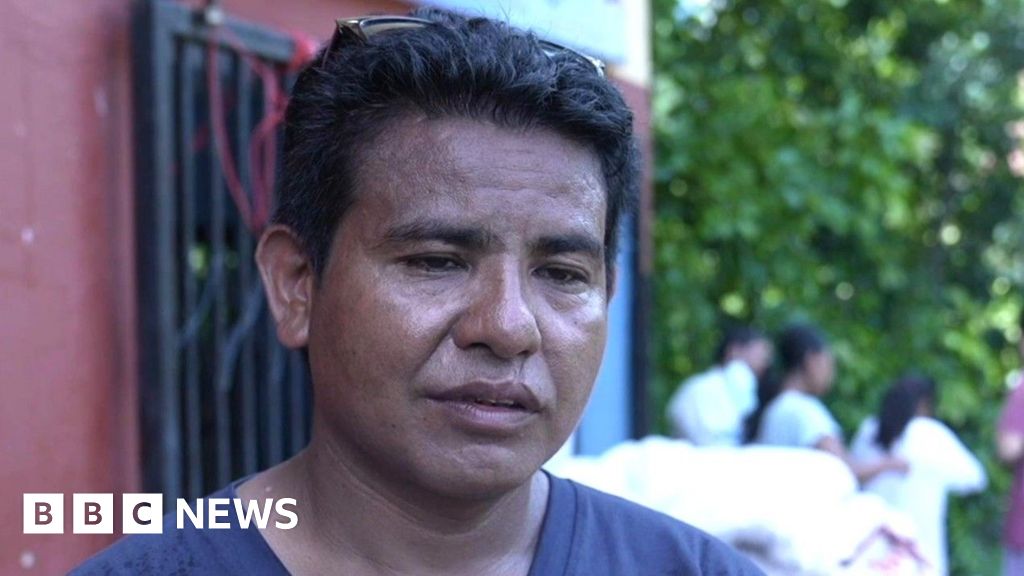
Nepalese hydropower workers have told the BBC about the catastrophic moment water from the Trishuli River crashed into their tunnel as the region was inundated by deadly flash floods last week.
It started with a sudden, strong gust of air, says Pemba Dundu Tamang, whose team of about 30 was constructing the tunnel's concrete lining.
The blast of wind sent plywood flying through the air and dislodged heavy machinery. Just outside, houses had already been swept away.
"I ran towards the tunnel entrance," he said. "The water was chasing behind me and I was running ahead of it."
Tamang lost several family members who were at home at the time. Nepal's death toll has exceeded 1,000 after last week's devastating floods, and officials say about 4,000 are missing.
A number of the missing - potentially in the hundreds - are labourers like Tamang, working in a vast network of tunnels at hydropower sites along the river. Engineers have been pumping air into these tunnels as part of a huge rescue operation.
"We are focused on search-and-rescue efforts at the tunnels, our work is continuing," Nepal Army spokesman Raja Ram Basnet told AFP news agency.
"Our soldiers are also deployed to collect bodies and prevent the spread of disease."
Tamang says he ran for about 20 minutes to flee the violent deluge, which followed him uphill.
"I was almost unconscious with shock. I could not think clearly."
His colleague, Itha Ghale, says the powerful gust of air almost blew them away as they sprinted.
Over 99% of the electricity generated in Nepal comes from hydropower, and Tamang and Ghale had been working at a major production site helping to build the Upper Trishuli 3B Hydropower Project.
The plant, which was due to open next year, was designed to re-use water from a hydroelectric plant further upstream to generate additional electricity for Nepal's national grid.
There were several different teams operating there - and Tamang says the one operating the large tunnel-lining machine was the last to come out.
But soon afterwards came a crushing realisation.
"I could see where my house should have been. There was nothing left. That was when I realised everything was gone."
Six of Tamang's relatives - his mother, elder brother and sister-in-law and three of their children - are gone, he said. They were at home on the riverside when the floods hit.
Only his wife, son and one nephew survived.
"I feel life is meaningless now. Surviving feels miserable. I do not know where to eat or where to go," Tamang says.
"The dead are at peace. It is those of us who survived who suffer."
Ghale, who lost eight members of his family, says he does not know why he survived. "Perhaps it was not my fate to die."
The eight family members include his mother and eldest daughter. His three sons and wife survived.
Tamang dreads what the future may bring, especially if these hydropower projects are shut down. "If things continue like this, we will go hungry. Sometimes I feel it would have been better not to survive."
Tamang ultimately managed to take refuge with a few others in the village of Shanti Bazar for two days until the army came to rescue them.
He estimates about 50 to 60 workers were able to escape the tunnel alongside him.
He says more people could have been saved if proper resources had been in place.
This is echoed by a new report which says there was evidence of growing instability around the glacier in the days before the disaster - and that better early warning systems could have saved lives.
Satellite images suggest the glacier surface was moving faster, meltwater was turning brown and a crack was developing in the surrounding rock, according to experts from the Asian Mountain Academic Alliance, the Stimson Centre and China's Institute of Mountain Hazards and Environment.
These are all possible signs the mountainside was becoming unstable.
The avalanche itself moved too fast for conventional warnings to help those closest to it, the scientists say.
But further downstream, where the flood took 10 minutes or more to arrive, they say a comprehensive warning system could potentially have saved a significant number of lives.
Right now, however, specialists from China, India and Nepal are continuing to use excavators and heavy machinery to blast through debris from the hydropower projects to try to reach workers still trapped at several hydropower sites.
"There are probably still some survivors inside. I would be happy if they were rescued quickly," Tamang says.
"I know many people who are still trapped there."
Additional reporting by Justin Rowlatt, climate editor
Nepal death toll crosses 1,000 as rescuers race to find workers trapped in mud-filled tunnels
Head teacher evacuated 900 children minutes before Nepal floods hit school
Footage of Tibet floods is being heavily censored in China - and we know little about victims there
Topics in this story
Gathered from external sources. Rights to this text belong to whoever originally published it.