The power of dissent: How protests put leaders to the test in Brazil and Serbia
When students take to the streets, they are often dismissed as inexperienced, idealistic or easily mobilised.
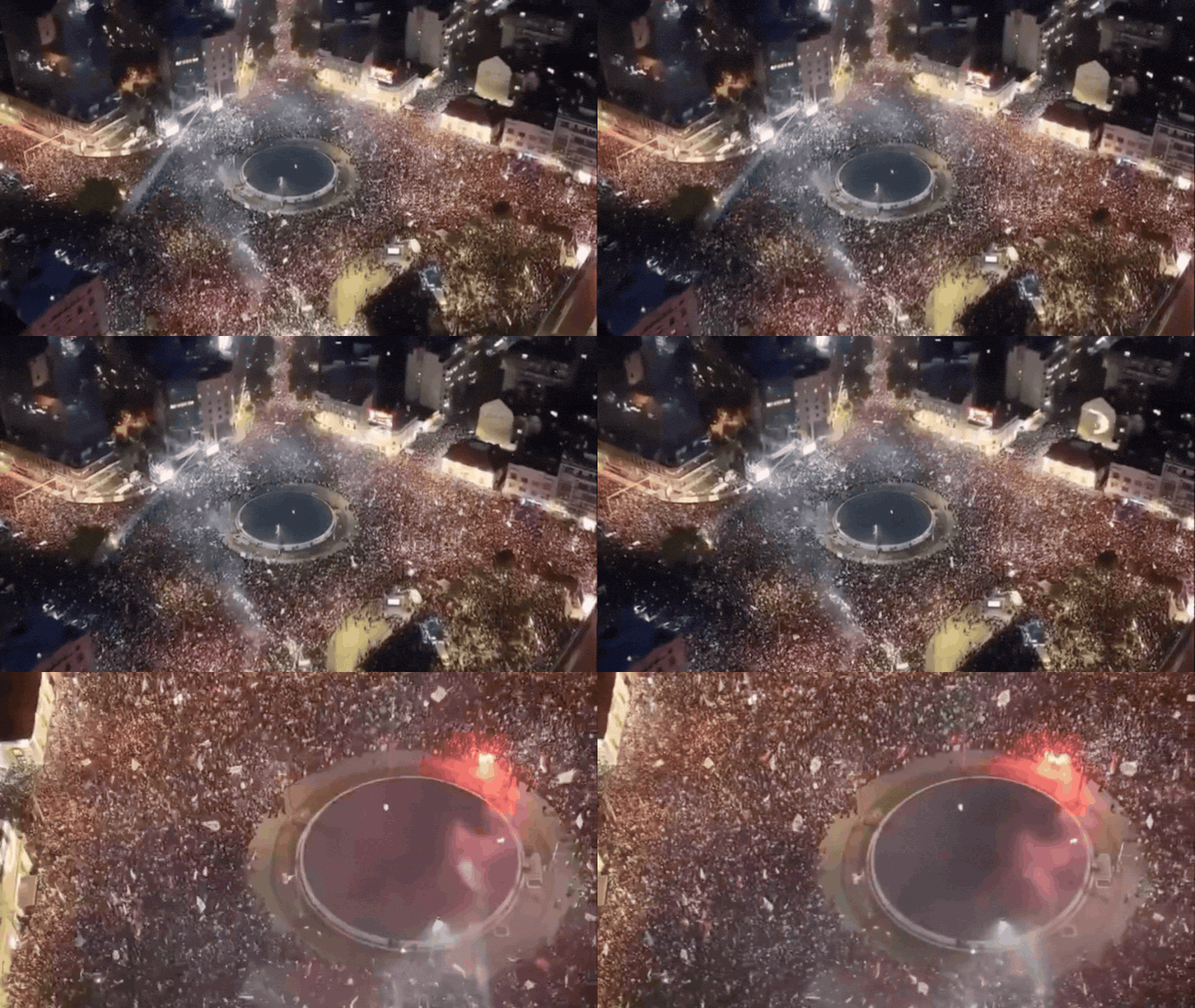
When students take to the streets, they are often dismissed as inexperienced, idealistic or easily mobilised. But when demonstrations persist, attract people beyond university campuses and begin challenging those in power, they can become a force that political leaders cannot ignore.The recent elections in Brazil and Serbia offer two different examples of how public dissent can reshape a political contest. In Brazil, student and youth mobilisation helped President Luiz Inácio Lula da Silva recover from a first-round setback and defeat Flávio Bolsonaro in the presidential runoff. In Serbia, a student-led movement that began with demands for accountability following a deadly infrastructure disaster developed into an electoral challenge to the ruling establishment.Both outcomes can be described as victories for dissent, at least for now. But they also raise a harder question: can movements that mobilise people against those in power sustain their influence after the votes have been counted?Sudhir Kumar Suthar, a professor in political science at Jawaharlal Nehru University (JNU), sees the results as part of a wider crisis of confidence in established political actors. “In the case of Brazil and Serbia, we can call the election results a victory of dissent, at least for the time being,” he said.Serbia: When a demand for answers became a challenge to powerSerbia’s student movement emerged after a concrete canopy collapsed at the railway station in Novi Sad in November 2024, killing 16 people. The tragedy triggered demands for accountability, transparency and the release of documents related to the disaster. As protests continued, anger over the incident became intertwined with broader concerns about corruption and the functioning of public institutions.Students blocked university faculties, organised demonstrations and marches, and attracted support beyond campuses. The movement increasingly challenged the government of President Aleksandar Vučić, whose Serbian Progressive Party had dominated the country's politics for years.The protests also drew on grievances that predated the Novi Sad disaster. Environmental concerns, particularly opposition to lithium mining, had already brought people onto the streets over fears about pollution, water resources and the consequences of industrial development. The disaster provided a new focal point for dissatisfaction that extended beyond a single incident.The movement’s decentralised structure became one of its defining features. Rather than depending on a single political leader, students organised through assemblies and collective decision-making. Their demands expanded from accountability for the disaster to early elections and broader institutional reform.The transition from protest to electoral politics was significant. A movement that began by demanding answers from the authorities was now challenging the established political order through the ballot box.In the recent snap parliamentary election, the student-backed Student List emerged ahead of the alliance led by Vučić. Preliminary results announced by Serbia’s Republic Electoral Commission on October 26 gave the Student List 52.71% of the votes counted and 140 seats in the 250-member parliament. The Vučić-led United Serbia list received 39.17% and 104 seats. These figures were preliminary, based on 8,187 of 8,392 polling stations processed at the time.The result marked a dramatic electoral setback for the ruling establishment and showed how a movement operating outside conventional party structures could turn public mobilisation into electoral strength.But an electoral victory does not automatically deliver institutional change. A movement united by opposition to corruption must now demonstrate that it can build consensus, govern effectively and implement its promises.“The student unrest shows distrust in political parties,” explained Suthar, adding that the question of what these movements ultimately want to replace the prevailing system with remains unresolved. “So basically it is a fight against the prevailing system without even thinking what it can be replaced with.”For Serbia’s student movement, the next test is whether it can turn its demands for accountability into transparent institutions and meaningful reforms.Brazil: Students mobilise against a political comebackBrazil’s election presented a different challenge. Rather than creating a new electoral force, students and youth movements mobilised against the prospect of a return of the Bolsonaro political camp.In the first round on October 4, Flávio Bolsonaro finished ahead of Lula, securing 47.03% of valid votes against the incumbent’s 45.16%. The result set up a closely contested runoff and energised supporters who feared that another Bolsonaro presidency would reverse policies on public services, minority rights and environmental protection.For Julia Andrade Maia, leader of the Juntos! movement and a student of the Federal University of Paraná, in Brazil, the mobilisation was driven by the experience of Jair Bolsonaro’s presidency from 2018 to 2022 and fears about what his son’s election could mean.“We have all learned something from what was the previous Bolsonaro government, and we definitely did not want to live through all that again,” said Julia.Julia described the prospect of another Bolsonaro presidency as a threat to public education, healthcare and democratic institutions. She said students were concerned about cuts to public resources amidst legacy of a government that she claimed attacked minorities and weakened public services.But the protests were not simply an endorsement of Lula. As Julia puts it, “I don't think people went to the streets because they thought Lula was perfect. People went to the streets because they knew Bolsonaro was terrible, and Lula was the only alternative that we had to face and defeat fascism.”Her account captures an important distinction between voting for a candidate and mobilising against a political alternative. The demonstrations brought together people who might not agree on every aspect of Lula’s agenda but shared concerns about the prospect of another Bolsonaro administration.How the streets amplified the campaignThe mobilisation began with students and youth movements, including student unions at universities across Brazil. Julia said that an early demonstration in Niterói, in Rio de Janeiro state, drew around 2,000 people. Within days, other universities were organising much larger protests.Political parties and other social movements subsequently joined the demonstrations. For Julia, the growth of the movement was inseparable from the relationship between physical gatherings and social media campaigning. “The streets made the digital stronger, as well as the digital engagements made the streets stronger,” she said.Julia said that seeing large crowds helped participants realise they were not alone, while social media enabled organisers to distribute content and extend their reach beyond the streets. Activists developed informal networks to circulate material on Instagram and other platforms, responding to what they perceived as unequal visibility for Lula’s campaign online.The demonstrations and digital mobilisation coincided with a campaign that gained momentum in the runoff. Lula ultimately won 51.79% of valid votes, receiving 64.26 million ballots against Flávio Bolsonaro’s 48.21%, or 59.83 million votes. He became the first Brazilian presidential candidate in the democratic era to finish second in the first round and then win the runoff.The environment, public services and sovereigntyThe Brazilian mobilisation was also about issues extending beyond the immediate contest between two candidates. Environmental protection, the Amazon rainforest, Indigenous rights and the management of natural resources were among the concerns shaping the political debate.Julia said that the environment was an important part of the mobilisation, though not its principal driver. “I think the environment played its role behind the protests, but I wouldn't say it was the major reason that the protests got so massive," she said.Environmental protection was not necessarily the single issue that brought the largest numbers onto the streets. Instead, it formed part of a wider set of concerns about public resources, national sovereignty, economic priorities and the role of the state.Suthar also cautioned against viewing the election as a straightforward environmental verdict. "In the case of Brazil, things are a bit complicated. The regions impacted by climate change are also the support base of Lula. Whereas the Bolsonaro support base is more in favour of industrialisation and modernisation, which is also being presented as the American model of governance.For environmental activists, Lula’s victory offers an opportunity to push for stronger forest protection and environmental enforcement. But it does not guarantee that those demands will be met. The government will still have to balance conservation with economic interests and navigate a legislature in which opposition forces remain influential.Can dissent produce lasting change?The similarities between Brazil and Serbia extend beyond the presence of students on the streets. In both countries, mobilisation connected immediate grievances with larger questions about how power is exercised and whose interests governments serve.Yet the movements also demonstrate that social media has not made physical protest redundant.“Social media is just an instrument to connect people more widely,” Suthar said. “But I don't think it has replaced the street-level protest as the medium of articulation of demands.”He argued that recent youth movements have revived a form of political participation that appeared to be receding. They have also brought together people who do not necessarily share a party membership or a single ideology but can unite around a common demand.The question is whether this solidarity survives after an election. Movements can lose momentum when the immediate target of their anger changes, while established political actors may absorb their demands without changing the structures that produced the original grievances.For Julia, Lula’s victory is not a reason for students to retreat from politics. She argues that Lula must learn from the mobilisation and continue working with citizens rather than assuming that an electoral mandate alone is sufficient.In Serbia, too, the student movement faces the challenge of converting electoral strength into accountable governance.The lesson from both countries is that sustained mobilisation can change the political stakes, challenge established power and create new possibilities for public accountability.The real measure of success, however, will come later — when protesters return to their campuses and communities, and the governments they helped shape demonstrate whether they have listened.You use AI every day. Now get your AI Quotient. Take the AIQ test.
Topics in this story
Gathered from external sources. Rights to this text belong to whoever originally published it.