Beneath one Sussex wind turbine, 75,000 recycled cubes replace rock armour in the ocean; could create more than twice the potential marine habitat
About 75,000 recycled concrete cubes have been installed around the foundation of a wind turbine at the Rampion Offshore Wind Farm, about 13 kilometres
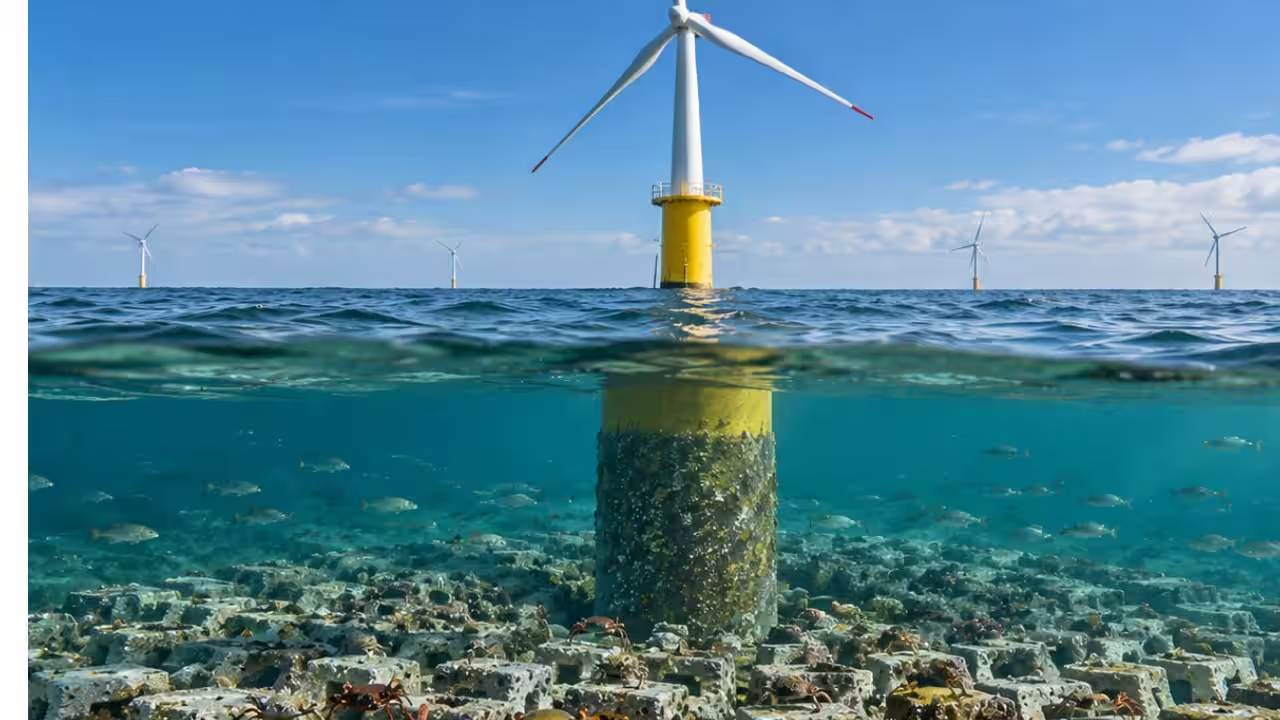
About 75,000 recycled concrete cubes have been installed around the foundation of a wind turbine at the Rampion Offshore Wind Farm, about 13 kilometres off the Sussex coast in the English Channel. The unusual installation is designed to do two jobs at once: protect the turbine foundation from seabed erosion, known as scour, and create additional spaces that marine organisms can potentially use as shelter or attachment points. The cubes replace conventional rock-based scour protection at one turbine and form part of a project called Reef Enhancement for Scour Protection, or RESP. The developers say the design could provide more than twice the potential habitat volume of traditional rock protection, although the ecological benefits are still being monitored.Why the wind turbine needs protectionOffshore wind turbines need protection from scour, which occurs when waves and currents remove seabed sediment around their foundations. If left uncontrolled, this erosion can expose or undermine parts of a turbine foundation. Rock armour is commonly used to stabilise the seabed around offshore structures, creating a protective layer that reduces the movement of sediment.At Rampion, the RESP project is testing whether that necessary engineering protection can also be designed to provide greater ecological complexity. The trial is located at turbine J04, where a scour pit of roughly 2 to 3 metres had developed. Instead of relying solely on conventional rock, engineers installed a specially designed array of concrete Reef cubes around the foundation.What are the 75,000 cubes?The installation contains about 75,100 Reef cubes weighing approximately 1,735 tonnes in total. The cubes come in different sizes and designs, including larger units with internal chambers and passageways. Their rough surfaces also contain features such as cracks, pits and crevices intended to create additional spaces for marine organisms.The system was developed by UK marine-design company ARC marine in collaboration with RWE. The cubes were manufactured in the UK using a material that ARC marine describes as 98% recycled, while the design was developed to withstand the forces experienced around an offshore turbine. The installation covers roughly 820 square metres of seabed.How could they help marine life?The Reef cubes are intended to create a more complex three-dimensional habitat than a conventional layer of rock. Their internal chambers can provide sheltered spaces, while their textured surfaces offer potential attachment points for organisms living on or around the seabed.Species identified as potential users of the structures include European seabass, black seabream, brown crab, common starfish, European flat oysters and Ross worms. The structures could also provide refuge for smaller organisms and juvenile fish. However, these are potential ecological benefits rather than evidence that the installation has already produced a measured increase in marine populations.Why the habitat claim is still being testedThe claim that the cubes can more than double marine habitat refers to the potential habitat volume created by the design, rather than a finding that the amount of marine life has already doubled. RWE and ARC marine have compared the geometry of the Reef cube system with conventional rock scour protection and say it can provide more than twice the potential habitat volume.The distinction matters because the installation is also an ecological experiment. RWE says surveys are planned in 2026, 2028 and 2030 to examine how organisms colonise the structure and compare the results with other areas of the wind farm. The monitoring should help determine whether the additional physical space translates into measurable ecological benefits.A test for future offshore wind farmsThe project is part of a wider effort to incorporate nature-inclusive design into offshore infrastructure. Rampion has 116 turbines and a total generating capacity of about 400 megawatts, making the site a useful setting for testing whether conventional engineering requirements can be combined with habitat creation.The RESP project has received support from Innovate UK and involves RWE, ARC marine and other research and engineering partners. Before deployment, the Reef cube design was tested under simulated storm conditions to assess its stability. If monitoring shows that the structures remain effective at controlling scour while supporting diverse marine communities, the approach could provide a model for incorporating habitat features into scour protection at other offshore wind farms.You use AI every day. Now get your AI Quotient. Take the AIQ test.
Topics in this story
Gathered from external sources. Rights to this text belong to whoever originally published it.