In the late 2000s, while inspecting reefs on Google Earth, specialist Chris Simpson spotted rare reefs off Australia’s remote Kimberley coast, revealing marine habitats that had been poorly mapped
Chris Simpson's groundbreaking find in 2007 reveals extensive fringing coral reefs along Australia's remote Kimberley coast, highlighting the region's rich marine biodiversity and resilience amid environmental challenges.
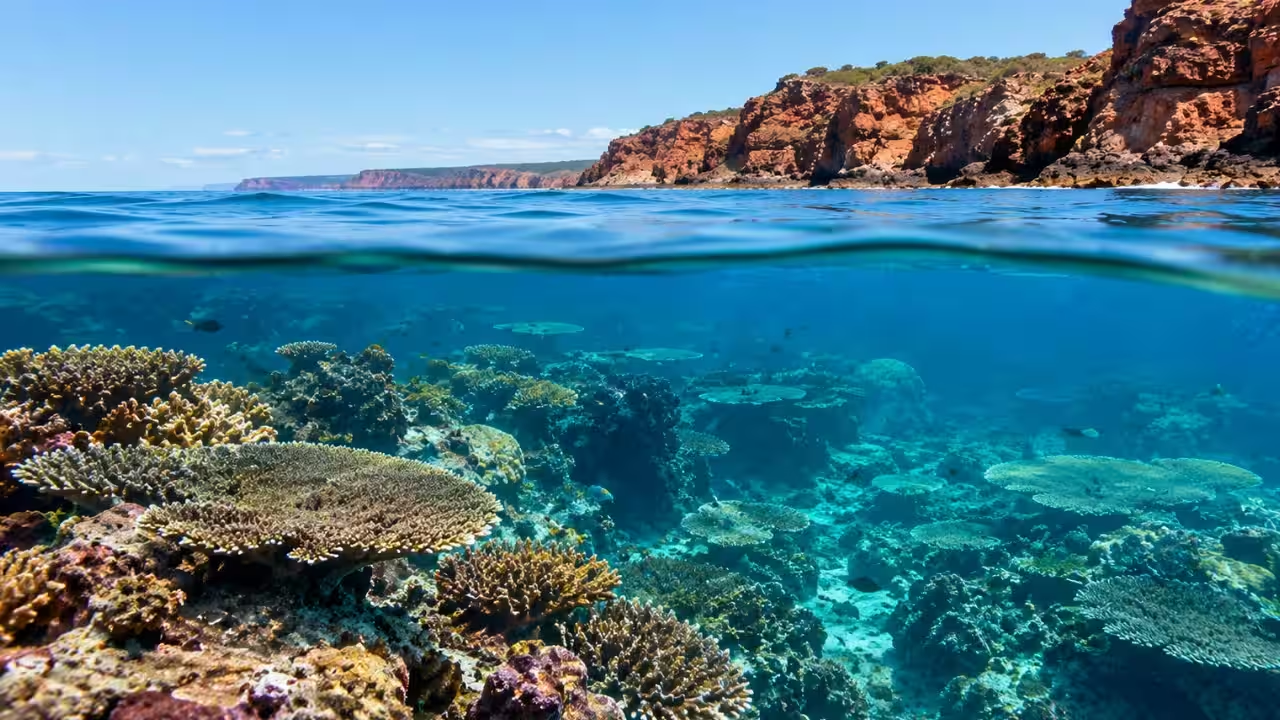
Coral reef specialists have long relied on satellite imagery to study reefs that are costly and difficult to reach by boat. Dr. Chris Simpson, a government scientist in Western Australia, regularly searched Google Earth for reefs along the state’s northern coast. On one such occasion, late in 2007, he discovered an extensive formation of fringing coral reefs off the remote Kimberley coast, a sight The Age described as rarely seen anywhere in the world. The Kimberley Development Commission describes the Kimberley as remot and the NASA Earth Observatory notes that the Kimberley coast has some of the largest tidal ranges in Australia and ranks among the largest in the world, with water levels at Montgomery Reef dropping sharply at low tide. Limited information was available about the reefs in this area, highlighting how little of the coastline had been documented.Chris Simpson’s Google Earth sighting of fringing reefsDr. Chris Simpson, a coral reef specialist at Western Australia’s Department of Environment and Conservation, made the sighting, as ReefBuilders reported on February 13, 2008. A report in The Age, republished by Climate Shifts, places the sighting late in 2007. Simpson could identify reefs in Landsat images and aerial photographs before Google Earth launched in 2005. The platform later made it easier to view the area without having to piece together separate images. The mapping blog Ogle Earth traced the sighting to places like the Buccaneer Archipelago and Cape Bougainville.Why the Kimberley coast had limited public coral data before 2009The study Biodiversity and biogeography of zooxanthellate corals in Australasia revisited based on new data from the Kimberley, published in the Records of the Western Australian Museum, describes a complex array of nearshore platform and fringing reefs along an estimated 12,000 kilometres of the northern Western Australian coastline, which suggests the Kimberley is an exception to the worldwide scarcity of fringing reefs noted earlier and describes the region as isolated from urban centres. According to the authors of the paper, Zoe Richards, Michel Pichon and Carden Wallace, the lack of information in the public domain hindered efforts to confirm the expected richness of the area in terms of its coral cover.Working in this environment is not easy. The above-mentioned study reports inshore tidal oscillations of more than 11 metres, strong currents and murky water, which limited subtidal diving to roughly 45 minutes around slack high tide. The surveys covered inshore, mid-shelf and offshore reefs, but they left gaps, because the discussion section notes that only islands and reefs at least 10 kilometres from the mainland were surveyed, so corals closer to shore remain poorly documented.Museum surveys from 2009 to 2014 and the count of 438 coral speciesThe Field surveys section of the above mentioned study records coral sampling at 171 stations between 2009 and 2014. Of these, 135 stations had transect belts; a total of 491 transects were conducted and 19,086 coral colonies were counted. At the remaining 36 stations, the same section notes that corals were collected incidentally during rapid visual assessment surveys. Combining the new museum-accessioned specimen records with recent donations and published historical records from 1893 onwards, the above-mentioned study puts the regional total at 438 zooxanthellate reef-building coral species, up from an estimate of 350 species made by Veron and colleagues in 2015. The above-mentioned study extended the known distribution of 85 species in the region, 37 of which are new records for Australia and identified Ashmore Reef, Cassini Island and Montgomery Reef as regional coral biodiversity hotspots.The 2015 Bonaparte Archipelago study and the question of bleaching resilienceA separate paper, A diverse assemblage of reef corals thriving in a dynamic intertidal reef setting (Bonaparte Archipelago, Kimberley, Australia), appeared in PLOS ONE in 2015. As its abstract notes, the study documents for the first time an assemblage of 225 hard coral species in the intertidal zone of the Bonaparte Archipelago and presents it as a cause for some optimism because the corals thrive in an unusually harsh setting. The museum study returns to the question of resilience. It notes that the central and northern Kimberley reefs appear to have largely resisted widespread bleaching and mortality so far and suggests that the extreme conditions their corals routinely experience make these reefs a natural laboratory for examining the traits that confer resilience. The study frames this against the 2016 to 2017 bleaching event, which severely affected the Far Northern Great Barrier Reef, Australia’s most renowned repository of coral diversity and argues that this makes identifying other caches of diversity increasingly important.You use AI every day. Now get your AI Quotient. Take the AIQ test.
Topics in this story
- Kimberley coast reefs
- rare coral reefs
- Google Earth marine discovery
- coral species richness Australia
- coral reef resilience
- Kimberley coast coral reefs
- rare coral reefs Australia
- fringing reefs discovery
- coral bleaching resilience
- marine habitats mapping
- Chris Simpson coral reefs
- Biodiversity zooxanthellate corals
Gathered from external sources. Rights to this text belong to whoever originally published it.