Australia’s Great Barrier Reef hosted the world’s first floating hotel in 1988; after a brief stay in Vietnam, the resort was relocated to North Korea
Explore the extraordinary journey of the world’s first floating hotel, once situated in Australia’s Great Barrier Reef, and its relocation challenges through Vietnam to North Korea, highlighting its impact on tourism and environmental assessments.
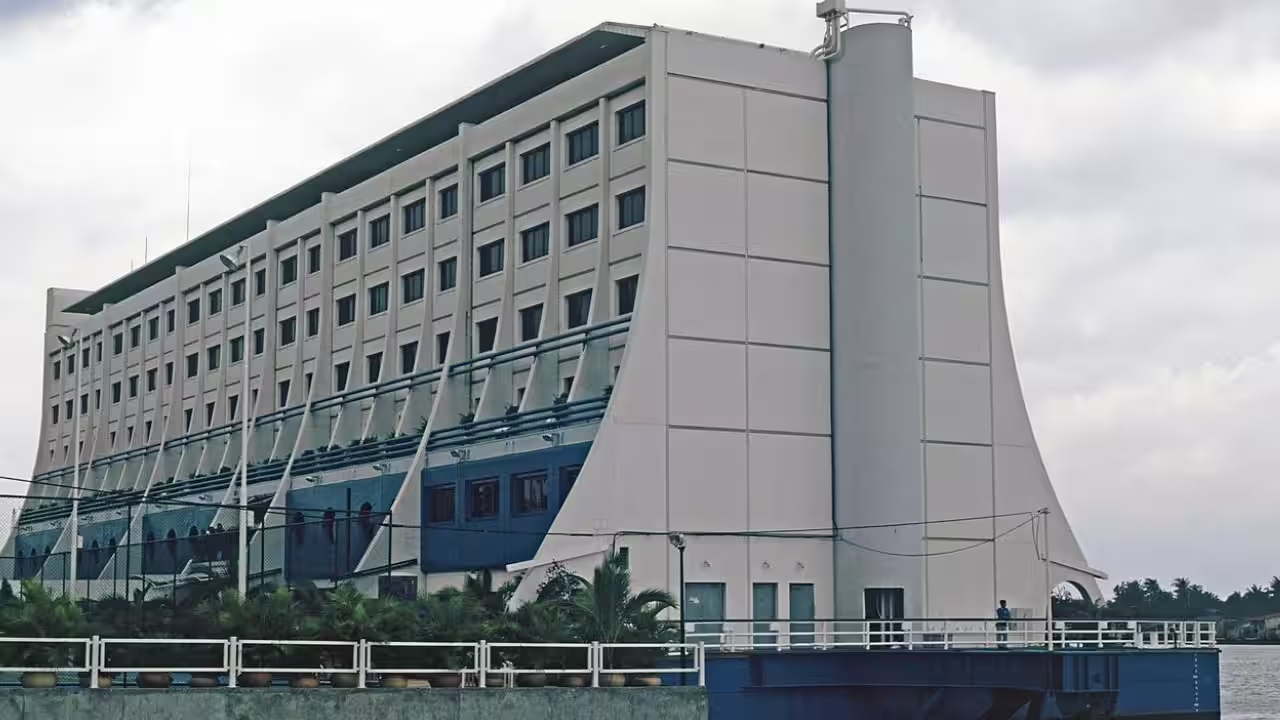
In March 1988, visitors to Australia's Great Barrier Reef could book a stay at a hotel unlike any other. The seven-story Barrier Reef Floating Resort stood above John Brewer Reef, about 70 kilometres off the coast of Townsville, Queensland. Guests could enjoy views of the ocean from their rooms while having access to restaurants, bars, a nightclub, a swimming pool and a tennis court. The resort was known as the first floating hotel in the world. However, the period that this resort remained operational in Australia was no more than a year. Due to its financial problems, the building was relocated to Vietnam and then to North Korea. The hotel was developed by Doug Tarca, a Townsville developer. He had an intention to offer tourists an opportunity to have contact with the reef without having to return to the mainland. The company that undertook the construction of this hotel was Barrier Reef Holdings Limited.The floating hotel was built in SingaporeAccording to ABC News, the corporation engaged a company from Singapore for the construction of the hotel in 1986. Following the construction process, the building was then shipped to Australia on a heavy-lift ship and the MOUA Interpretation Manual puts that journey at over 5,000 kilometres. The building arrived at John Brewer Reef during the summer period of 1987 to 1988. The hotel contained 140 double rooms and 34 luxury suites, according to the Great Barrier Reef Marine Park Authority. It had restaurants, bars, a nightclub, a helipad and a tennis court. Visitors could enjoy dining and snorkelling around the reef. Location was a reason that made this trip different, but at the same time there were certain inconveniences. The guests had to travel from Townsville by sea or helicopter and the weather could cause problems with communication between the hotel and the mainland. Weather conditions were affecting its functioning and the number of guests was declining gradually.The hotel moved to Vietnam after financial problemsThe resort was not attracting enough tourists to make it profitable in terms of covering its operating expenses. Due to being far away, harsh weather conditions and expensive running costs, the enterprise could not be run effectively. The owners were forced to sell the resort. About a year later, the hotel was sold to a company in Ho Chi Minh City, Vietnam. It was taken 5,000 kilometres away from Australia and transported to Vietnam, where it docked in 1989. It was renamed Saigon Floating Hotel and moored on the Saigon River close to the Tran Hung Dao Statue. The floating hotel attracted tourists when it docked in Vietnam because this country was now trying to develop itself after the war. The locals referred to it as “The Floater”. It was a hotel with two nightclubs. The floating hotel operated from 1989 to 1997 in Vietnam, according to an ABC News story about its journey.Its next destination was North KoreaThe hotel was subsequently purchased by a South Korean firm and relocated to the Mount Kumgang tourist area of North Korea in 1998. It was rebranded as Hotel Haegumgang and became a part of a tourism project that aimed at attracting tourists to the location. The relocation occurred at a time when North and South Korea sought to normalise relations with each other. South Korean firms helped build the Mount Kumgang Resort, which became an important site for tourists from South Korea. The hotel was supposed to bring tourists to the North Korean resort and it did host South Korean visitors until tours to Mount Kumgang were halted in 2008. Tourism at Mount Kumgang was halted in July 2008 after a North Korean soldier shot and killed a 53-year-old South Korean tourist who had allegedly entered a restricted military zone.After the tours stopped, the hotel sat closed and dilapidated. According to Reuters, in October 2019, North Korean leader Kim Jong-un toured Mount Kumgang and criticised the state of tourist facilities there. According to him, these facilities were outdated and badly maintained and their demolition was needed. Among those facilities whose fate was uncertain was the Australian resort, according to ABC News. The report confirmed that the hotel was still in North Korea at the time. South Korean intelligence reports cited by CNN say the hotel was among the sites North Korea destroyed in 2022.A lasting legacy in AustraliaAccording to the MOUA Interpretation Manual, the floating hotel has covered more than 14,000 kilometres in about thirty years, having moved from Singapore to Australia's Great Barrier Reef, then to Vietnam and finally to North Korea. It became a unique part of world history because of its travel experience. Despite its short stay in Queensland, the project also had a lasting impact on how tourism developments were assessed in Great Barrier Reef Marine Park. According to the Great Barrier Reef Marine Park Authority, the hotel project led to one of Australia's most complex environmental assessments at the time. The surveillance program also helped lay the standards for future developments within the marine park. The life of the resort was very short, but its travel through three nations made it noteworthy. This was a project that started out as a very big idea of building a luxurious resort above one of the world's most famous natural wonders, but it ended up as a floating hotel in North Korea.You use AI every day. Now get your AI Quotient. Take the AIQ test.
Topics in this story
Gathered from external sources. Rights to this text belong to whoever originally published it.