Portugal deployed seven artificial reef systems across 43.5 sq km off the Algarve; a study using 27 years of data estimated seabream carrying capacity rose 35%, or 895 tonnes
Discover how Portugal's artificial reefs off the Algarve have increased seabream carrying capacity by 35%, supporting fish population growth and biodiversity over 27 years, while also influencing fishing practices.
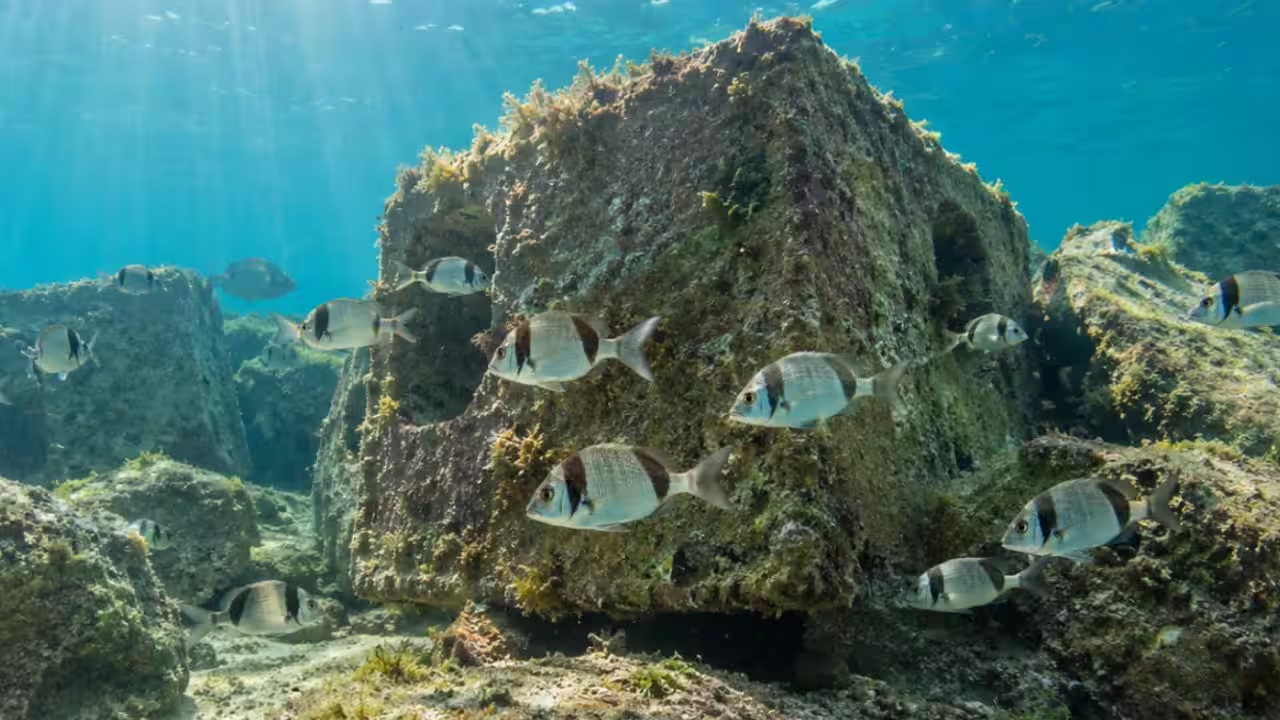
Can people build a better home for fish? Portugal gave it a try. A 2008 symposium paper by Gianna Fabi and colleagues stated that seven artificial reef systems were deployed in the Algarve, in southern Portugal. They spanned 43.5 square kilometres of seabed. The paper said the reefs had successfully improved fishing yields and made catches more diverse. Then a later study asked a sharper question: did the reefs only attract fish or did they help create more of them?Why build homes for fish underwater Artificial reefs refer to the man-made structures that are placed on the seabed. They can be thought of like apartments for fish. The same research paper observed that artificial reefs have been created in the western Mediterranean basin since 1960. In the Mediterranean, the countries that have been involved include France, Italy, Spain, and Monaco. Portugal built its reefs on its Atlantic coast. The main goal had mostly been to protect and boost fishing resources used by recreational and commercial fishers. The authors added that these reefs often serve several purposes at the same time. Some also help protect natural habitats such as seagrass beds that serve as nurseries for young fish.A huge reef project off the Algarve The Algarve project was big. The paper described it as a large complex of seven artificial reef systems. They included more than 20,950 modules that weighed 73,000 tonnes in total. Their combined volume was 103,000 cubic metres. The reefs reportedly increased biodiversity and the amount of life living on the seabed. They also became a popular site for recreational diving and research.Did the reefs make fish or just attract them?Fish can just swim over to the reef from other places. This would mean higher catches without adding any new fish to the sea. Scientists called this the attraction hypothesis. The other theory is that of the production hypothesis, where the reefs increase the overall fish population. According to Ruben Roa-Ureta and team, before this paper, it had not been established which hypothesis was right. Their 2019 paper, ‘Modelling long-term fisheries data to resolve the attraction versus production dilemma of artificial reefs,’ published in Ecological Modelling, tried to settle the debate.What 27 years of data revealed The team looked at the two-banded seabream in the south of Portugal. They used monthly records of 27 years of landings and 20 years of fishing effort for three fleets. One small-scale fleet fished on the reefs, while two semi-industrial fleets worked the broader continental shelf. They then calculated regional carrying capacity, the number of fish an area can support. If fish had only moved, it would have been constant. Instead, the authors found it increased by 35% after the final reefs were dropped. It went up straight for four years. This, the authors said, challenged the idea of attraction. A later review in Frontiers in Marine Science estimated the rise at around 895 tonnes.The catch behind the good news There is, however, a twist. The study found the reefs helped the artisanal fisheries by increasing stock biomass. However, fishing pressure rose as well. The harvest rate of the semi-industrial fleets working offshore increased to almost three times its previous level. This resulted in a large increase in total fish mortality and the rate of exploitation. The result was more layered than just a simple success story. The study also focused on one species in one region, so it cannot represent all the reefs around the world. But Ruben Roa-Ureta and colleagues said their method could be used elsewhere since it only needs basic fishing data.You use AI every day. Now get your AI Quotient. Take the AIQ test.
Topics in this story
Gathered from external sources. Rights to this text belong to whoever originally published it.