In 1832, a New York merchant built a house with a hidden 2-foot-wide passage; researchers now link it to the Underground Railroad
US News: For decades, visitors to Manhattan's Merchant's House Museum walked past a built-in chest of drawers without knowing the full significance of the narr.
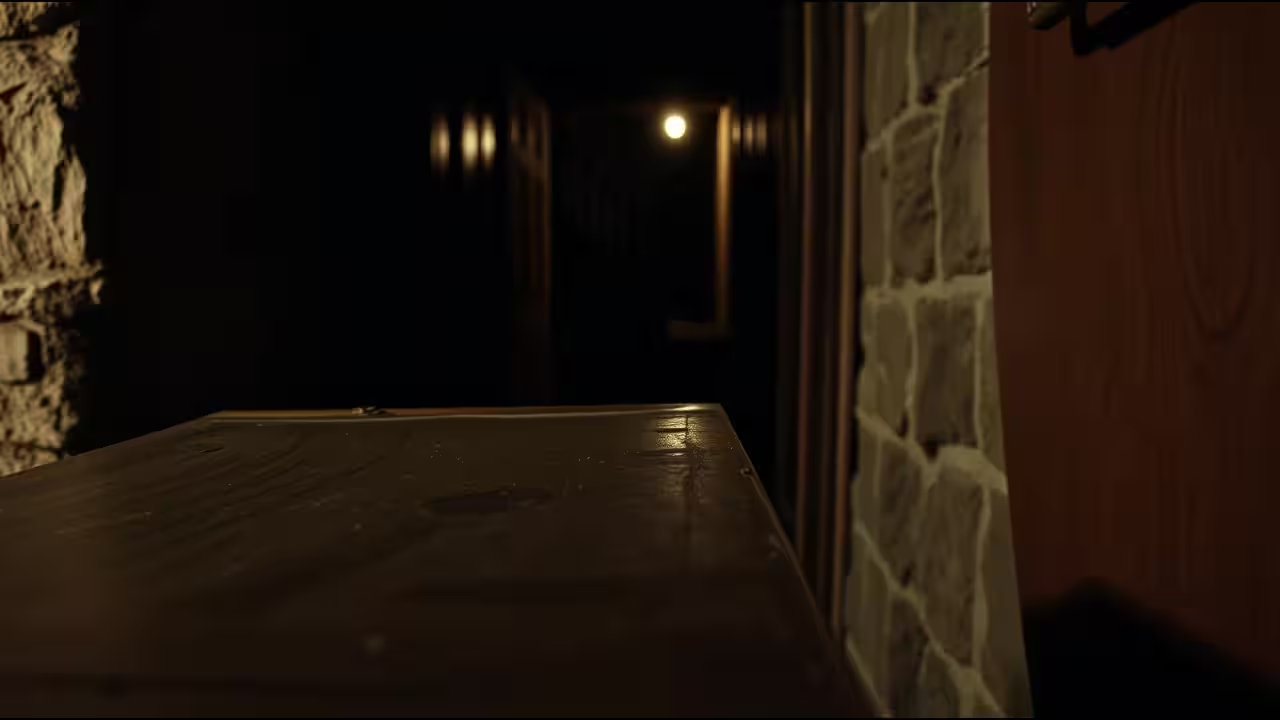
For decades, visitors to Manhattan's Merchant's House Museum walked past a built-in chest of drawers without knowing the full significance of the narrow passage concealed behind it. After two years of research, historians concluded that the passage was likely used as a hiding place for people escaping slavery. The passage is roughly 2 feet square and descends about 15 feet from the second floor toward the ground floor. The museum announced the finding in February 2026, describing the 1832 Merchant's House as the earliest known site of Underground Railroad activity in New York City. The house was built by Joseph Brewster, a wealthy merchant and abolitionist, and the museum says the passage appears to have been incorporated into the building when it was constructed. Its physical existence was known before the recent research; what changed was the understanding of what the unusual space may have been used for.Why historians believe the passage was connected to the Underground RailroadAccording to the Merchant's House Museum, the passage is an unusual feature of the 1832 building and has no obvious domestic purpose. Its entrance is concealed beneath a built-in chest of drawers on the second floor, while the narrow shaft extends downward through the house. Researchers examined the architecture alongside historical evidence about Brewster and New York's abolitionist movement. Patrick Ciccone, an architectural historian involved in the research, emphasised that Brewster's background was significant because wealthy white New Yorkers who openly opposed slavery were unusual at the time. He described Brewster as the builder of the house, meaning he was in a position to make deliberate choices about its construction. The museum has therefore interpreted the passage as a space intended to conceal freedom-seekers, while continuing to distinguish that conclusion from a surviving document that explicitly states who used the passage or exactly how often it was used.Why the discovery adds another chapter to New York's abolitionist historyThe passage was constructed during a complicated period in New York. Although New York State had abolished slavery in 1827, the city's economy remained closely connected to the slaveholding South. At the same time, New York had an active abolitionist movement led in large part by free Black residents, alongside white abolitionists who worked within the movement. People involved in helping those escaping slavery often had to operate discreetly. The Underground Railroad was not a literal railroad but a loose network of people, homes and other locations that helped freedom-seekers travel toward places where they could live outside the institution of slavery. The Merchant's House passage provides a rare physical reminder of that history. Much of what is known about the Underground Railroad comes from documentary accounts, oral histories and later historical research. Intact spaces that may have been used for concealment are considerably rarer.How the hidden passage survived inside the Merchant's HouseThe Merchant's House was constructed in 1832 and later became the home of the Tredwell family, who occupied the property for almost a century. The building eventually became a museum in 1936 and is now one of New York City's best-preserved examples of a 19th-century merchant family's home. The concealed passage survived largely intact within the building. Its entrance is hidden beneath a chest of drawers, making it difficult to notice as part of the house's ordinary interior. The recent research brought together the physical evidence inside the building with historical information about Brewster and the abolitionist networks operating in New York during the period. The museum subsequently presented the passage as evidence of the house's connection to the Underground Railroad.What the discovery means for ManhattanThe Merchant's House Museum now identifies the property as the earliest known Underground Railroad site in New York City. That distinction is significant because Manhattan played an important role in the abolitionist movement, yet comparatively few physical spaces associated with the city's Underground Railroad history have survived in an intact form. The discovery also broadens the story told by the museum itself. For decades, the Merchant's House was primarily understood through the domestic history of the Tredwell family and their household. The hidden passage adds another layer to that history, connecting the building to the wider struggle over slavery and freedom in 19th-century New York. For historians, the most important question may now be what else can be established about the passage. The architecture suggests a deliberate attempt at concealment, while Brewster's abolitionist views provide historical context. But identifying the specific people who may have sheltered there and documenting how the space was actually used will require further research.Catch the latest World News and Live updates. Download the TOI app.
Topics in this story
Gathered from external sources. Rights to this text belong to whoever originally published it.