In 2016, Barack Obama faced a patchwork of unprotected California desert; he created three monuments, and nearly 2 million acres gained protection
In 2016, President Obama designated three national monuments in Southern California, safeguarding nearly 1.8 million acres of desert land. Discover the significance of Mojave Trails, Sand to Snow, and Castle Mountains and their impact on wildlife and conservation.
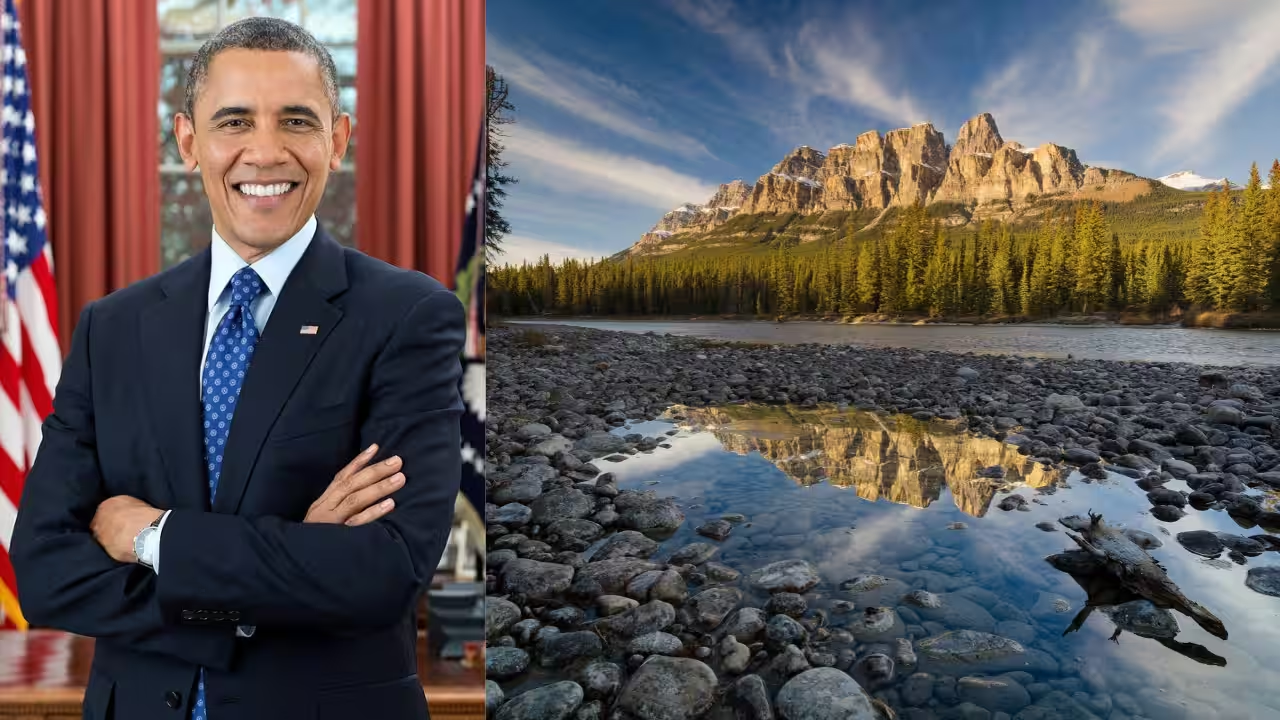
President Barack Obama designated three national monuments in Southern California on February 12, 2016, which placed nearly 1.8 million acres of federal land under national monument protection. The three sites were Mojave Trails, Sand to Snow and Castle Mountains, which are a group of desert landscapes that also connected several areas that were already protected as national parks, preserves and wilderness. The U.S. Department of the Interior said the designations followed decades of local input and conservation efforts.Mojave Trails covered 1.6 million acresThe largest designation was Mojave Trails National Monument, which covers about 1.6 million acres in the eastern Mojave Desert, and its boundaries included rugged mountain ranges, ancient lava flows, sand dunes and desert valleys. The area also contained historic Native American trading routes, World War II-era military training sites and the longest remaining undeveloped stretch of Route 66.More than 350,000 acres within Mojave Trails had already been designated as wilderness by Congress, and Obama’s proclamation placed the wider landscape under the national monument designation and linked it with other protected areas in the region. The Mojave Trails proclamation specifically identified lava flows, volcanic features, caves, sand dunes, mountains, and other geological formations as resources to be protected. The monument included Amboy Crater and the Pisgah Volcano area, where lava tubes form one of Southern California’s highest concentrations of caves.Sand to Snow ran from desert floor to alpine mountainSand to Snow National Monument stretches from the Sonoran Desert floor toward San Gorgonio Mountain, which is the highest peak in Southern California, across an elevation range of nearly 10,000 feet. The monument contained more than 100,000 acres of wilderness that Congress had already designated, and also included about 30 miles of the Pacific Crest Trail, desert oases and archaeological sites, including an estimated 1,700 Native American petroglyphs. Federal officials identified more than 240 bird species and 12 threatened or endangered wildlife species in the area.Obama’s proclamation described the area as a connection between the San Bernardino National Forest and Joshua Tree National Park, and its varied terrain included desert scrub, riparian areas, woodlands, chaparral and alpine forests. Wildlife recorded in the region included bighorn sheep, mountain lions, black bears, bobcats, and several federally listed species.Castle Mountains filled another gapThe smallest of the three was Castle Mountains National Monument, which covers approximately 20,920 acres, sits next to Mojave National Preserve and contains Joshua tree forests, desert grasslands, mountain habitat, and archaeological sites. The area also includes the historic Hart mining site and the Castle Mountains themselves, with Hart Peak rising to 5,543 feet, and the proclamation identified the area as an important connection for wildlife and water between the New York and Piute Mountains. Desert bighorn sheep, golden eagles, bats and desert tortoises are among the wildlife found there.The three monuments were designed to connect protected landThe three designations covered roughly 1.775 million acres, which federal officials rounded to nearly 1.8 million, and the administration said that the new monuments would connect existing protected areas, including Joshua Tree National Park, Mojave National Preserve and 15 congressionally designated wilderness areas. The designations were made under the Antiquities Act, which gives presidents authority to establish national monuments on federal land to protect objects of historic or scientific interest. Obama had used the law repeatedly during his presidency, but the California desert action was one of his largest single conservation designations.Federal officials said that activities including hiking, camping, hunting, horseback riding, photography and other outdoor uses would continue under monument management rules. The February 2016 designations instead added another layer of federal protection across a landscape that already contained several different categories of protected public land.You use AI every day. Now get your AI Quotient. Take the AIQ test.
Topics in this story
Gathered from external sources. Rights to this text belong to whoever originally published it.