Scientists release six captive-bred endangered snakes into the Australian wild; four survive a world-first conservation experiment using artificial rocks to give the reptiles a second chance
Four of six endangered broad-headed snakes released into the Australian wild have survived their first few months in a world-first conservation experiment
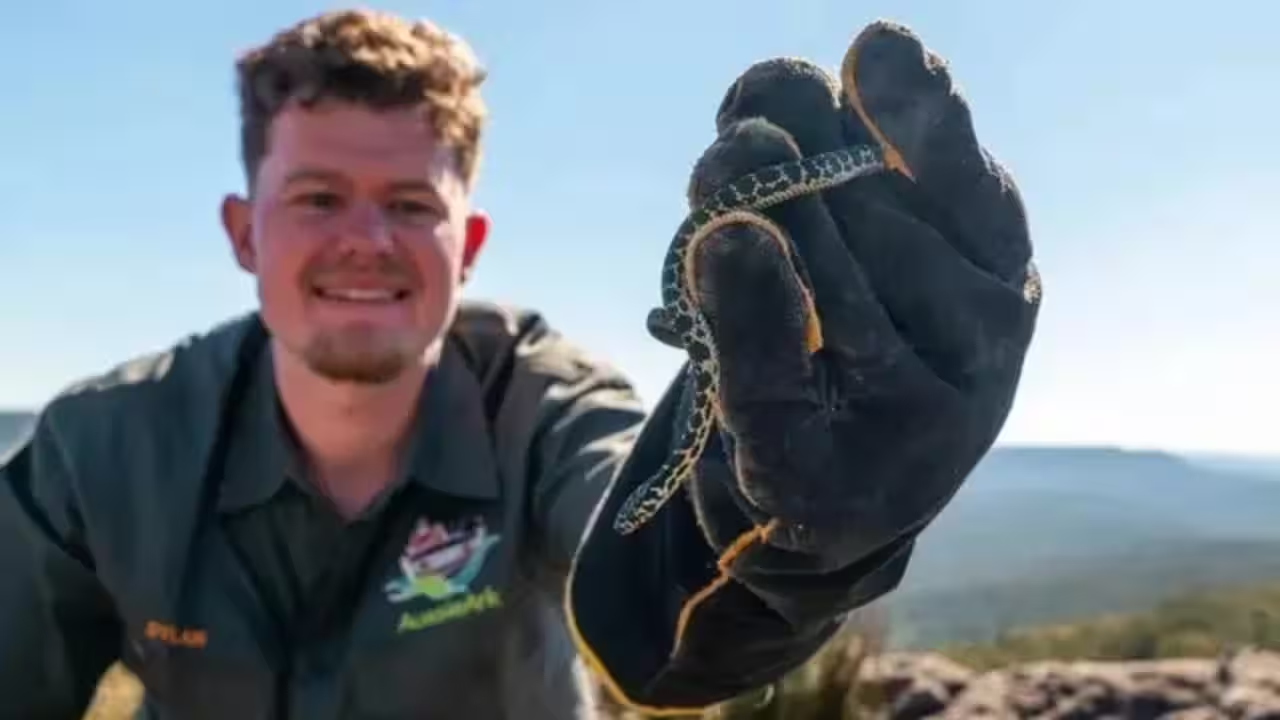
Four of six endangered broad-headed snakes released into the Australian wild have survived their first few months in a world-first conservation experiment that could offer a new approach to protecting threatened reptiles. The juvenile snakes were bred in captivity and released in May 2026 into restored rocky habitat in the Shoalhaven region of New South Wales. Conservationists used specially designed artificial rocks to recreate the natural shelters the reptiles depend on for protection, temperature regulation and hunting. Researchers from the University of Technology Sydney (UTS), working with conservation organisation Aussie Ark and Indigenous rangers, have been monitoring the animals through regular field surveys. The latest update, released on November 6, reported that at least four of the six snakes were still alive.Australia's endangered broad-headed snake faces mounting threatsThe broad-headed snake (Hoplocephalus bungaroides) is an endangered reptile endemic to Australia. Recognisable by its black body, yellow bands and flattened head, it is primarily found in sandstone habitats across the Sydney Basin and surrounding areas of New South Wales.These snakes depend heavily on natural rock formations, particularly sandstone crevices, where they shelter during the day, regulate their body temperature and find protection from predators. They emerge mainly at night to hunt smaller reptiles, including geckos and skinks.However, the destruction and removal of natural bush rocks have significantly reduced suitable habitat. Habitat fragmentation, illegal collection, drought and bushfires have added to the pressures facing the species. The loss of suitable rocky shelters is particularly damaging because these structures provide several essential resources within a relatively small area.Drought and bushfires contributed to a sharp population declineLong-term research led by University of Technology Sydney wildlife ecologist Professor Jonathan Webb has documented the pressures affecting the species. His monitoring work recorded a significant population decline following the 2017–19 drought and the devastating Australian bushfires of 2019–20.According to UTS, the monitored population had declined by approximately 64% by 2023. Researchers also recorded little breeding activity during the three years following the bushfires, raising concerns about the species' ability to recover.Broad-headed snakes have a relatively slow reproductive cycle, making population recovery difficult. Females generally reproduce every two or three years, while young snakes can take around five years to reach adulthood. Consequently, the loss of breeding animals and suitable habitat can have long-lasting effects on local populations.Conservationists breed endangered snakes in captivityThe reintroduction programme began in October 2024, when Aussie Ark secured 17 adult broad-headed snakes from the wild to establish a captive breeding population. Three additional adults joined the programme the following month, bringing the founding group to 20.The animals were housed at Conservation Ark, Aussie Ark's conservation facility in Somersby, New South Wales. The organisation subsequently achieved successful captive breeding using the wild-sourced founders, producing eight juvenile snakes.Six of these juveniles were selected for the experimental release in May 2026, while two remained in captivity because of their valuable genetic characteristics. Retaining the two animals was intended to help preserve genetic diversity and support future breeding efforts.The programme brought together captive breeding expertise from Aussie Ark and scientific research from UTS, with the aim of developing a practical method for returning captive-bred reptiles to their natural habitat.Artificial rocks provide specially designed sheltersOne of the most unusual elements of the experiment is the use of artificial sandstone structures developed to replicate the natural rocky shelters required by broad-headed snakes.The structures were developed by Dr Benjamin Croak, whose research at UTS focused on designing artificial habitats with suitable thermal and physical conditions. They contain crevices where snakes can shelter, regulate their body temperatures and remain protected during daylight hours.The structures also help recreate the conditions in which the reptiles encounter their prey. Since broad-headed snakes hunt smaller rock-dwelling reptiles, suitable habitat is essential for their ability to find food after release.The artificial shelters were placed in restored rocky habitat before the six juvenile snakes were introduced. The approach addresses a major challenge in wildlife reintroduction: breeding animals in captivity is only one part of conservation, as released individuals also need suitable conditions to survive outside controlled environments.Researchers monitor the snakes every fortnightFollowing the May release, Professor Webb's research team and Indigenous rangers began conducting field surveys every two weeks to check the animals' survival and adaptation to their surroundings.The researchers use individual head markings to identify the released snakes and distinguish them during monitoring. This allows the team to track individual animals rather than relying solely on general sightings of the species.An earlier update published on October 1 reported that three of the six snakes had been confirmed alive. The November 6 announcement from UTS raised the number to at least four.One particularly encouraging observation involved a juvenile snake found with a noticeably swollen belly, suggesting it had recently eaten. Conservation ranger Dylan Wallis said the observation indicated that the animal was finding food in its new environment.The monitoring programme is designed to establish whether the snakes can locate prey, use the artificial shelters and survive the challenges of their natural habitat.Indigenous rangers participate in the conservation effortTraditional Owners and Indigenous rangers from the Shoalhaven region are also involved in the reintroduction programme. Their participation includes field monitoring, habitat protection and developing local knowledge of the species.Rangers Ashley Thomas and Dylan Wallis have been associated with the conservation work, while Traditional Owner Frank Connolly Jr. has highlighted the importance of passing environmental knowledge and cultural connections to younger generations.The partnership gives local Indigenous communities an active role in protecting a threatened species on Country. It also supports the development of long-term conservation skills among rangers who can contribute to monitoring and habitat management.Scientists plan further releases and habitat restorationThe six-snake release is an experimental step towards establishing a sustainable wild population. Researchers intend to continue monitoring the animals to understand their long-term survival, feeding behaviour and ability to adapt to the environment.Aussie Ark also plans to continue its captive breeding work, while conservationists explore opportunities to restore additional rocky habitats suitable for future releases.Professor Webb's long-term research, which spans more than three decades, is helping scientists understand the species' ecological requirements and the conditions needed for successful reintroduction.The broader objective is to establish populations capable of surviving and reproducing naturally, reducing their dependence on continued human intervention.You use AI every day. Now get your AI Quotient. Take the AIQ test.
Topics in this story
Gathered from external sources. Rights to this text belong to whoever originally published it.