In 2023, a Washington, DC man believed he had won a $340 million Powerball jackpot; then the lottery said its website had posted the wrong winning numbers
John Cheeks from Washington, DC thought he had won a $340 million Powerball jackpot until a website error led to a legal battle. Discover the shocking details behind the lawsuit that challenges the lottery's responsibility for posting incorrect winning numbers.
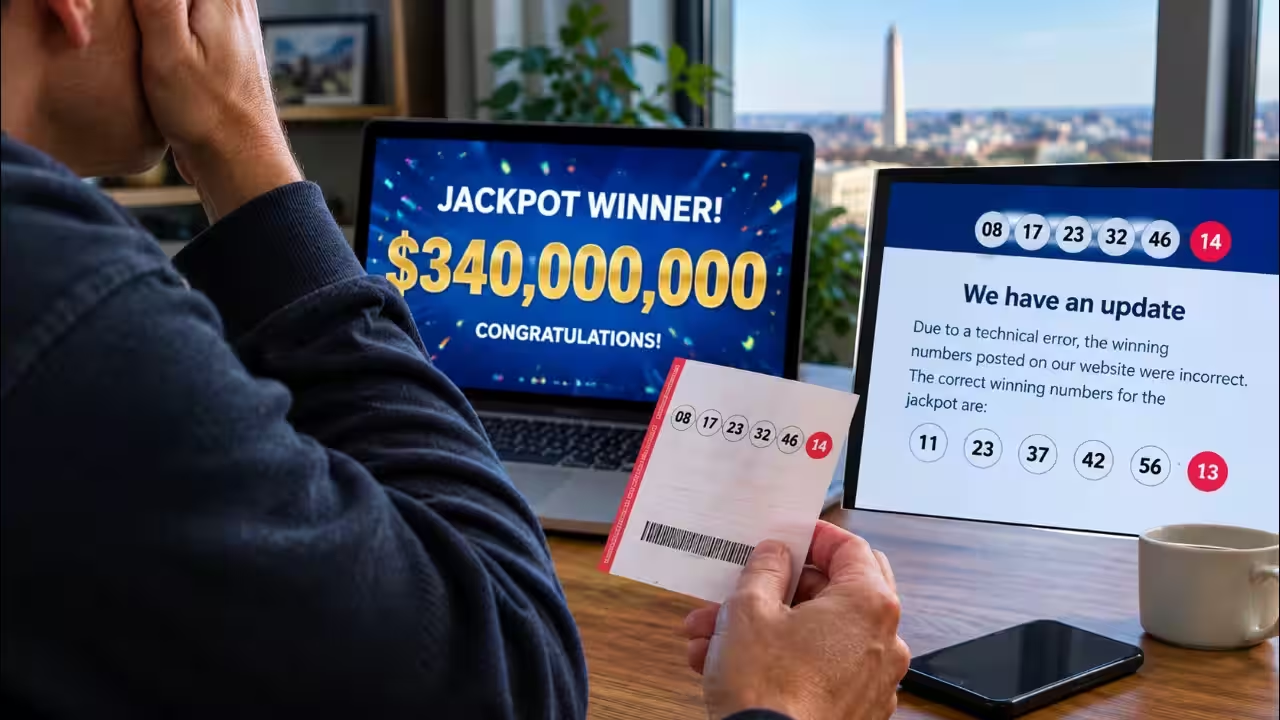
Winning a lottery jackpot is usually the kind of moment people imagine for years. For Washington, DC resident John Cheeks, that moment appeared to arrive in January 2023, when the numbers displayed on the DC Lottery website matched those printed on his Powerball ticket. The jackpot was estimated at $340 million. One problem remained: the numbers on the website did not match the numbers drawn in the actual Powerball drawing.What happened next turned a potential jackpot into a legal battle over whether the lottery company could be held liable for posting the wrong numbers on its website. By February 2024, Cheeks had filed lawsuits against the companies, demanding either the prize money or compensation due to the mistake.The numbers that appeared to make him a millionaireAccording to The Guardian, Cheeks bought his Powerball ticket on 6 January 2023, selecting numbers that had personal significance to him, including family birthdays. The following day, the actual Powerball drawing took place. Cheeks did not watch the drawing. Instead, when he checked the DC Lottery website in the early hours of 6 January, he saw what appeared to be the winning combination: 7, 15, 23, 32 and 40, with Powerball number 2. Those were the numbers on his ticket. The jackpot was listed at about $340 million.A website test turns into a legal battleWhen Cheeks attempted to claim the prize, however, lottery officials told him that his ticket was not a winner. According to Justia U.S. Law, he was eventually informed that the numbers he had seen online had been posted accidentally during website testing. Taoti Enterprises, the contractor working on the DC Lottery website, had been carrying out quality-assurance tests involving a change to time-zone settings. In a declaration filed with the court, Taoti project manager Brittany Bailey explained that the test numbers were mistakenly published on the live Powerball website instead of a development version.Timing was important. The numbers had been uploaded on 6 January, the day before the Powerball drawing on 7 January. Therefore, it was impossible for them to be the official numbers drawn during the event. The false numbers remained on the DC Lottery website until 9 January. Cheeks sought clarification over how the mistake occurred and raised questions about the lottery companies’ responsibilities after his numbers were displayed as a winner on the official website.The lawsuit filed by Cheeks was directed at the DC Office of Lottery and Gaming, Powerball, Taoti Enterprises and others. Cheeks’ attorneys claimed that, based on the published numbers, he was entitled to the prize. In addition, they argued that in case the jackpot was not won, Cheeks was eligible to claim damages due to negligence in publishing and maintaining the wrong numbers.Why the case raised bigger questions about lottery systemsThe lawsuit may highlight the gap between online results and the process used to validate a winning ticket. According to the DC Office of Lottery and Gaming, winning tickets had to be validated through its gaming system. The defendants further stated that the numbers on the website were clearly a technical error and not from the draw itself.The Iowa Lottery Board also pointed to another incident that offered some context to the dispute. In November 2023, incorrect Powerball numbers were briefly posted online in Iowa because of a reporting error. The numbers remained on the website for about seven hours, and six tickets were paid prizes based on the incorrect results, adding up to $69. The Iowa Lottery also dealt with other tickets presented during that period, with prizes ranging from $4 to $200. The Iowa incident was still very different from Cheeks’s case, which involved numbers that appeared to show he had won a jackpot worth hundreds of millions of dollars.You use AI every day. Now get your AI Quotient. Take the AIQ test.
Topics in this story
Gathered from external sources. Rights to this text belong to whoever originally published it.