New bomb threats force more European flights into emergency landings
Flights make emergency landings in France, Italy and Bulgaria days after bomb threats disrupted air traffic.
Hoax bomb threats have forced more than a dozen flights to make unplanned landings across Europe, days after a series of similar threats forced multiple flight diversions and the closure of an airport in Poland.
The warnings on Thursday affected flights between France, Italy, Bulgaria, Spain, Denmark, Poland, Romania, Ireland, the United Kingdom and the Czech Republic, among others.
An Aer Lingus flight from Dublin to Rome was rerouted to France after a suspected bomb threat and escorted by military aircraft to the Evreux airfield west of Paris, French authorities said.
France’s air force said it scrambled planes “as soon as the threat was reported”.
The office of Prime Minister Sebastien Lecornu said a bomb squad was in place at the airport and that 151 passengers and six crew were moved to safety.
In a separate incident, Bulgaria reported that three aircraft had requested emergency landings on its territory due to bomb threats, according to local media.
Planes flying from Denmark’s capital, Copenhagen, and Spain’s capital, Madrid, landed in Sofia, the Bulgarian interior minister said, according to broadcaster bTV.
“Upon landing, the necessary inspections were carried out in accordance with the applicable procedures and no issues were identified,” Bulgaria’s transport ministry told the Reuters news agency, adding that normal airport operations had resumed.
Meanwhile, Spanish authorities said three flights were affected by hoax bomb threats at Madrid airport. It remains unclear whether any of them were among the aircraft that made emergency landings in Sofia.
Four airplanes heading to Prague also received bomb threats. Czech police said all aircraft underwent pyrotechnic inspections, which yielded negative results. “The investigation of the threats has been taken over by NCTEKK [the National Centre against Terrorism, Extremism and Cybercrime] and currently no further information can be provided,” it said on X.
In Belgium, LOT Polish Airlines said that a flight from Warsaw to Brussels landed safely at its destination after a security warning.
“Following receipt of information regarding a potential security threat to flight LO235 from Warsaw to Brussels, the flight crew was notified of the situation and conducted an onboard inspection in accordance with established procedures. No suspicious items were found,” a LOT spokesperson said.
The aircraft landed at Brussels’ Zaventem airport, where security services carried out an additional inspection of the plane. No dangerous or suspicious items were found, while spokespeople for the airport said no additional security measures were necessary.
Separately, a Wizz Air flight from Milan to Warsaw was rerouted to Vienna after a hoax bomb threat was reported, the airline said.
“The diversion was carried out in accordance with established safety protocols and procedures,” Wizz Air said in a statement.
Another hoax bomb alert was reported on a Finnair flight from Helsinki to Rome that was escorted to the Italian capital by a fighter jet and checked by bomb disposal experts, an airport spokesman told the AFP news agency.
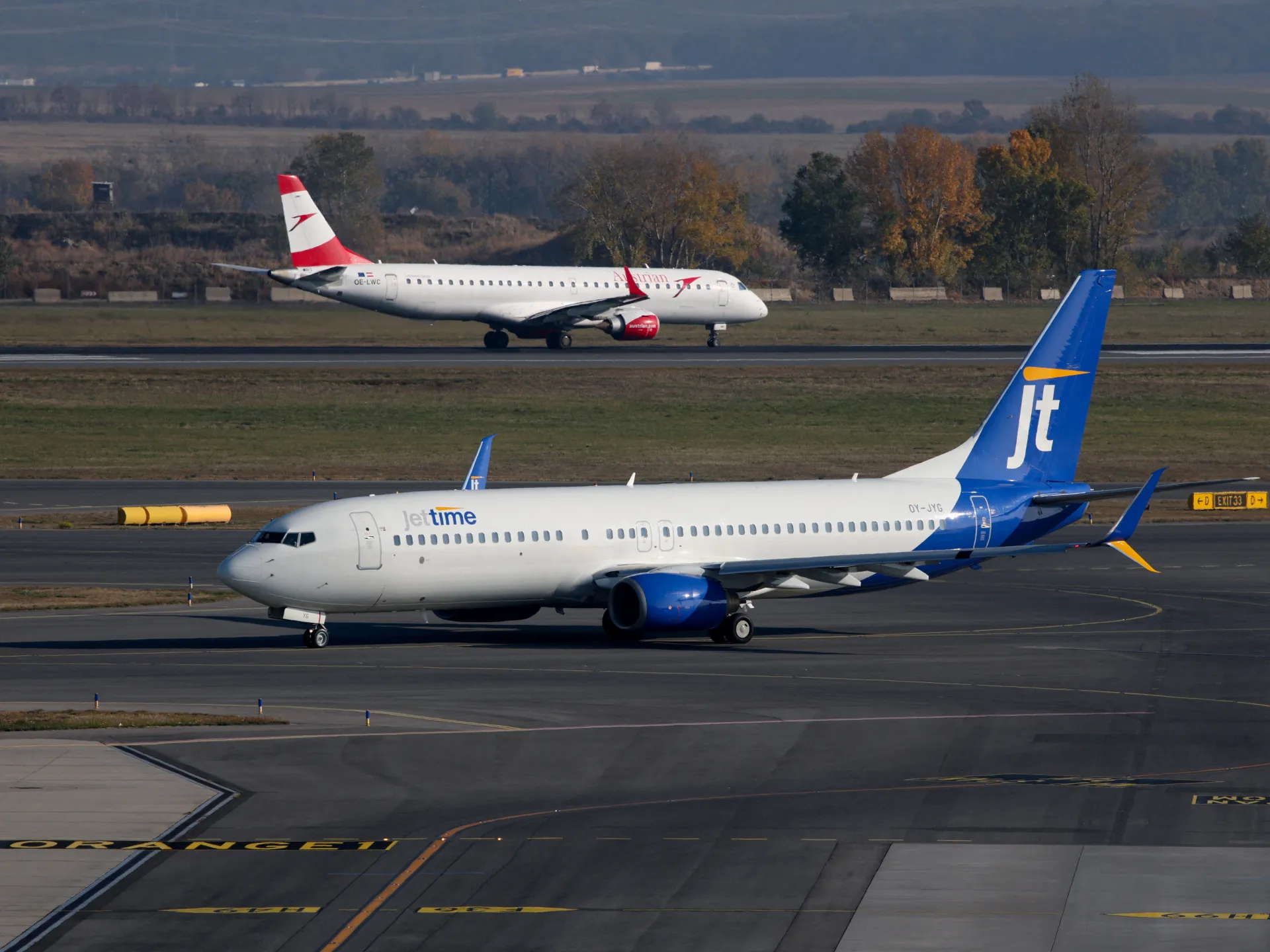
Elsewhere, a spokesperson for the Finnish carrier said a threat was made against its Helsinki-Vienna flight operated by Jettime on Thursday. The plane landed in the Austrian capital without incident.
While no country has attributed blame for the threats, they come as many European officials are accusing Russia of planning “hybrid attacks” — often cheap, easily deniable and not expected to trigger an armed response.
Britain’s Transport Secretary Heidi Alexander told UK media that flights across Europe were hit by “malicious hoax threats.”
The European Union said it was not yet clear whether the hoax bomb alerts were connected, and that it was following events closely with national authorities.
“Any threats against civilians are unacceptable,” EU transport commissioner Apostolos Tzitzikostas wrote on X, adding that it was “too early to draw conclusions on whether the reported incidents are linked”.
The disruption comes after several European flights were targeted by bomb threats on Tuesday, prompting emergency searches, briefly shutting down an airport outside the Polish capital, Warsaw, and leading the Italian Air Force to escort a Ryanair plane into Rome.
Philip Baum, a visiting professor of aviation security at Coventry University, told Al Jazeera that the number of planes forced to divert or land was “unusual”, but that “bomb threats themselves are not”.
“What has happened this week seems to be coordinated to some extent … and the authorities across multiple countries in Europe are evaluating the threat as being specific … and they demand that the aircraft actually land and be completely inspected.”
Reporting from Heathrow airport in London, Al Jazeera’s Frances Read said there was “no indication of who would be behind this, but there is a wider context in a time of geopolitical tension”.
“We’ve seen cyberattacks on other things, like a hack on supermarket refrigerators which turned up the temperature to spoil food in supermarkets across Europe, and we’ve seen drone incursions as well,” the correspondent said.
The German government has blamed Russia for a failed drone attack on Leipzig airport in August.
While there is no evidence linking the recent bomb threats to these previous attacks, “that is realistically what European governments will be looking at,” Read added.
Gathered from external sources. Rights to this text belong to whoever originally published it.