In 1921, Italian immigrant Simon Rodia began hand-building Los Angeles’s Watts Towers from steel, mortar and broken tile; 33 years later the construction had ended
Rest of World News: A small triangular lot in Los Angeles’ Watts neighborhood was purchased by Simon Rodia in 1921, who began building what would become the Watts Towers..
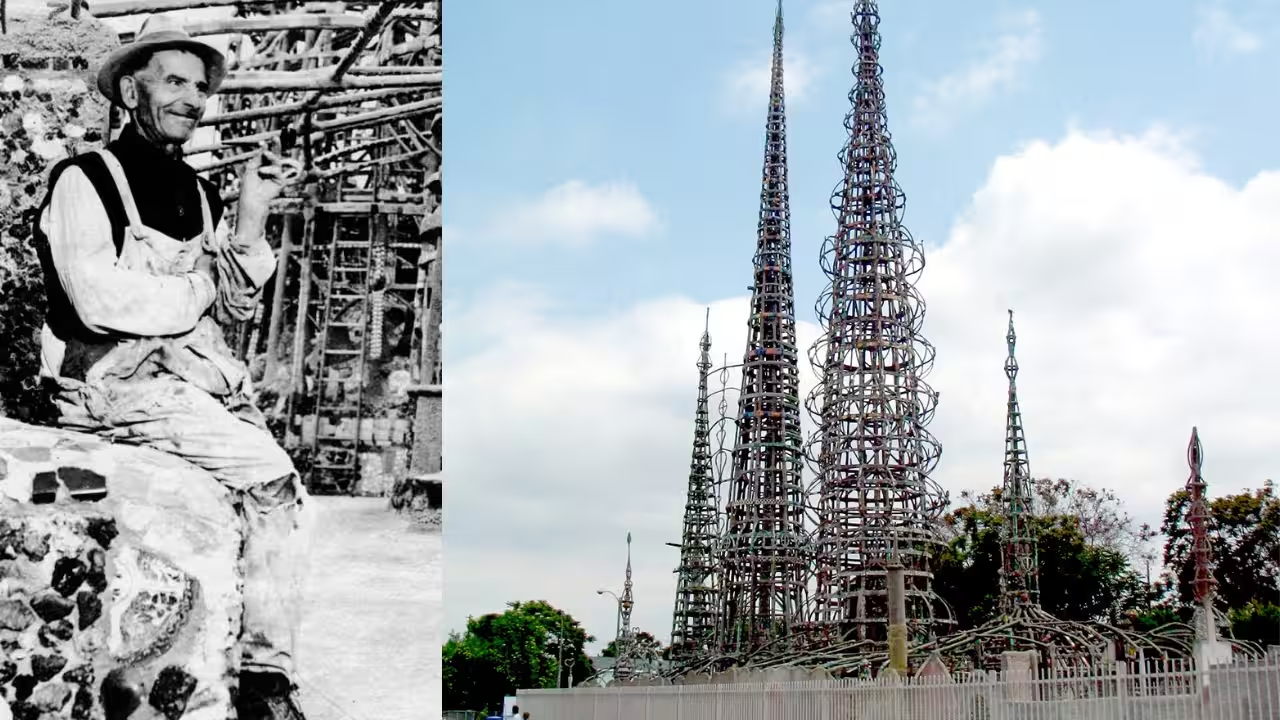
A small triangular lot in Los Angeles’ Watts neighborhood was purchased by Simon Rodia in 1921, who began building what would become the Watts Towers. He worked on the site for 33 years and used steel, wire mesh and mortar, then embedded pieces of glass, tile, pottery, shells and other objects into the surfaces. The National Park Service describes the site as containing three principal towers, six smaller towers and other sculptures, walls and decorative features. The tallest tower rises 99½ feet, despite having a foundation only 14 inches deep.Rodia turned a residential lot into a building siteRodia was born in Italy in 1879 and came to the United States when he was very young. He eventually settled in California, where he worked as a laborer and tile setter before moving to Watts. He purchased the property in 1921, and the lot measured about 140 by 150 by 68 feet and included his home, garden and the structures he would build over the following decades. The National Park Service says Rodia lived and worked there until 1954.Rodia built walls and smaller decorative structures before constructing the taller towers, and also repeatedly altered sections that he had already completed, which meant the site was never simply built once and left unchanged. The National Park Service registration describes the Towers as being in a continual process of construction and reconstruction between 1921 and 1954. Rodia changed the South Wall, altered the Center Tower and transferred some of its earlier elements to the West Tower.He built the towers without weldingRodia had no equipment for welding or riveting the steel; instead, he bent lengths of steel into the shapes he wanted and tied them together with wire. He then wrapped the framework in wire mesh and applied mortar by hand. The decorative materials went into the mortar while it was being worked, and the surfaces contain pieces of glass, shells and other objects, along with tile and pottery. The Library of Congress describes the construction as steel pipes and rods wrapped in wire mesh and coated with mortar, with porcelain, tile, glass and found objects incorporated into the finished structures.The National Park Service says he did not use ladders or scaffolding when building the tallest tower; rather, he waited for sections of cement to harden and used the horizontal rings around the structure as footholds. The West Tower was the tallest of the three principal towers, and reaches 99 1⁄2 feet, with its foundation only 14 inches deep. The Center Tower measures 97 feet 10 inches, while the East Tower reaches 55 feet and was the first of the three large towers Rodia constructed.Glass, pottery and shells became part of the wallsRodia used materials that were available to him rather than relying on a conventional architectural finish, such as pieces of pottery, colorful glass, shells, tile and other objects pressed into the mortar throughout the site. The National Park Service records decorated walls containing pottery shards, glass and other objects. One section includes rows of objects shaped like corncobs and boots, while the gazebo contains tiles, seashells, pottery and pieces of colored glass.The site also includes a structure known as the “Ship of Marco Polo,” a gazebo, fountains, decorated walls and smaller sculptures. The three main towers are connected visually and structurally with other elements across the property. California State Parks describes the Watts Towers as a work of architectural sculpture made from a steel core wrapped in wire mesh and covered with mortar, with tile, glass, shell, pottery and rocks embedded into the surface.Rodia left Watts in 1954Rodia gave the house, garden and Towers to a neighbor when he was in his mid-70s in 1954 and moved to Northern California. He never returned to Watts, and his house burned the following year. The National Park Service records that the fire destroyed the building but left part of its decorated facade, posts, fireplace and chimney.Los Angeles officials later considered demolishing the property because of concerns about their structural safety. A preservation campaign formed to oppose the demolition, and in 1959, an engineering test subjected the tallest Towers to forces intended to simulate severe wind conditions. The test equipment failed before the structures did, which helped preservationists make their case for keeping the site.The Towers became a protected landmarkThe Watts Towers were entered into the National Register of Historic Places in 1977, and the National Park Service listing identifies 1921 and 1954 as significant years for the property and records the site at 1765 East 107th Street in Los Angeles. California State Parks now describes the site as a National Historic Landmark and notes that it is operated by Los Angeles County. The tallest tower remains 99½ feet high, and the structures still stand on the original Watts property. The Library of Congress has also documented the Towers in its photographic collections, and its records identify the structures as the work of Italian immigrant construction worker Sabato Rodia and note that he built them between 1921 and 1954 using steel, wire mesh, mortar, and embedded decorative objects.Catch the latest World News and Live updates. Download the TOI app.
Topics in this story
Gathered from external sources. Rights to this text belong to whoever originally published it.