After polio left her unable to walk, Elsie MacGill returned to engineering and supervised production of more than 1,450 Hawker Hurricane aircraft, earning the nickname ‘Queen of the Hurricanes’
Elsie MacGill became one of Canada’s most influential engineers at a time when women faced considerable barriers in technical professions.
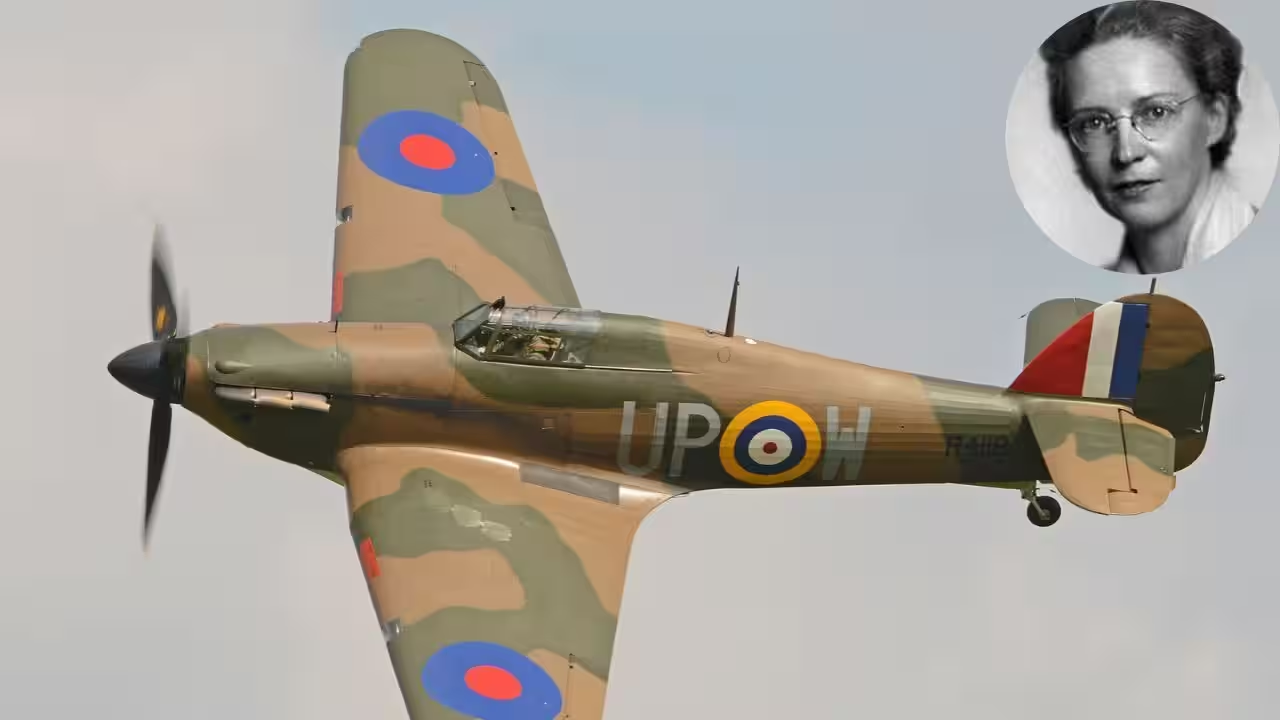
Elsie MacGill became one of Canada’s most influential engineers at a time when women faced considerable barriers in technical professions. After contracting polio and losing the ability to walk, she returned to engineering and took on a major role in producing Hawker Hurricane fighter aircraft during the Second World War. Her work helped keep aircraft production moving as Britain and its allies faced an urgent need for military planes. Known as the Queen of the Hurricanes, MacGill later became equally recognised for challenging discrimination against women and advocating for their rights.How did Elsie MacGill return to engineering after polioAccording to the Government of Canada, Elizabeth Muriel Gregory MacGill, known as Elsie MacGill, was born in Vancouver, British Columbia, on 27 March 1905. She grew up in a family that valued education and public engagement. Her mother, Helen Gregory MacGill, was a prominent advocate for women’s rights and became British Columbia’s first woman judge. This environment helped shape MacGill’s belief that women should have opportunities to participate in professional life.MacGill pursued engineering at a time when very few women entered the field. She studied electrical engineering at the University of British Columbia before continuing her education at the University of Toronto, where she earned a degree in electrical engineering. She later completed a master’s degree in aeronautical engineering at the University of Michigan, becoming the first woman in North America to earn a master’s degree in that subject, according to the Canadian Aviation Hall of Fame.Her progress was interrupted in 1929 when she contracted polio. The illness left her unable to walk, and she faced a long period of recovery. Rather than abandoning her career, she adapted to her physical limitations and continued working towards her professional goals. Her determination became a defining feature of her story, although her achievements rested on technical knowledge and practical experience as much as personal resilience.Her work transformed Canadian aircraft manufacturingMacGill began working in the aviation industry in the late 1920s and early 1930s, when aircraft engineering was developing rapidly. She worked for Fairchild Aircraft in the United States before moving to Canada, where she became involved with Canadian Car and Foundry, commonly known as Can Car, in Fort William, Ontario, now part of Thunder Bay.In 1938, MacGill became chief aeronautical engineer at Can Car. The appointment placed her in a senior technical position just as the threat of war was increasing demand for military aircraft. Her responsibilities involved designing, testing and improving aircraft, as well as helping the factory prepare for large-scale production.According to the Royal Canadian Mint, MacGill played a significant role in producing Hawker Hurricane fighter planes at the Canadian factory during the Second World War. The aircraft had an important place in Allied air operations, including the Battle of Britain in 1940, when British and Allied pilots fought to prevent German control of the skies.The Hurricane was not simply a design that could be manufactured without difficulty. Producing military aircraft in large numbers required detailed engineering work, skilled employees, reliable supplies and an organised factory. MacGill helped address those challenges while overseeing production and ensuring that the aircraft met the required standards.The Hawker Hurricane was adapted for cold weatherOne of MacGill’s most important contributions was helping the factory adapt the British-designed Hurricane for Canadian conditions. The aircraft needed to operate in colder environments, so she worked on improvements that included equipment to prevent ice from building up on its wings and tail. According to the Royal Canadian Mint, she also helped develop adaptations such as ski landing gear and de-icing systems.These changes mattered because ice could interfere with an aircraft’s ability to fly safely. MacGill’s engineering work helped make the Hurricane more suitable for the conditions in which Canadian-built planes might be used. Her role combined practical problem-solving with the larger challenge of supplying aircraft to the Allied war effort.The factory itself underwent a major transformation. Veterans Affairs Canada reports that, within a year, the plant was producing 3 fighter aircraft a day, supported by a workforce of around 4,500 people. The operation produced approximately 1,450 Hurricanes in just two years.The scale of the achievement was particularly striking because Can Car had not previously operated at this level of fighter-aircraft production. MacGill helped guide the engineering work required to turn the factory into a major supplier during wartime.How did MacGill earn the Queen of the Hurricanes nicknameMacGill’s wartime contribution brought her public recognition beyond the engineering community. In 1942, she was featured in True Comics, which used the nickname Queen of the Hurricanes to describe her achievements. The name reflected her responsibility for the engineering work behind the production of more than 1,450 aircraft.Her career did not end with the Hurricane programme. After the contract was completed, she became responsible for production of 835 Curtiss Helldiver aircraft for the US Navy, according to Veterans Affairs Canada. Her experience showed that her skills extended beyond a single aircraft model or manufacturing project.MacGill also used her standing to advocate for women. The Government of Canada records her involvement with the Canadian Federation of Business and Professional Women’s Clubs, where she served as national president. She argued for greater opportunities for women in professional and public life, at a time when their access to many careers remained restricted.In 1967, she joined the Royal Commission on the Status of Women in Canada. The commission examined the position of women in Canadian society and helped bring questions of equality into national debate. Her participation reflected a broader commitment that had developed alongside her engineering career.The Royal Aviation Museum of Western Canada also notes that MacGill became a technical adviser to the United Nations International Civil Aviation Organization after the war.Her achievements remain part of Canada's engineering historyMacGill died in a car accident in Cambridge, Massachusetts, on 4 November 1980, aged 75, according to Veterans Affairs Canada. Her legacy has since been recognised through engineering and aviation honours, as well as public commemorations.In August 2023, the Royal Canadian Mint issued a commemorative one-dollar circulation coin honouring her. Designed by Claire Watson, the coin depicts MacGill holding rolled-up blueprints, with the Maple Leaf Trainer II she designed and a Canadian-made Hawker Hurricane shown alongside her. The Mint presented the coin as recognition of both her engineering achievements and her contribution to women's rights.The title Queen of the Hurricanes captures only one part of MacGill’s life. Her influence extended from the factory floor to national discussions about equality.You use AI every day. Now get your AI Quotient. Take the AIQ test.
Topics in this story
Gathered from external sources. Rights to this text belong to whoever originally published it.