An American citizen was arrested at airport by Border security for wiping his phone with PIN; Federal judge approves search without warrant; here's what new ruling says on phone and laptop searches
US border agents can search people’s phones and other electronic devices without a warrant or any suspicion, a federal judge has ruled.
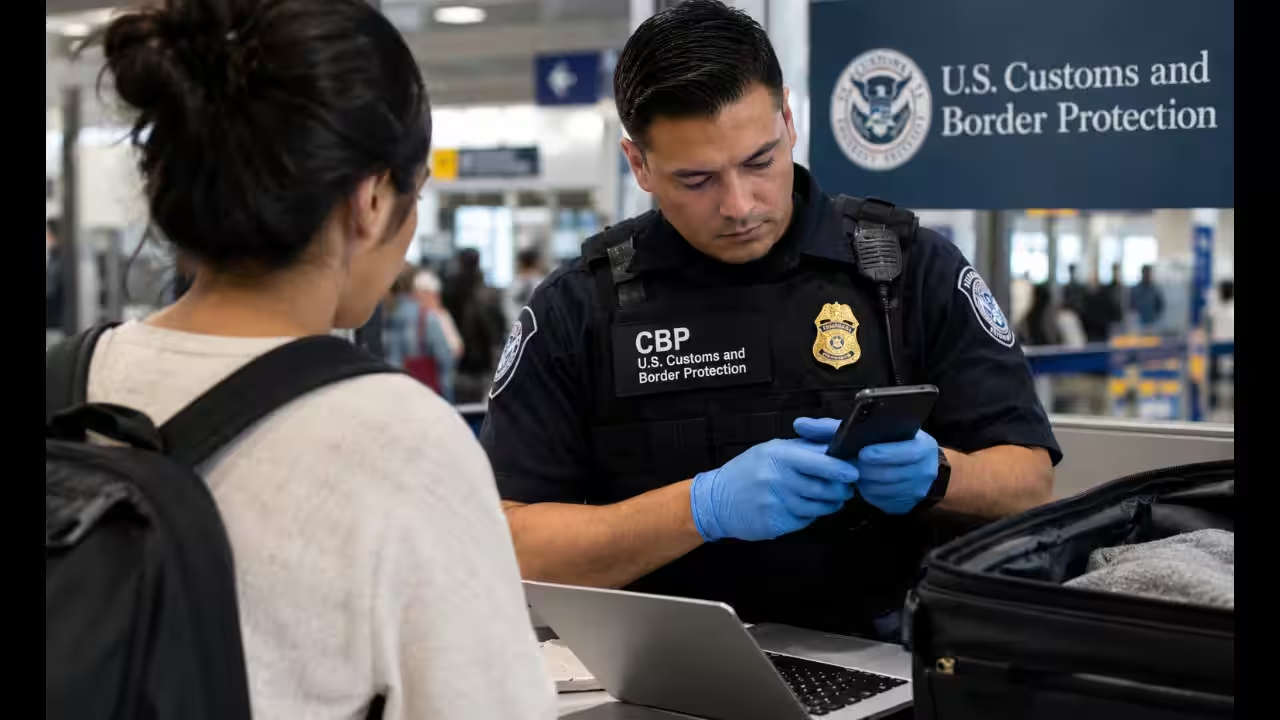
US border agents can search people’s phones and other electronic devices without a warrant or any suspicion, a federal judge has ruled. In a ruling last month, the US Court of Appeals for the 2nd Circuit said that border agents do not need reasonable suspicion before manually searching a traveller's cellphone at the border. The ruling comes months after an Atlanta resident, Samuel Tunick was arrested on charges of destruction of property for wiping his phone with PIN during airport search. Prosecutors then accused Tunick of destroying potential evidence. The latest ruling stemmed from a bank fraud and money laundering case against a man in New York City in 2024.What the court saidWriting in the 2nd Circuit’s majority opinion, Judge Steven J. Menashi said that border agents in the case stated above and others can “manually” look through someone’s phone or other device without needing to give a reason. In the ruling, Menashi said that there should be no distinction between a phone and other types of property, equating it to luggage or a notebook.“Because a cellphone is property, our precedents establish that the government does not need to have reasonable suspicion before searching a traveler’s cellphone at the border,” he wrote.What was the Atlanta case where man wiped his phone with PINAs reported by The Guardian, Samuel Lutnick’s case centred on GrapheneOS, a custom Android operating system that runs in place of the software on most modern Google Pixel devices. These include the ability to erase a device by entering a designated passcode. The incident occurred at Hartsfield-Jackson Atlanta International Airport on January 24, after Tunick returned from the Dominican Republic. Tunick’s attorneys confirmed GrapheneOS was running on his phone.Agents repeatedly asked Tunick to unlock his phone and warned that it would be seized if he refused. After he eventually provided a passcode, “the screen went blank, flashed several times, and the phone appeared to restart,” according to the defence motion. Data stored on the device was subsequently lost. Prosecutors then alleged that the wipe was a deliberate attempt to destroy potential evidence. Tunick’s lawyers maintain that the underlying search violated his constitutional rights. The GrapheneOS has a feature that allows the device owner to set a passcode that deliberately wipes the contents of that device if entered instead of the user’s unlock passcode.Here’s what U.S. Customs and Border Protection said about border search of electronic devices at ports of entryU.S. Customs and Border Protection (CBP) is responsible for protecting our nation’s borders and enforcing numerous laws at U.S. ports of entry. CBP’s ability to lawfully inspect electronic devices crossing the border is integral to keeping America safe in an increasingly digital world.All travelers crossing the United States border are subject to CBP inspection. On rare occasions, CBP officers may search a traveler’s mobile phone, computer, camera, or other electronic devices during the inspection process. These searches have been used to identify and combat terrorist activity, drug smuggling, human smuggling, bulk cash smuggling, human trafficking, intellectual property rights violations and visa fraud, among other violations. They enable the discovery of digital contraband, such as child pornography, illicit transfer of restricted or classified information, or other export-controlled information. Furthermore, border searches of electronic devices are often integral to determining an individual’s intentions upon entry to the United States and thus provide additional information relevant to admissibility of foreign nationals under U.S. immigration laws.CBP has established strict guidelines, above and beyond prevailing legal requirements, to ensure that these searches are exercised judiciously and responsibly and are consistent with the public trust.The number of travelers crossing the border that experience a border search of their electronic devices is small. In Fiscal Year (FY) 2025, less than 0.01 percent of arriving international travelers encountered by CBP at a port of entry had their electronic devices searched. Additional statistics are available in the Frequently Asked Questions below and Relevant Policies and Documents box to the right of this page.You use AI every day. Now get your AI Quotient. Take the AIQ test.
Topics in this story
Gathered from external sources. Rights to this text belong to whoever originally published it.