In 1968, the Netherlands reclaimed land from the sea for factories; when the development was abandoned, birds colonised it and the accidental wetland became a 56-square-kilometre nature reserve
Rest of World News: Discover the transformation of a 1968 abandoned industrial site into the thriving Oostvaardersplassen nature reserve, showcasing how ecological recovery can reshape landscapes and support biodiversity.
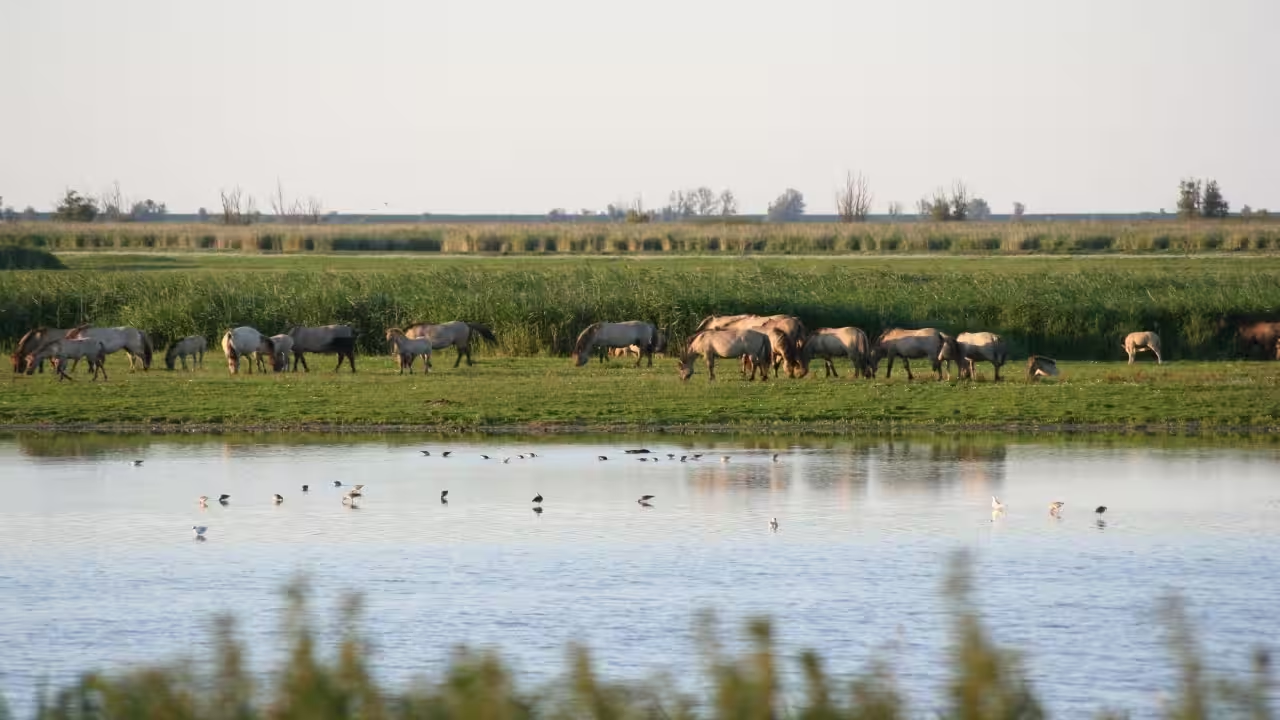
In 1968, Dutch engineers drained a stretch of the IJsselmeer near Lelystad to create new land meant for factories and warehouses, a history recorded on the official site page kept by Nationaal Park Nieuw Land. The industrial estate was never built. The abandoned ground filled with rainwater and seepage, wild geese settled on it within a few seasons, and the site gradually became the Oostvaardersplassen, a wetland that now covers 56 square kilometres and draws researchers from across Europe.Part of a much larger Dutch programme to reclaim land from the old Zuiderzee for farms, housing and industry, the reserve lies within the Zuidelijk Flevoland polder. Planners expected the newly drained ground near Lelystad to carry factories once the clay soil had settled enough to build on. Workers sowed reeds across the marshy sections to stop that soil from shifting during the wait. The construction that was meant to follow never arrived, largely because the oil crisis of the 1970s slowed the wider Dutch economy and left the planned industrial estate on paper only. With no bulldozers on site, the reed beds and shallow pools simply carried on spreading through the wet clay. That gap between plan and outcome makes the Oostvaardersplassen unusual among nature reserves. Almost nowhere else in Europe did a protected wetland begin life as a rejected industrial park rather than a landscape someone set out to conserve.Geese arrived before officials changed their mindsGreylag geese found the marshy ground long before any government body decided what to do with it. Their grazing kept young willow and reed growth in check, which stopped the site from turning into scrubby woodland and instead let open water and reed beds spread further. That habitat pulled in a growing list of migratory birds, from spoonbills to great white egrets, along with species that had grown scarce elsewhere in the Netherlands.A group of ecologists led by Frans Vera noticed what was happening and began pushing for the site to be protected rather than eventually drained for the industry it was originally meant to hold. Their case succeeded. By 1983 the site had been formally designated a nature reserve by Staatsbosbeheer, the Dutch state forestry service, and in 1989 it earned recognition as a Wetland of International Importance, a status confirmed in the site record kept by the Ramsar Sites Information Service and normally reserved for wetlands with long, well-documented ecological histories rather than ones barely two decades old.From accidental swamp to a rewilding case studyOnce protected, the Oostvaardersplassen became a live experiment rather than a conventional park. Vera and the management team introduced Heck cattle, Konik horses and red deer to graze alongside the geese, aiming to recreate the kind of open, herbivore-shaped landscape that may have covered parts of prehistoric Europe. Left largely without supplementary feeding, the herds bred, competed for food and thinned out in hard winters much as wild populations would. That management approach was the subject of an in-depth account carried by Ecos.That approach has not been free of controversy. Harsh winters have periodically killed large numbers of grazing animals, prompting public debate in the Netherlands over how much human intervention a wild reserve should allow. Independent panels have since pushed for more active management of herd numbers, and rules around supplementary feeding have shifted more than once in response.The site has also grown in size and status since its early years. It became part of Nieuw Land National Park when that park was established in 2018, joining neighbouring dune and marsh areas under a single protected designation. Visitors can now walk marked trails along the reserve's edges and watch herds of horses and cattle roam ground that was originally planned for warehouses and loading docks. What began as surplus polder, too wet and too unstable for the factories it was drained for, is today one of the most closely watched rewilding sites in Europe, offering scientists a rare long-term record of how quickly wild habitat can reclaim ground that humans once carved out of the sea for entirely different purposes.Catch the latest World News and Live updates. Download the TOI app.
Topics in this story
Gathered from external sources. Rights to this text belong to whoever originally published it.