A plan for 11 geothermal test wells split a California valley and left one farm with a reported $70,000 asking-price cut
A proposed geothermal energy project in Surprise Valley has ignited heated discussions among locals about environmental impacts and property values, highlighted by a reported $70,000 reduction in a farm's asking price.
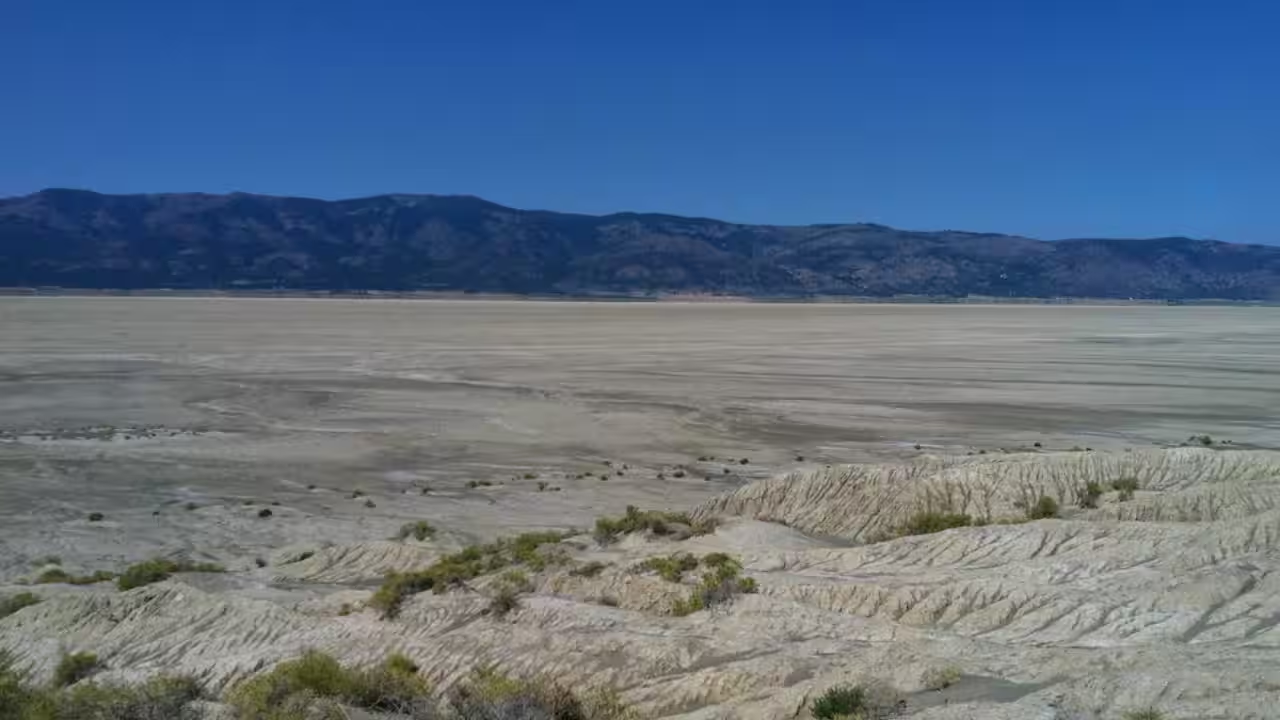
Geothermal energy produces electricity from heat beneath the Earth’s surface, and projects that tap it can raise difficult questions for nearby communities. At Surprise Valley, in California’s Modoc County, a planned geothermal exploration project has set interest in renewable energy against concerns about environmental protection and the future of rural land.The geothermal exploration project involves drilling exploratory wells to assess the area’s geothermal potential. Although the work could eventually lead to energy generation, residents have raised concerns about its effects on groundwater, the region’s hot springs, and neighboring landowners. SFGATE reported that Jeff and Sheila Cotton cut their farm’s asking price by $70,000 after prospective buyers raised concerns about the project, though the reduction has not been independently verified.The county's review outlines the scale of the proposed drillingThe project’s California Environmental Quality Act filing describes up to 11 geothermal test wells on nine well pads. The wells would be drilled to depths of 3,000 to 5,000 feet, allowing researchers to study temperature, pressure, flow rate, and the chemical composition of geothermal fluid. The filing places the 39.5-acre site between Surprise Valley Road and County Road 13. It also flags groundwater, tribal cultural resources, wildfire, transportation, and air quality as potential concerns. The filing says the project would also need three new access roads off Surprise Valley Road, while existing routes may have to be widened or surfaced to handle drilling equipment. It lists 15 jobs tied to the 39.5-acre site and identifies the area as industrial use under a use permit. This describes proposed activity, not a completed development. Exploration lets developers confirm that a resource could support electricity generation, and finding a suitable resource does not by itself mean a commercial power plant will be built.Earlier research established the valley's geothermal potentialEarlier geothermal exploration in Surprise Valley was funded by the California Energy Commission. The commission’s report Geothermal Exploratory Drilling, Surprise Valleydescribes a study that set out to evaluate underground temperatures and reservoir characteristics. Drilling of the Warner Mountain Energy-Exploratory 1 well (WME-E1) took place from May 15 to June 8, 2019, and reached 3,605 feet rather than 4,000 feet. The work included well tests, geological logging, geochemical sampling, and reservoir modeling. Based on that modeling, the report estimates that the well could sustain its maximum artesian flow for 20 years or more, and it characterizes the reservoir as shallow and highly productive at 230°F, with productivity indices that are high by geothermal industry standards. The above-mentioned study also notes the possibility of a hotter, deeper reservoir that merits further research. This is one reason the area has been considered suitable for geothermal development. However, results from a single earlier well do not guarantee the suitability of all proposed drilling sites.Residents weigh potential economic benefits against environmental concernsThe proposed exploration has prompted disagreement over how geothermal resources should be developed in the valley. Supporters see the possibility of jobs, investment and a new source of energy for the region. Others are concerned about the effects drilling could have on groundwater, natural hot springs, agricultural land and the area's rural character. The commission’s earlier report Geothermal Exploration, Economic Analysis and Distributed Energy Resource Demonstration, covers work on the eastern side of Surprise Valley, which began with a geoscience survey of about 800 acres and three temperature gradient wells used to build a geologic cross-section and a conceptual model of the resource. The demonstration stage included a 20 kW distributed-energy module tied to a 190°F hot spring, but a six-minute test with ten 100-watt lamps produced fluctuating, intermittent electricity, and the module was never commissioned.The above mentionedGeothermal Exploratory Drilling, Surprise Valleystudy also covered potential uses of the resource, including power generation and agricultural use of geothermal water. Taken together, the two reports show that economic uses of the area’s geothermal resource have been studied, although the demonstration module never reached commissioning. Groundwater, cultural resources and the other concerns listed above are among the topics the environmental review of the current project addresses. SFGATE’s reporting also describes residents’ concerns about groundwater, nearby property values, and the valley’s rural character, set against the project’s potential for renewable energy and local jobs.The reported $70,000 price cut illustrates the uncertaintyThe farm at the center of the reported real estate dispute raises another question: how does the prospect of nearby drilling affect buyers’ decisions? The official documents cited in this article cannot confirm the transaction, the concerns buyers raised, or the size of the discount. A single sale would not be enough to establish a broader decline in land values in Surprise Valley.The outcome will depend on exploration and reviewFurther development would depend on the results of exploration and review. In Surprise Valley, the economic and environmental questions are closely linked. Geothermal energy could bring economic benefits to the area, but residents are also concerned about the consequences for their groundwater, hot springs, and agricultural operations.You use AI every day. Now get your AI Quotient. Take the AIQ test.
Topics in this story
- geothermal energy
- Surprise Valley
- environmental impact
- California geothermal project
- renewable energy
- Surprise Valley geothermal project
- California geothermal energy
- environmental concerns geothermal drilling
- geothermal test wells
- property value impact geothermal
- renewable energy California
- groundwater concerns geothermal
Gathered from external sources. Rights to this text belong to whoever originally published it.