In 2016, WFP helped Sahrawi refugees grow barley without soil in the Sahara; hydroponic trays produced fresh animal feed in seven days while using 90% less water
Rest of World News: In 2016, the World Food Programme introduced innovative hydroponics to empower Sahrawi refugees in the Sahara with soil-free barley cultivation, drastically improving animal feed production and saving water.
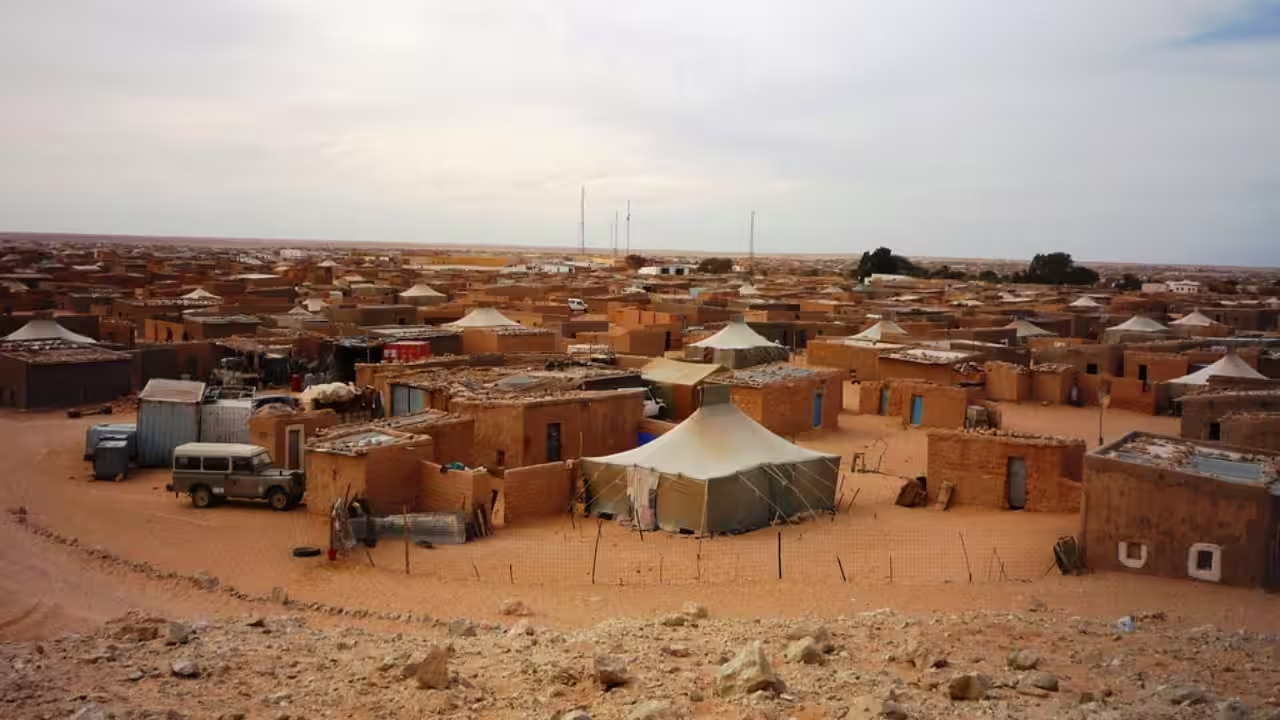
Tens of thousands of Sahrawi refugees living in camps close to Tindouf in southwest Algeria face severe constraints on growing food. The arid environment provides little agricultural land or water, while families depend heavily on livestock such as goats and camels for food and income. In 2016, Sahrawi agricultural engineer Taleb Brahim began experimenting with hydroponics after seeing how the technique could grow fresh fodder with little water. In March 2017, he presented the idea to the World Food Programme's Innovation Accelerator, which selected it for further development. WFP staff in Algeria then worked with Brahim, the Innovation Accelerator, and Oxfam to develop and test low-tech hydroponic units built with locally available materials. Rethinking nearly every tenet of traditional farming was necessary to get that system to function consistently in desert environments.Barley cultivation without soilHydroponics is especially useful in areas with poor, nonexistent, or simply too salty soil to produce crops since it enables plants to grow with their roots hanging directly in nutrient-enriched water rather than planted in the ground. Barley seeds were spread across shallow trays and kept moist inside simple units built from locally available materials. The systems could be powered by solar energy and required only a water pump, making them considerably simpler than the high-tech hydroponic equipment first tested. The World Food Programme's own project overview notes that this method needs about ninety per cent less water than traditional soil-based agriculture, since the water feeding the trays can be captured and reused rather than lost to dry desert soil. Within about seven days, the barley in each tray sprouted into a dense mat of fresh green fodder ready to be fed straight to animals, cutting what would normally be a growing season for a fully mature grain crop down to little more than a week for usable feed. That speed turned out to matter just as much as the water savings once the trays reached the camps themselves.Feeding animals within a weekBefore the hydroponic units came, household scraps and whatever the animals could forage were usually the best refugees could do for feed, and the lean, unproductive condition of many herds showed it. Families who adopted the trays reported an improvement within months, with notably increased milk and meat production after their goats and camels had regular access to fresh green feed rather than dried trash.A Sahrawi participant named Maryam said her community still could not quite believe they now had fodder growing right there in the camp. The technique also took significantly less work than attempting to farm in open desert soil, as a family could manage a few trays inside a shaded building, without requiring vast tracts of land or heavy irrigation equipment. As the approach proved successful in the camps, WFP and its partners began adapting the technology for other locations.Taking the idea beyond the Sahara DesertWithin a few years of the first trial, identical hydroponic fodder units had been installed in refugee situations in Chad and Jordan, each time slightly customised to local conditions but built around the same core idea of growing more food with significantly less water. Research partners such as the Fraunhofer Institute later worked on expanding the concept beyond animal fodder toward vegetables like lettuce and herbs, aiming to stretch the same low-water approach further into human diets rather than just livestock feed. For populations in some of the driest and most unstable places in the world, the appeal of a system that requires no soil, uses up to 90% less water and produces useful fodder within days is clear.Catch the latest World News and Live updates. Download the TOI app.
Topics in this story
Gathered from external sources. Rights to this text belong to whoever originally published it.