Appeals court OKs Army plan to blow up tons of lead-based explosives in Iowa, hours after Trump put it on hold
The blast risks sending a plume of toxic particles into nearby communities, but the Army says a controlled explosion is the safest way to deal with the highl...
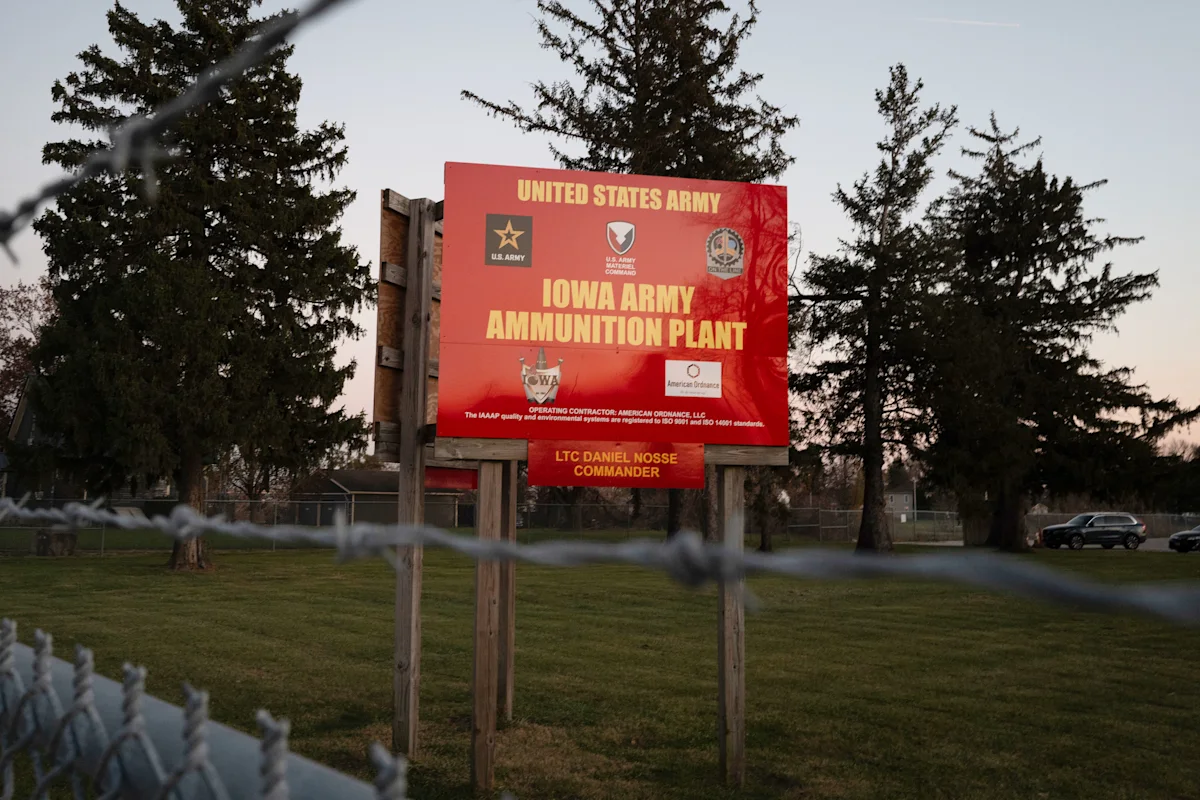
A federal appeals court cleared the way for the U.S. Army to detonate 68 barrels of toxic lead-based explosives stored at a facility in Iowa on Monday, hours after President Trump announced that he had halted the plan. The court's order is the latest twist in an ongoing controversy over the military's effort to dispose of the volatile material in a controlled explosion before it potentially detonates on its own.
Trump wrote on Truth Social Monday morning that, while he believes the "proper course is to get rid of this longterm problem," he would not allow the Army to destroy the material until federal courts sign off on the plan and Iowa's Democratic Gov.-elect Rob Sand gives his approval.
It's unclear whether Trump will continue to insist on Sand's sign-off before allowing the detonation, which had been scheduled for Wednesday, to be carried out.
The explosion threatens to send a plume of toxic lead dust over local communities, livestock and farmland in the surrounding area. Environmentalists sued to stop the detonation last week, setting off a back-and-forth legal battle. The military has argued that the controlled detonation must take place soon, before impending cold weather potentially causes the material to combust on its own.
Here's what led to the current situation, what the dangers are and what might happen next.
The roots of the controversy reportedly date back to at least March, when the Army discovered nearly 5 tons of deteriorating lead azide, a dangerous bomb-making material, stored at an ammunition plant in rural Iowa. According to legal filings , the lead azide had crystallized over the course of two decades, leaving it highly susceptible to exploding. The material is so volatile, the Army says, that the friction and motion of attempting to move it somewhere safer would likely cause it to explode.
According to the New York Times, the Army at first hired a chemical company to carry out a process that could neutralize the material without an explosion, but later determined that detonating it was the right course of action.
Earlier this month, the Environmental Protection Agency approved an emergency permit allowing the Army to carry out a controlled detonation of the lead azide.
The detonation was initially scheduled to take place on Friday. But local environmental groups filed a lawsuit aiming to stop the plan from going forward, arguing that the EPA failed to apply proper environmental standards when it approved the detonation, creating the risk of "immediate, irreparable harm" to surrounding communities.
On Thursday, a federal appeals court issued an order temporarily blocking the Army from carrying out the detonation. But the Army argued in a filing Saturday that the situation has become so dangerous that it has the authority to proceed under a separate emergency exemption.
The blast was on track to happen on Wednesday until Trump intervened. The court issued its ruling allowing the detonation to proceed about five hours after Trump's post was published.
Lead is a neurotoxin that poses a serious risk to those who are exposed to it, particularly pregnant women and young children. No one disputes that blowing up the barrels of lead azide could release dangerous material to the surrounding area. The Army shared modeling showing lead particles from the explosion traveling as far as 40 miles and airborne dust drifting up to 100 miles.
The American Lung Association has advised people in the area to stay indoors for 24 to 48 hours after the blast to avoid exposure.
The Army argues that, whatever risks the planned detonation poses, doing nothing creates the danger of something much worse.
The real choice … is not between a detonation and no detonation. It is between a planned and mitigated detonation and an unplanned and unmitigated explosion," the government wrote in a legal filing .
But environmental groups have countered that the public was only given a few days' notice before the initial planned detonation, not nearly enough time for local residents to understand the full scope of the risk and take the steps they need to stay safe.
The groups also questioned how the Army allowed the situation to become so urgent when it had been aware of the material for at least eight months. Sand echoed that sentiment in a post on social media on Sunday.
"No good options exist and the situation is more dangerous and unpredictable than it ever should have been," he wrote on X . "Most clearly, since a contract to remove explosive risk was signed this spring, we must all be asking why it was cancelled, why nothing was done, and why we are rushing to demolition now in late November."
Officials haven't yet said whether the plan to detonate the material on Wednesday remains in place and Trump hasn't clarified whether he will still seek Sand's approval in the wake of the court's filing.
Topics in this story
Gathered from external sources. Rights to this text belong to whoever originally published it.