Iran says forces 'stronger' than at beginning of war
Iran said on Saturday its military had grown stronger since the outset of the war with the United States, as mediators including Qatar worked to prevent any...
Iran said on Saturday its military had grown stronger since the outset of the war with the United States, as mediators including Qatar worked to prevent any return to fighting after months of deadlock in the conflict.
Washington also offered a $20 million reward for information about Tehran's nuclear programme.
Iranian Foreign Minister Abbas Araghchi said on Instagram on Saturday that over the past 48 hours he held phone calls with ministers from 12 countries.
US President Donald Trump, meanwhile, called Qatari Emir Sheikh Tamim bin Hamad Al Thani on Friday to discuss efforts to end the war.
Qatar's Prime Minister Sheikh Mohammed bin Abdulrahman Al Thani applauded colleagues in the US administration for "genuine intentions to find a way to contain the situation and to de-escalate it".
"Thanks also to some wise voices in Tehran, we have prevented that from getting out of control," he said in Oxford on Friday.
Trump said Iran -- which he stressed has had its economy and military severely damaged over eight months of war -- is eager to end the conflict.
"We're dealing with them now. They want to make a deal very badly," he said.
The US leader previously talked up the possibility of resuming heavy strikes on Iran but has since walked back from the idea.
Nevertheless, the US military has conducted occasional limited strikes.
Late on Saturday, the official IRNA news agency reported two explosions on the island of Qeshm in the Strait of Hormuz, hours after two earlier explosions were reported and the military said it had shot down a drone over the island.
Washington last attacked Qeshm on Tuesday.
The Middle East conflict began when the US and Israel attacked Iran in late February.
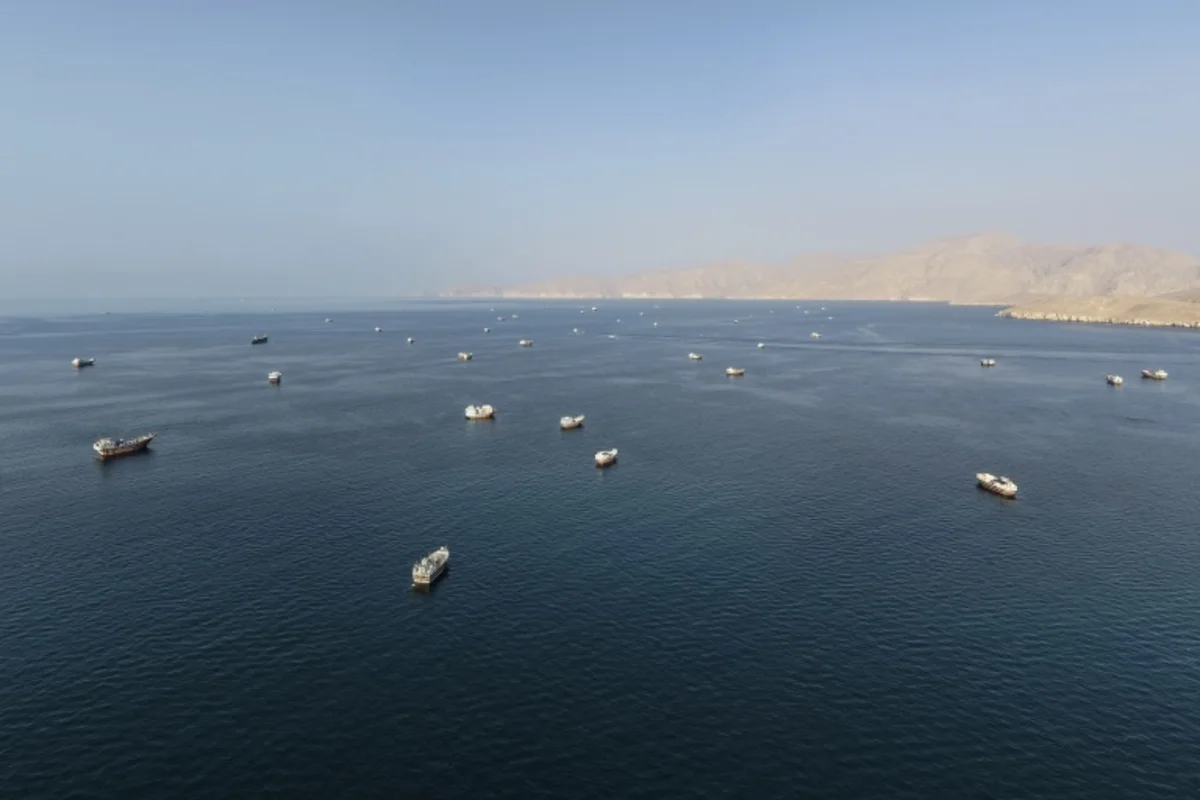
Tehran has since sought to limit traffic through Hormuz, which normally carries about one-fifth of global oil consumption.
Iranian army spokesman Mohammad Akraminia said the strategic waterway would remain closed until Tehran's demands were met by Washington.
He also said Iran's forces "are on higher alert and are stronger than they were at the beginning of the war".
"They now possess greater motivation, commitment and self-confidence," he added, state news agency IRNA reported on Saturday.
"Under the order of the Supreme Leader, the response of the armed forces will be immediate, effective and without geographical limitations."
Revolutionary Guards spokesman Hossein Mohebbi told Fars news agency on Saturday that "the increase in the range of Iran's missiles continues steadily".
He spoke days after Trump's Republican Party suffered heavy losses in midterm elections widely viewed as a referendum on the US leader's turbulent second term.
Ali Vaez, of the International Crisis Group, told AFP that "having suffered electoral defeat and failed to secure military victory, Trump is unlikely to tolerate the trifecta of diplomatic humiliation".
"The midterms have raised the political cost of war, but a lame duck Trump could become a flame duck if Iran denies him a face-saving exit," he added.
"Both sides may be mistaking the other's weakness for a reason to hold out rather than compromise."
Qatar's prime minister said "we cannot... just wait for this moment of a perfect deal" as there would never be one.
He added that priority should be given to addressing the nuclear issue and ensuring freedom of navigation and the security of the Gulf.
Iran's military said in a statement carried by state TV on Saturday that a tanker in the Strait of Hormuz "caught fire and came to a halt after striking a naval mine".
The US had recently said all mines had been cleared from the waterway.
On Friday, the US military said it was offering a $20 million reward "and possible relocation" for information about Iran's nuclear programme.
Rewards for Justice, a State Department programme, was seeking information on topics including "facilities, equipment, and associated personnel, such as those in the scientific community," US Central Command said on X.
Trump has repeatedly said US forces have effectively obliterated Iran's nuclear programme.
"If we didn't hit Iran, you wouldn't have Israel today," he said on Friday.
"If they had nuclear, they would have used nuclear. They would have obliterated the Middle East."
Topics in this story
Gathered from external sources. Rights to this text belong to whoever originally published it.