Jude Law and several celebrities join residents to oppose a proposed London housing development; the 45-home project near Blackheath station faces objections over parking, local businesses and the area's character
A proposed housing development near Blackheath station in south-east London has drawn opposition from residents and prominent figures, including actor
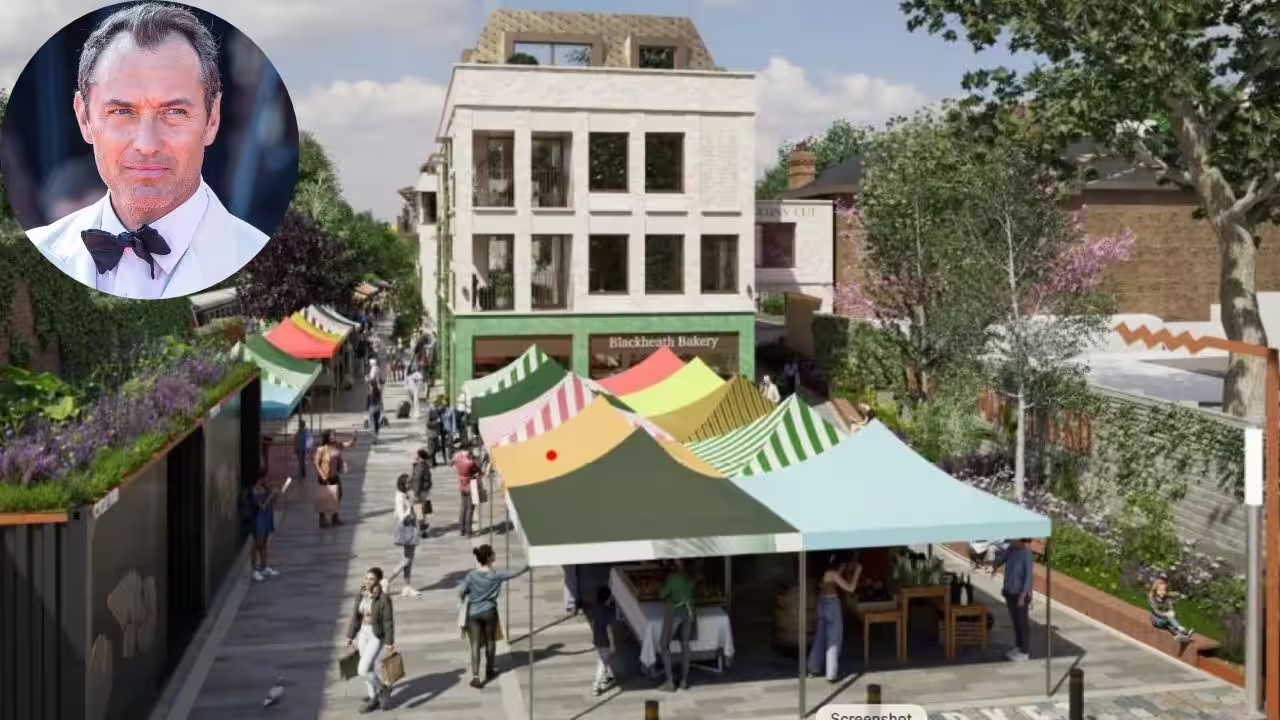
A proposed housing development near Blackheath station in south-east London has drawn opposition from residents and prominent figures, including actor Jude Law, Dominic Cooper, broadcaster Jools Holland and musician Manfred Mann. The plans, submitted by Acorn Property Group, would replace much of the station’s car park with 45 homes, raising concerns about parking, local businesses and the neighbourhood’s historic character. Campaigners argue that the scheme could disrupt Blackheath village’s community life, while Lewisham Council has postponed its decision to seek further information on the proposal and its potential effects.Jude Law and celebrities oppose the Blackheath housing developmentThe controversy centres on a site that currently serves commuters and hosts Blackheath Farmers’ Market every Sunday. Acorn Property Group’s proposal includes 20 terraced houses and 25 flats arranged across buildings ranging from three to five storeys. The development would significantly change the station car park and its role in the surrounding village.As reported by The Independent, the campaign against the project has attracted support from several well-known residents and people with longstanding connections to Blackheath. Jude Law, Dominic Cooper, Sarah Hadland, Nick Ferrari, Lucy Boynton, Katherine Parkinson and Kellie Shirley were among those who signed an open letter calling on Lewisham Council to reject the plans.The campaign has also drawn backing from musicians and public figures including Mark Knopfler, Manfred Mann, Glenn Tilbrook, Sir Terry Waite and Jim Moir, better known as Vic Reeves. Their objections reflect concerns that the proposed buildings would be out of proportion with the area and undermine its distinctive identity.Blackheath is a leafy neighbourhood known for independent cafes, bookshops and well-preserved Georgian and Victorian streets. The village is part of a conservation area designated in 1968, making it the first of its kind in London.How much parking would the Blackheath station development removeParking has become one of the most significant points of disagreement. According to TimeOut London, the existing station car park has 162 spaces, but the proposed development would leave only 17.Campaigners say the reduction could make it harder for shoppers to reach Blackheath's independent businesses, particularly at weekends. Residents have also raised concerns about additional traffic and congestion on roads already under pressure.People living along Collins Street, where two-storey terraced houses face the station car park, feared the development would bring disruption and affect their privacy. Some residents said they would consider moving if the plans were approved.The Greenwich Wire highlighted concerns from local traders about the consequences of losing parking. Nick Ellis of Ellis Butchers said the village depended on parking, particularly for weekend trade. Councillors also questioned whether the developer's parking assessment adequately reflected the area's busiest periods.One committee member pointed out that the parking survey had been conducted during the week rather than at weekends, when the village attracts more visitors. The debate has therefore extended beyond the number of spaces to whether the evidence accurately captures how people use Blackheath.The farmers’ market has become central to the disputeBlackheath Farmers’ Market is another major concern for opponents of the development. The market currently operates in the station car park every Sunday and attracts thousands of people to the village, supporting nearby shops and businesses.The campaign's open letter, published on the Reject Blackheath Station website, warns that the market could be squeezed into a narrow area under the proposed arrangement. Signatories argue that the loss of space and parking could threaten the market's future and reduce the number of customers visiting local businesses.The Greenwich Wire reported that councillor Amanda de Ryk questioned whether the market's proposed new layout would protect its long-term viability. She also raised concerns about the proximity of market stalls to the homes, suggesting that noise, footfall and clearing up could create tensions between residents and market operators.However, the market's management has taken a different position. The Greenwich Wire quoted London Farmers’ Markets director Mark Handley as saying the proposals would provide improved facilities, including a water supply for the first time and upgraded power. He argued that the company would not support a development that put the market at risk.This has created a disagreement between campaigners who fear the market will be damaged and its operator, which believes the redevelopment could improve its facilities.What does Acorn Property Group say about the proposed homesAcorn Property Group has defended the scheme as a way to make use of land that is primarily functioning as a station car park. The company says the proposal responds to London's urgent housing needs while following planning policies that encourage new homes.As reported by The Independent, Acorn described its approach as sustainable and heritage-led, arguing that the design would support residents and the natural environment. It also said consultation had taken place through in-person events and online engagement with residents, businesses and other stakeholders.The development would include 8 homes for people on Lewisham's housing waiting list, according to The Greenwich Wire. Supporters of the scheme have argued that the need for additional housing should not be overlooked in the debate over parking and building design.At the January 2026 planning meeting, resident Freddy Soames argued that the village needed more housing and should not prioritise parking spaces over 45 homes. His comments offered a counterpoint to the campaign, highlighting the difficulties of balancing local concerns with wider housing demand.What happens next after Lewisham Council defers its decisionThe Greenwich Wire reported that Lewisham Council received 1,202 objections to the development, compared with 30 comments in support.At its January 2026 meeting, Lewisham Council's planning committee deferred the decision after asking for further information about parking, the effect on local businesses, the farmers’ market and access for emergency services.A council spokesperson said the committee did not believe it had enough information to make a fully informed decision and wanted the local economy's interests properly considered.You use AI every day. Now get your AI Quotient. Take the AIQ test.
Topics in this story
Gathered from external sources. Rights to this text belong to whoever originally published it.