In 2022, Michigan treated one mile of Colony Road with a soybean oil-based asphalt treatment; its developer claimed it could extend pavement life by up to 40%
Discover how Michigan is pioneering the use of soybean oil asphalt treatments to prolong the lifespan of roads by up to 40%. This approach combines agriculture with road maintenance, offering an eco-friendly solution to pavement preservation.
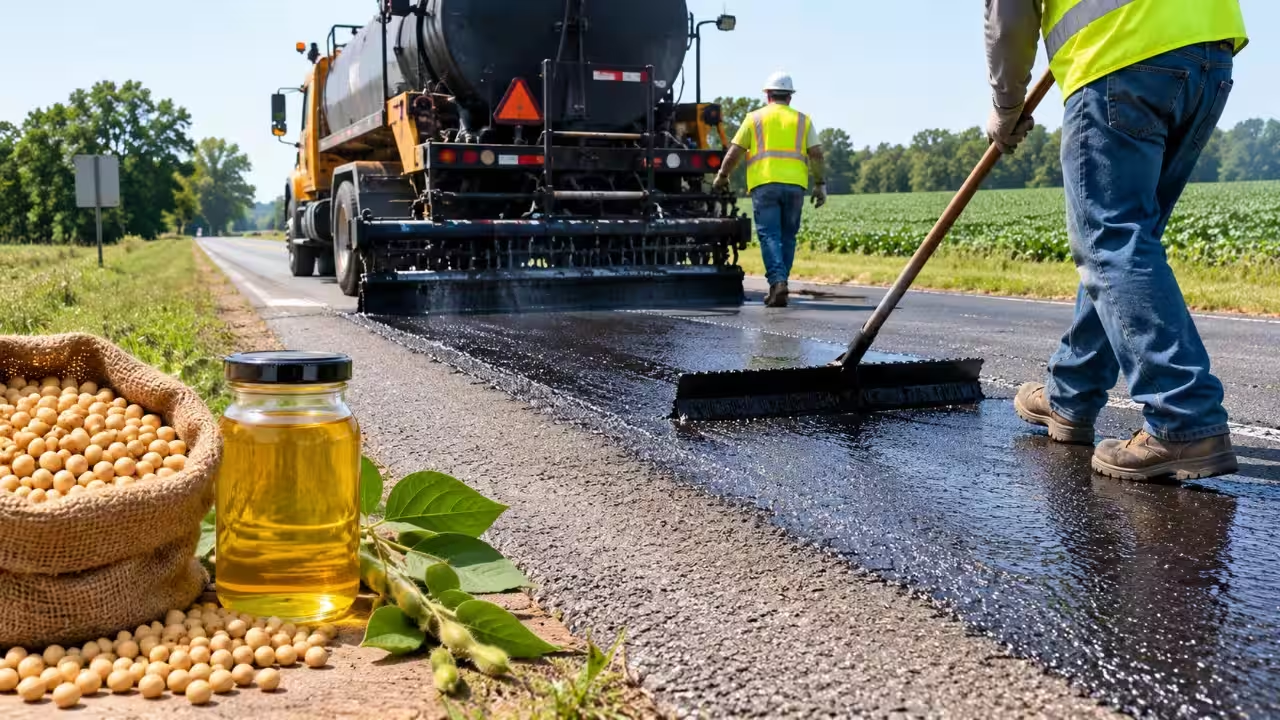
Asphalt roads do not fail overnight. Sunlight, oxygen, water, traffic, and repeated freeze-thaw cycles gradually harden the binder and make it more brittle, eventually allowing cracks to spread and water to penetrate deeper into the pavement. Road agencies therefore have another challenge besides repairing damaged roads: preserving pavement while it is still in reasonably good condition.According to WKAR Public Media, a 2022 road project in Michigan tested an unusual approach to extending pavement life. A one-mile stretch of West Colony Road in Clinton County received a soybean-oil-based treatment designed to slow the ageing and breakdown of asphalt. The project brought road maintenance together with agriculture, using a soybean-based product as a pavement rejuvenator. The treatment was not intended to repair potholes or badly deteriorated asphalt. Instead, it was applied to a recently paved road as a preventative maintenance measure. The aim was to help keep the asphalt flexible, reduce cracking and delay deterioration. Clinton County Road Commission officials described the project as a way of exploring whether a locally available agricultural product could help preserve roads for longer.How soybean oil can help ageing asphaltBIORESTOR, which is based on soybean oil, was used to treat the surface of the road at Colony Road. The product in use was different from the typical surface treatment method as it penetrates the existing asphalt. When asphalt gets old, it oxidises, resulting in stiffening of the binder and susceptibility to cracks. Thus, the main objective of rejuvenation is to add lighter substances into the binder in order to increase its elasticity. The product was applied after the road at Colony Road had already been resurfaced.Research has provided some scientific support for the idea of using soybean-derived materials in this way. A study published in the Journal of Cleaner Production examined soybean oil as a rejuvenator for aged asphalt binder and found that it could improve the diffusion and compatibility of the aged binder while helping reverse some effects of ageing. The researchers used laboratory testing and molecular modelling to examine how the oil interacted with the asphalt binder.One mile of Colony Road gets the treatmentThe Colony Road project was a collaborative effort between the Clinton County Road Commission, the Michigan Soybean Committee, and the Soy Transportation Coalition. The chosen mile of road was in Clinton County near Fowler, in part because it served soybean farmers and could showcase a use for soybeans grown in Michigan. The pavement that underwent the treatment was chosen to be in good condition.According to Farm Progress, the one-mile application used about 200 gallons of soybean oil. The product was reported to cost about $61 per gallon, putting the material cost at roughly $12,200 for the oil used on the section. The project itself was supported through a partnership involving the road commission and agricultural organisations. By helping aged asphalt retain flexibility, the soybean-based treatment could potentially slow cracking and delay more extensive road repairs.What does the 40% figure really mean?The figure associated with the project was an extension of pavement life of up to 40%. According to WKAR, the product developer said an earlier road treated with the soybean-oil-based product had shown a 40% improvement in pavement life compared with untreated pavement after seven years of monitoring. The company also claimed that the product could extend pavement life by 40% to 45% and reduce cracking by 80%. These figures were based on the developer's earlier experience and product claims, not results from the 2022 Colony Road project itself.The project demonstrated a new approach to road maintenance. Rather than allowing the asphalt to wear out and then removing it, a renewable agricultural product could be used in advance to slow the ageing process. If long-term testing confirms the results, soybean-based rejuvenators could offer another way to extend asphalt life and create an additional market for soybeans.You use AI every day. Now get your AI Quotient. Take the AIQ test.
Topics in this story
Gathered from external sources. Rights to this text belong to whoever originally published it.