A mom complained about her daughter's classmate bringing cookies to school. Welcome to Oreo-gate.
The bigger story isn't really about cookies. It's about why online drama travels so far.
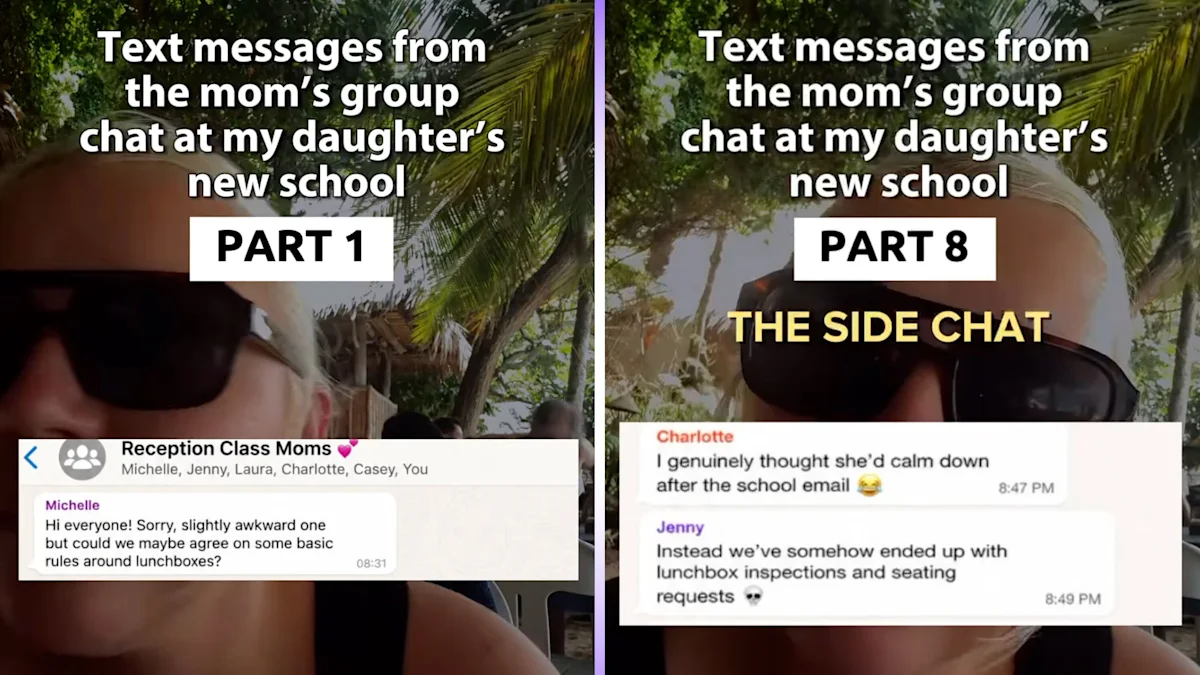
It's a 2026 parenting story that was destined to go viral.
The tale came from a mom named Ashleigh, who told it via Instagram Reels . According to her, the drama went down in a group chat for her daughter's elementary school classroom. A fellow mom named Michelle had reached out to the group of parents to ask that they all stop sending Oreos in their children's lunches, because it made her daughter, Ava, too jealous.
"I just wondered if we could agree not to send things like Oreos, chocolate candy, etc. so the kids aren't comparing lunches?" Michelle asked.
Predictably, all hell broke loose. The story — which has involved multiple updates — had all the elements of modern parenting that people argue about ad nauseam online. On one side, there's the crunchy, presumably MAHA mom Michelle, who is willing to " snowplow " over everyone else's Oreo enjoyment to ensure her precious little child doesn't deal with any negative emotion.
On the other side, there are the "normal" moms, who just want their kids to be able to enjoy a cookie in peace. And on the internet, everyone was quick to jump onto Ashleigh's (aka Team Oreo) side. They labeled Michelle as overly controlling, applauding Ava's quest for Oreos despite her mother's best efforts — and vowing to send the cookies with their own children to cheer her on.
"Feeling like we should all just go ahead and pack Oreos in our kids lunches this week," wrote one kids food influencer on Threads . Pediatric nutrition experts also waded in .
And of course, Oreo itself soon got wind of the tale. "OREO-gate was NOT on my 2026 bingo card," wrote the brand .
The drama is so juicy, the discourse so hot and the virtue signaling so satisfying. Does it matter if anything about Oreo-gate is real?
Because there are lots of reasons to be skeptical of "Ashleigh's" story. The account, @AshleighJamz on Instagram, seems to exist for the sole purpose of turning alleged text-based drama from her life into silly songs using the AI song generator app Suno, which the account's creator lists as a "partner."
Curiously, this isn't the first time "Ashleigh" has seen people throw down in the group chat. In fact, that's all she posts about. The account, which was created less than a month ago, also features videos about workplace drama, bachelorette party drama and dating drama — all of which are shown via group chats set to songs made using Suno. In fact, the account has never posted about anything else, and has tagged every post #SunoPartner.
I reached out to Suno to ask what the partnership between "Ashleigh" and the company entails, but a representative for the company said they did not have "anything to add" about the story, and would not confirm that the user behind the account had an active brand deal with the company. I also reached out via Instagram DM to "Ashleigh," but did not hear back.
But if it is a planted or manufactured saga, whoever crafted it knew what they were doing. As Pamela Rutledge, the director of the Media Psychology Research Center , tells me, the story was internet gold.
"Oreo-gate has all the trappings of good viral content: low stakes, high relatability, escalating conflict and emotion, identifiable heroes and villains, humor and episodic suspense," she says. "Each installment raises the stakes just enough to make people wait for the next episode. The AI songs enhance entertainment value and shareability. It also invites moral judgment that encourages comments, sharing and identification with a side. The cookie becomes incidental."
And of course, parents aren't jumping to weigh in because they feel the need to defend the honor of the esteemed Oreo. It's all about telegraphing the type of parent they want to be, or want to be seen as. As Rutledge puts it, the drama turns a lunchbox dispute into a "battle over parenting identity."
"Oreo-gate resonates because it hits several current parental hot buttons into one entertainingly ridiculous dispute that turns ordinary, relatable conflict into public entertainment: food restriction, parental control, children's autonomy, social comparison, school boundaries and parent-group politics and backchannelling," she says.
As she notes, debate over food restrictions in school, especially when it comes to allergies or concerns over nutritional value, has become a huge talking point both in real-world and online parenting spaces.
"When it's not a school-wide rule, one person expecting others to follow her rules challenges people's parental autonomy," Rutledge says. "Michelle is acting as a community voice, but she is one parent. Other parents push back against her assumption of compliance."
In that sense, whether Michelle and Ava exist is essentially irrelevant. The value that online commenters get comes from the performance of publicly acting out their values, telegraphing to others where they stand and, ultimately, what kind of parent they are. In other words, those invested in Oreo-gate don't care so much if the child they are cheering on to get her Oreos is actually real — just that everyone knows what they'd do if she were.
Should we be concerned that these blatantly fishy stories are causing this level of internet drama? Yes, but it makes sense once you understand that Ava and her Oreo were never the most important characters in the story. The discourse was.
Topics in this story
Gathered from external sources. Rights to this text belong to whoever originally published it.