In 1993, Taiwan was called “Garbage Island” as only 70% of trash was collected; 33 years later, recycling reached 55% nationwide
Rest of World News: In 1993, Taiwan had a trash problem so severe that it was dubbed “Garbage Island”. The country collected only 70 per cent of its waste, while the rest.
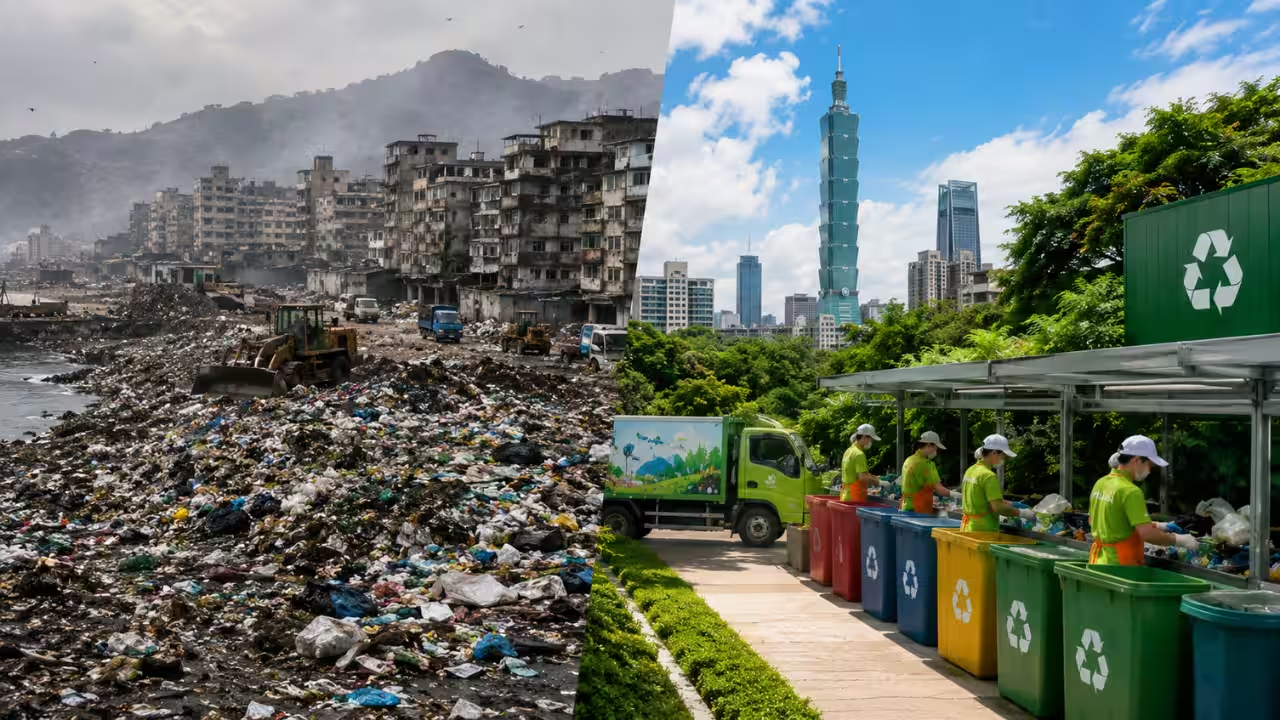
In 1993, Taiwan had a trash problem so severe that it was dubbed “Garbage Island”. The country collected only 70 per cent of its waste, while the rest was left to pollute the environment through littering or burning. More than three decades later, Taiwan has turned that crisis into one of the world’s most striking recycling transformations, with a nationwide recycling rate of 55 per cent. The change was driven not by one measure but by a system that made households, businesses and government share responsibility for waste. Residents were required to buy official bags for non-recyclable trash, manufacturers and importers helped fund recycling, and households had to sort their waste before collection. Even the trash trucks became part of daily life, with yellow vehicles playing classical music to signal their arrival. Together, these measures helped make recycling a routine part of life and dramatically reduced the amount of waste sent for disposal.Why did Taiwan introduce paid trash bagsUnder the system, residents must buy official blue bags for non-recyclable trash, making disposal a direct cost. According to Rapid Transition Alliance, the bags cost between 3 and 43 cents depending on their size. The policy encouraged people to think more carefully about what they threw away, while waste generation in Taipei fell by 31 per cent between 1997 and 2015, from 1.26kg to 0.87kg per person per day. Taiwan also made businesses responsible for part of the process. Its Extended Producer Responsibility system requires manufacturers and importers to help fund recycling. Rapid Transition says the 1997 “4-in-1 recycling programme” brought together government, manufacturers, consumers and licensed recycling enterprises. Fees paid into the Recycling Fund helped subsidise collection and recycling, spreading responsibility across the production and consumption chain.How do Taiwan’s musical garbage trucks workTaiwan’s trash collection became famous for yellow trucks that play classical music as they travel through neighbourhoods. Residents listen for the trucks and take their trash directly to them rather than leaving bags outside their homes. Taipei has more than 4,000 collection points operating five nights a week, while mobile apps allow residents to track the trucks and receive alerts when they are nearby. The yellow trucks are followed by separate recycling vehicles, encouraging households to sort their waste before collection. Residents separate general trash, raw and cooked food waste, plastic and paper, while food waste can be used for animal feed or compost. The system has also required substantial infrastructure. Rapid Transition reports that the Recycling Fund had purchased more than 1,300 recycling vehicles for municipalities since 1998 and financed 273 storage facilities for 326 municipal collection squads.How did Taiwan raise recycling to 55%These measures helped Taiwan make a dramatic shift from its “Garbage Island” era. The country now has a recycling rate of 55 per cent and recycles 73 per cent of its plastic. Daily waste disposal also fell from 1.14kg per person in 1998 to under 0.4kg by 2015. The change was not simply about collecting more trash; it was about reducing waste and recovering materials before they reached. Paid trash bags encouraged households to limit non-recyclable waste, while sorting made it possible to separate valuable materials and food waste. Producer responsibility helped fund the collection and recycling system, creating a framework in which businesses also contributed to managing the products they put into circulation.Taiwan’s system brought together government agencies, manufacturers, importers, consumers, community groups and private recyclers rather than placing the entire burden on one group. Households had to sort their trash, businesses helped finance recycling, and public funding supported the vehicles and facilities needed to collect materials. More than three decades after Taiwan collected only 70 per cent of its trash, the country had developed a system capable of recycling 55 per cent nationwide.Catch the latest World News and Live updates. Download the TOI app.
Topics in this story
Gathered from external sources. Rights to this text belong to whoever originally published it.