An Indiana father and daughter bought badly eroded farmland with poor corn yields; their soil-restoration efforts are now helping protect a rare salamander
An Indiana father and daughter faced a difficult challenge after buying farmland damaged by years of intensive crop production.
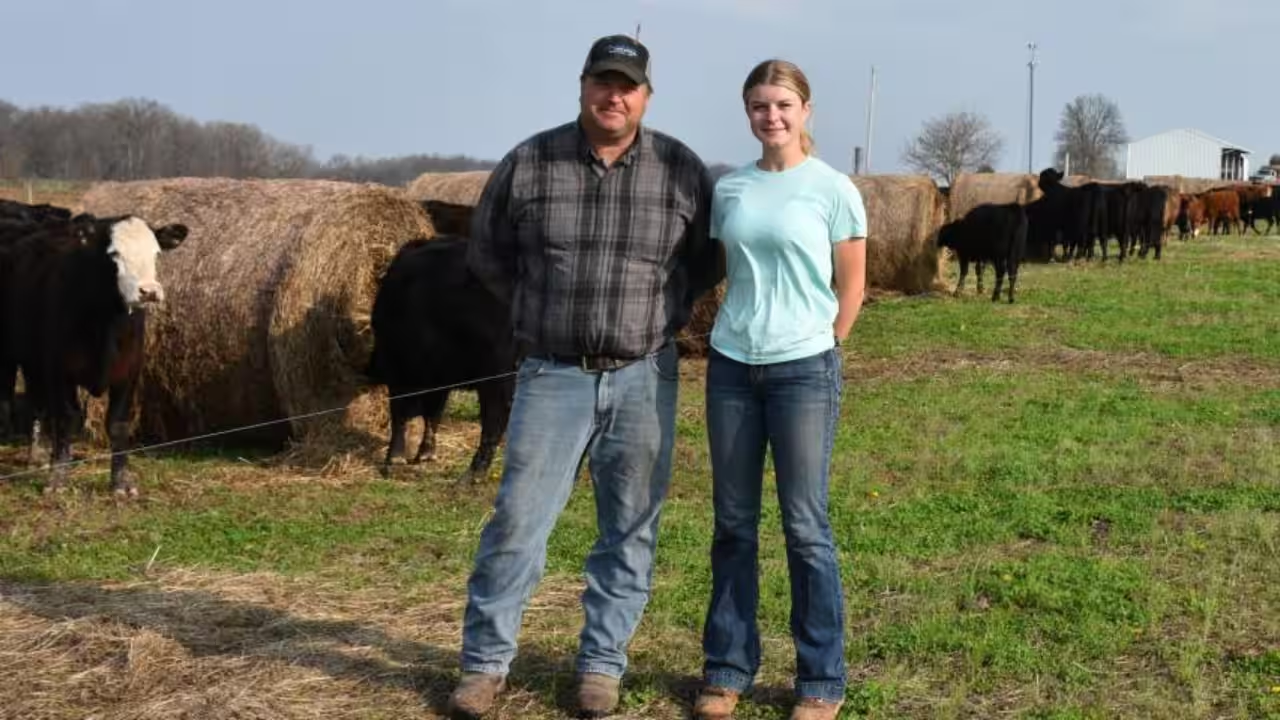
An Indiana father and daughter faced a difficult challenge after buying farmland damaged by years of intensive crop production. Deep erosion channels cut through the fields, the soil had lost much of its productivity and corn yields were poor. Ben and Lily Shireman of southern Indiana decided to change how they managed the land, shifting towards rotational grazing, cover crops and other soil-restoration practices. Their efforts have helped reduce erosion, improve pasture conditions and lower the farm's reliance on commercial fertiliser. The work also has wider environmental significance because the property lies within the Blue River watershed, where sediment and agricultural runoff can affect aquatic habitats. The watershed supports the eastern hellbender, a large salamander that depends on clean water and rocky streambeds.How years of farming left the land badly erodedThe Shiremans purchased the farm in Harrison County, southern Indiana, after years of intensive row cropping had damaged its soil. Deep erosion channels cut through the fields, and the family struggled with poor corn yields and high input costs. Ben reported that some of the ditches were so deep that a pickup truck could fit inside them. The farm produced an average of around 100 bushels of corn per acre, and he said the operation was barely making money.How rotational grazing and cover crops helped restore the farmThe family introduced rotational grazing, cover crops and improved pasture management to reduce erosion and rebuild soil health. They also used bale grazing, placing hay bales in selected areas so cattle could feed while distributing manure across the pasture. These practices help return nutrients to the soil and build organic matter. With improved nutrient management, the family reported using less commercial fertiliser. The changes were supported through conservation programmes administered by the US Department of Agriculture’s Natural Resources Conservation Service (NRCS).Why the farm's soil restoration matters to a rare salamanderThe property lies within the Blue River watershed, where sediment and nutrients from agricultural land can affect waterways. The eastern hellbender (Cryptobranchus alleganiensis alleganiensis) depends on clean, flowing water and rocky streambeds for shelter and reproduction. Excess sediment can cover the spaces it needs, while pollution can degrade its habitat. By reducing soil erosion and managing nutrients more carefully, the Shiremans are helping limit runoff into the wider watershed. Their work forms part of the Farmers Helping Hellbenders conservation initiative, which encourages agricultural practices that improve water quality and aquatic habitat.Quail return as the farm's habitat improvesThe family has reported seeing quail return to the property as they improve its soil and pasture conditions. Lily Shireman described the sightings as an encouraging sign of change. Healthier vegetation and better habitat conditions can support wildlife, although the family has not reported a formal survey measuring quail numbers on the farm. For the Shiremans, the changes represent more than an attempt to improve agricultural productivity. They are also helping create a landscape that can support wildlife alongside farming.Conservation assistance helped make the changes possibleThe family received support through the NRCS Environmental Quality Incentives Program and the Farmers Helping Hellbenders Regional Conservation Partnership Program. These initiatives help farmers adopt practices that improve soil health, reduce erosion and protect water quality. The assistance supported changes such as fencing, livestock watering infrastructure and improved grazing management. By tackling soil loss and nutrient runoff at their source, the Shiremans are contributing to wider efforts to protect the Blue River watershed and the eastern hellbender's habitat.You use AI every day. Now get your AI Quotient. Take the AIQ test.
Topics in this story
Gathered from external sources. Rights to this text belong to whoever originally published it.