Robert Kiyosaki, the ‘Rich Dad Poor Dad’ author, is $1.2 billion in debt: How the self-help guru uses borrowing to build wealth
Trending News: Robert Kiyosaki, author of 'Rich Dad Poor Dad,' owes $1.2 billion, and he says that’s a feature, not a bug. He’s made a career out of teaching people .
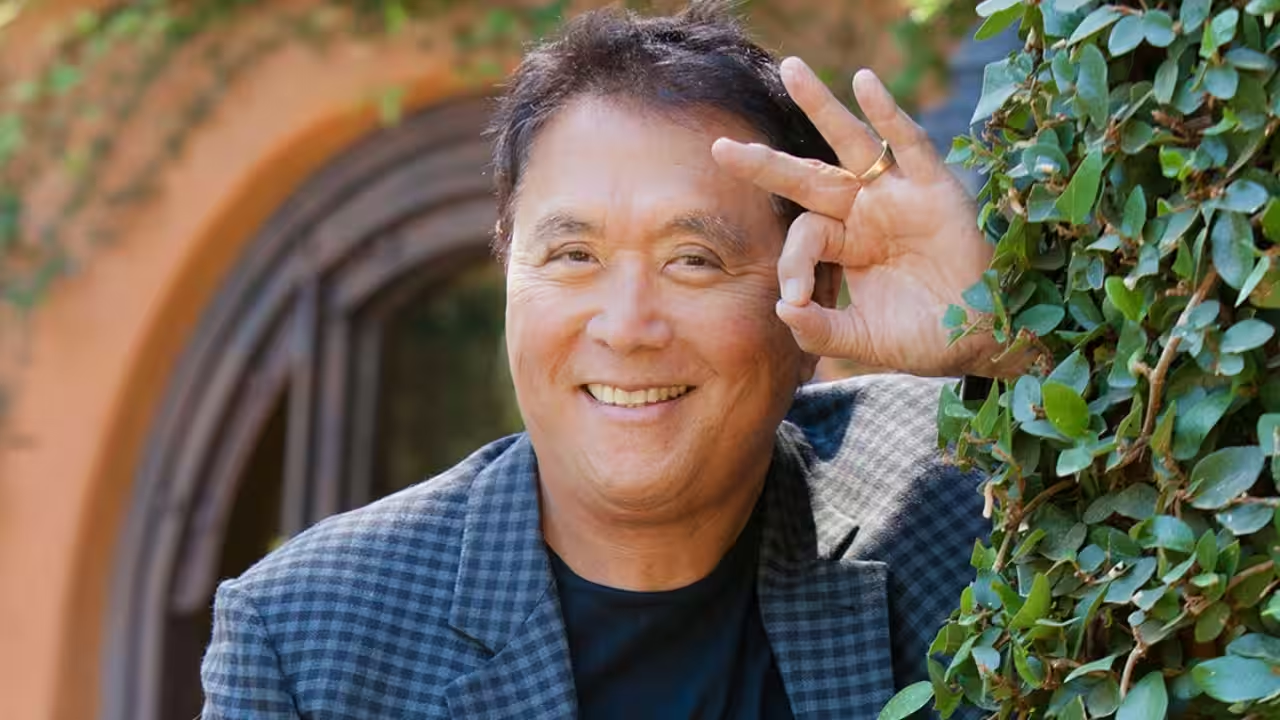
Robert Kiyosaki, author of 'Rich Dad Poor Dad,' owes $1.2 billion, and he says that’s a feature, not a bug. He’s made a career out of teaching people that debt doesn’t have to be a financial disaster. In fact, he’s very public about the staggering amount he owes, explaining that debt, when used right, is core to how he built wealth. It’s a twist on the usual American dream, where most people scramble for years to wipe out their debt, not brag about it.Recently, that $1.2 billion number started making the rounds again after Kiyosaki talked about it on the Get Rich Education podcast. He’s 79 now, not slowing down, and happy to repeat that his approach isn’t something everyone should just copy. Per the New York Post, he’s been studying debt since the ’70s and still argues that borrowing, done wisely, is a tool, not a trap. But behind the shock value of that billion-dollar figure, there’s a detail most headlines miss: it’s not all unsecured debt hanging over his head. Most of it’s linked to real estate, with partners, so his personal stake is way smaller: more in the tens of millions, not a billion plus.Robert Kiyosaki’s ‘good debt’ philosophy: Why is he so unfazed by owing so much?It all comes back to one of his main ideas: debt can be good or bad, depending on what you do with it. In his world, “good debt” is when you borrow to buy something that actually puts money in your pocket, like apartments that generate rent, instead of buying stuff that just drains your cash.Real estate is the heart of how he operates. Kiyosaki doesn’t sit around waiting for decades, hoping to save enough cash to buy buildings outright. He takes out loans, acquires properties, and as those buildings pay rent and (hopefully) rise in value, he builds equity, using other people’s money. That’s the idea powering his books and seminars, and it’s what made ‘Rich Dad Poor Dad’ a monster hit. He took a simple family contrast: his own “Poor Dad” vs. his friend’s “Rich Dad” and used it to reframe how millions of people think about money.Where exactly does that infamous $1.2 billion come from?Mostly, it’s tied to a massive portfolio of apartment buildings. Together with his former wife Kim, who’s also deeply involved in his business world, they invested in something like 1,500 apartments. They own these properties with partners, so this mountain of debt isn’t on Kiyosaki’s credit card. Kim herself admitted he only owes a fraction personally, maybe $30–60 million, based on what’s been reported. It’s still a lot, but it’s a different story.Kiyosaki’s specialty is borrowing against the value of real estate. Suppose he buys a building with a mortgage, and the value rises over time. Instead of selling off and losing the asset, he borrows against the equity, pulling out cash to buy more properties. He relies on those assets generating enough income for the loans to make sense: if the rent covers the costs, it’s a win. He also points out the tax benefits: a loan isn’t taxed like income. But, and it’s a big “but,” the properties need to actually pay enough, or the whole strategy falls apart quickly. It’s much riskier than the catchy tagline “rich people use debt” makes it sound.The dark side is that leverage works both ways. It amplifies gains, but if the market swings down, like rents drop, properties lose value, vacancies rise, or interest rates spike, that same debt can crush an investor. Experts who’ve commented on Kiyosaki’s tactics always throw up a warning sign: you'd better know exactly what you’re doing. Kiyosaki himself says education comes first, so don’t just try this because you saw a viral quote.Why talk about the 'billion-dollar debt' so much?It’s not just shock value, though Kiyosaki loves a flashy number. He knows those headlines get people listening, and then he can launch into his real message about “good debt.” The soundbite exists partly to sell the story, not just to lay out a balance sheet.It’s important to get the context, though: he’s not talking about credit card debt or personal loans that keep people up at night. He’s talking about loans that are tied to assets designed to bring in money, usually shared with other investors. If anything, the headline proves his point. In Kiyosaki’s world, a gigantic debt is a badge of honor, not a sign he’s lost control. It’s his way of walking the talk and showing that, when used his way, debt can build fortunes instead of destroying them.Get the latest movie news, reviews, and celebrity updates. Download the TOI App.
Topics in this story
Gathered from external sources. Rights to this text belong to whoever originally published it.