After Crocodile Hunter Steve Irwin died in 2006, Australia protected 330,000 Cape York acres in his name; the reserve now shelters over 40 significant species
Rest of World News: Discover the Steve Irwin Wildlife Reserve, a 330,000-acre conservation area created in memory of Steve Irwin, protecting over 40 significant species and diverse ecosystems on Cape York Peninsula.
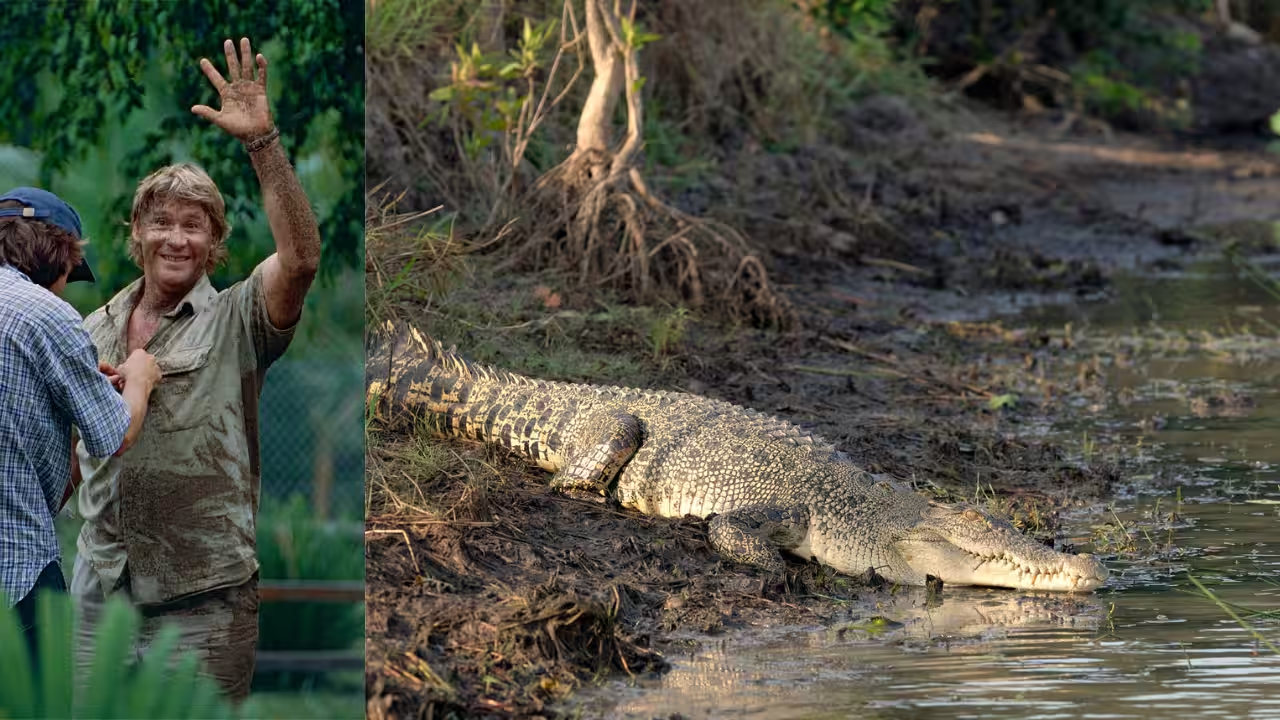
Steve Irwin died in 2006, after which a 330,000-acre property on Australia's Cape York Peninsula became part of a conservation effort bearing his name. The Steve Irwin Wildlife Reserve was established as a tribute to his conservation work and is now a protected landscape that contains rainforests, wetlands, savannas and dozens of species considered important for conservation.Australia Zoo says that the property was formerly known as Bertiehaugh Station, a cattle property on the western side of Cape York. The Australian Government purchased the property after Irwin’s death as a living memorial to his conservation work, while the Irwin family and Australia Zoo took on its management under Australia's National Reserves System. The reserve covers about 135,000 hectares, or 330,000 acres, and its southern end fronts the Wenlock River, while the Ducie River forms a northern boundary.The property soon faced a mining threatAustralia Zoo says that plans were announced to mine the area for bauxite, only days after the property was named the Steve Irwin Wildlife Reserve. The proposed development threatened to clear vegetation and remove bauxite from beneath the topsoil. The Irwin family responded with a campaign to protect the reserve, while supporters also petitioned the Queensland government.Queensland Parliament records from 2010 describe the 330,000-acre property as a wetland conservation area and tribute to Irwin. The parliamentary petition said a proposed mining area of about 30,300 acres included parts of the reserve and contained headwaters and spring-fed wetlands that were important to the Wenlock River and surrounding habitat.Australia Zoo says that the campaign involved millions of dollars and lasted six years before the Australian Government passed legislation protecting the reserve from the proposed strip mining. The reserve was subsequently given additional protection as a Strategic Environmental Area.More than 40 species have conservation significanceThe reserve contains 35 different ecosystems and currently has more than 40 species considered to have conservation significance because they are threatened, endemic or have restricted distributions. Its biodiversity records include 170 bird species, 48 fish species, 47 reptiles, 21 amphibians and 20 mammals. Australia Zoo says wildlife surveys are still being conducted, which means that the inventory can change as researchers continue working in the area.Australia Zoo says more than 48 freshwater fish species have been recorded in the Wenlock River, and the reserve contains one of the world's larger breeding populations of saltwater crocodiles. The property also contains unusual habitats that are associated with perched bauxite springs. Australia Zoo describes one spring forest ecosystem as unique, with no comparable ecosystem currently known elsewhere.The reserve remains a research siteAustralia Zoo and the University of Queensland have supported research programs on the reserve covering biodiversity, hydrology, fire ecology, palaeontology and archaeology. Scientists have also studied species including estuarine crocodiles, palm cockatoos, microbats, spiders, file snakes, carnivorous plants and northern quolls.Australia Zoo says that more than 170 crocodiles are currently being tracked in the Wenlock River, with the Irwin family continuing annual research trips to the reserve, and the scale of the property helps explain why the mining proposal generated such a prolonged conservation campaign. A development footprint of roughly 30,300 acres would have occupied only part of a 330,000-acre reserve, but the proposed area included important waterways and wetlands.Today, the Steve Irwin Wildlife Reserve remains a 330,000-acre conservation property on Cape York, with ongoing ecological research and surveys across its 35 ecosystems. Australia Zoo says the area currently supports more than 40 species of conservation significance.Catch the latest World News and Live updates. Download the TOI app.
Topics in this story
Gathered from external sources. Rights to this text belong to whoever originally published it.