Greenpeace placed boulders weighing up to 2 tonnes on England’s North Sea seabed; it says the barrier blocks bottom trawling across 116 sq km
Greenpeace UK has placed boulders on the North Sea seabed to stop bottom trawling across 116 sq km, aiming to protect harbour porpoises. This action follows the release of Blue Planet III and highlights the need for stricter fishing regulations in marine protected areas.
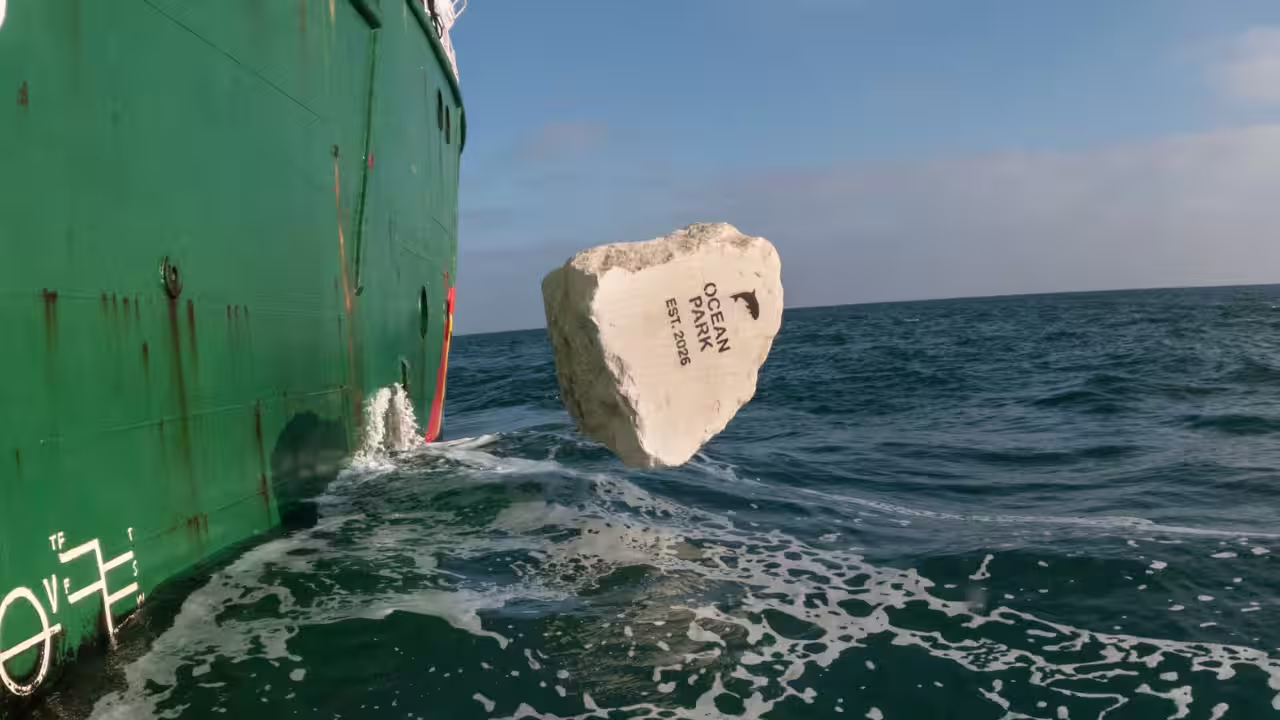
Imagine dropping giant rocks into the sea to keep fishing boats out. That's what Greenpeace UK says it has done. On 2 November, 2026, the group said in a press release that its activists placed boulders weighing up to two tonnes on the seabed of the Southern North Sea off England's east coast. Greenpeace says the barrier prevents bottom trawling, a fishing practice that drags gear across the sea floor, from accessing 116 square kilometres. The area was designated to protect harbour porpoises. Greenpeace calls it the most heavily bottom-trawled offshore protected area in the UK.Why boulders and why nowThe group linked the move to the first episode of Blue Planet III, aired on BBC One the night before the announcement. Greenpeace says it had warned back in June that it would take direct action if the government failed to act, and nothing had been done yet. The group itself has declared the area an ‘Ocean Park,’ a campaign label, and said its ship, the Arctic Sunrise, will be patrolling the zone in the coming days to deter other destructive fishing activities. Simon Pegg and Benedict Cumberbatch signed their names on the boulders, as did MPs including Kerry McCarthy and Dr Roz Savage.What Greenpeace says is wrong with bottom trawling Greenpeace says bottom trawling can destroy delicate seafloor habitats. It can also leave porpoises hungry by taking away key fish stocks, while intense noise disrupts their hunting. These points are taken from a 2026 report by campaign group Oceana. Despite the site's protected status, the organisation says there are currently no restrictions on fishing activity in most parts of the site. This makes bottom trawlers and other industrial vessels a daily threat to porpoises.What the official body says about the site The Joint Nature Conservation Committee (JNCC) is a public body that advises UK governments on nature-related matters. JNCC notes that the Southern North Sea site spans 36,951 square kilometres. At the time of its designation in 2019, it was the largest special area of conservation in the UK and European waters. The JNCC also states that the site provides a habitat for about 17.5% of the UK’s North Sea harbour porpoise population. Its goals include no significant disturbance to porpoises and leaving their prey available. The 116 square kilometres that Greenpeace says it has effectively closed off is only about 0.3 percent of the total site.The numbers behind the claimGreenpeace analysed data from Global Fishing Watch and found that there are at least 37,200 hours of bottom-towed fishing in the site in 2025. This was far more than any other offshore protected area in the UK. It says that bottom trawlers and dredgers covered a cumulative 55,600 square kilometres of seabed inside the UK’s Marine Protected Areas in 2025. That’s about 58 times the size of Dartmoor National Park. This figure counts every pass of the gear, so it measures the total amount of trawling, not the area trawled. Greenpeace also notes that in 2025, the vessels spent at least 115,000 hours towing gear in those areas. That's equivalent to more than 13 years of non-stop fishing.Government plans and the bigger goal Will McCallum, co-executive director of Greenpeace UK, wants a ban on destructive fishing in all UK protected waters. Greenpeace says only 11 percent of the UK’s marine protected areas (43 out of 378) are fully protected by law from bottom trawling. It also notes that a government plan to outlaw the practice in parts of a further 42 areas, announced in 2025, is still undecided, more than a year after its consultation closed. The Southern North Sea is due in a later round, with no date specified yet. The release contains no government response. The UK has signed up to protect 30% of land and sea for nature by 2030. Greenpeace says just 3.5% of the world's oceans and just 1% of UK waters are fully or highly protected.You use AI every day. Now get your AI Quotient. Take the AIQ test.
Topics in this story
Gathered from external sources. Rights to this text belong to whoever originally published it.