Archaeologists uncovered a 200-year-old shipwreck buried in Canadian sand dunes; clues point to a vessel lost in 1812
Archaeologists excavated a shipwreck on Sable Island in May 2025 that researchers believe may be the Swift, a sloop that ran aground in 1812.
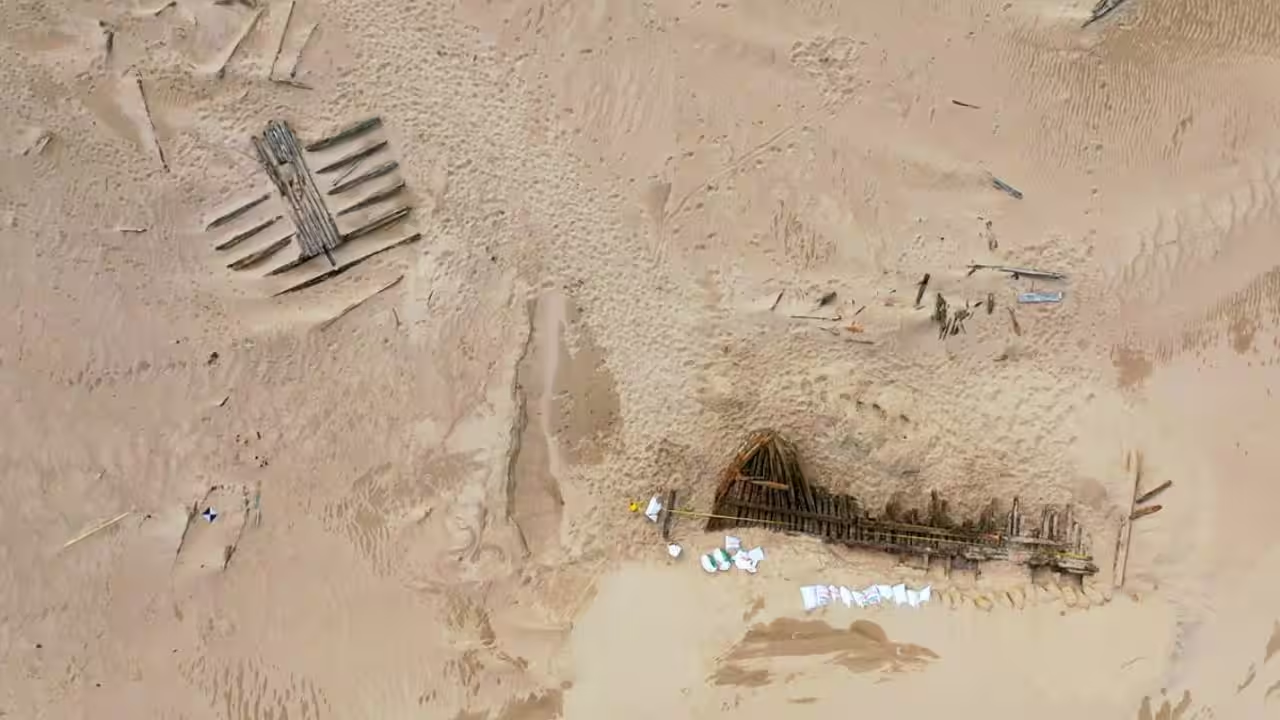
Archaeologists excavated a shipwreck on Sable Island in May 2025 that researchers believe may be the Swift, a sloop that ran aground in 1812. If confirmed, the identification would establish a rare link between a shipwreck site on the island and a documented wreck from before the 20th century.According to Parks Canada, the Swift was one of three ships that ran aground on September 27, 1812, while travelling from Bermuda to Newfoundland. The site first came to light in February 2024, when a winter storm exposed parts of the wreck, including copper sheathing bearing a British Royal Navy broad arrow and a stamp dated January 1810. During the later excavation, archaeologists uncovered larger sections of the vessel buried in the sand along the island’s North Beach.How a storm exposed the 200-year-old shipwreck on Sable IslandThe site first came to attention during routine monitoring in February 2024, when a winter storm exposed a small piece of wreckage on Sable Island. Staff also found a section of copper sheathing bearing a British Royal Navy broad arrow and an Admiralty stamp dated January 1810, from Portsmouth.Archaeologists recognised the broad arrow as a mark used by the Royal Navy to identify its property. Historical records identify HMS Barbadoes as the only known British naval ship to have wrecked on the island’s northeast side. The frigate had also undergone a refit at Portsmouth in 1810, linking the sheathing to the vessel.What connects the shipwreck to the 1812 maritime disasterParks Canada archaeologists have determined the two large sections uncovered at the site belong to the same vessel, which may be the Swift. Several clues support this possibility. The wreck appears to be that of a small, single-deck vessel with one mast. Fragments associated with HMS Barbadoes were also found nearby, pointing to a possible link with the same wreck event.The site’s location matches historical maps showing where the Swift ran aground. The wood also appears to be Bermuda cedar, which is consistent with the possibility that the vessel was a Bermuda sloop travelling from Bermuda to Newfoundland. Together, these clues support the identification, although Parks Canada has yet to confirm that the wreck is the Swift. All three ships were lost in the September 1812 incident.Two excavations uncovered larger sections of the shipwreck on Sable IslandThe excavation took place during two trips to Sable Island, in May 2024 and May 2025. During the first visit, archaeologists documented the exposed wreck and uncovered a larger section buried deep beneath a dune. Uncovering the section buried beneath the dune required more time and the use of mechanical tools. When the team returned in May 2025, they uncovered another large section of the wreck that was more complete than expected.The vessel lay beneath loose, uniform sand with no distinct soil layers, so archaeologists used sandbags to stabilise the excavation banks. They removed most of the sand with a skid steer before switching to hand tools to avoid damaging the wreck. The team recorded the vessel’s structure and visible features to scale before the shifting sands covered the wreck once more.How the shipwreck is being studied and protected for future researchAfter exposing the wreck, the team documented its timbers, visible features, and nails. They also recorded its position using a survey instrument and drone, and collected wood and copper samples for analysis. Studying the wood can help researchers identify the species and determine whether different pieces came from the same vessel. In some cases, tree-ring analysis can also help establish the wood’s age and origin.Once the work was complete, the team reburied the wreck in sand to protect it from oxygen, which can rust metal and encourage fungi that decay wood. Parks Canada will continue to monitor the site, as shifting sands may expose more artefacts. Researchers will also analyse their findings and investigate questions about the ships and their crews over time.You use AI every day. Now get your AI Quotient. Take the AIQ test.
Topics in this story
Gathered from external sources. Rights to this text belong to whoever originally published it.