Namibia gave rural communities wildlife rights; elephant numbers rose from about 7,500 in 1995 to 22,800 in 2016 as communal conservancies expanded
Discover how Namibia transformed its wildlife conservation strategy by empowering rural communities, leading to the remarkable rise of its elephant population from 7,500 to over 16,000. Learn about the successes and challenges of this community-driven approach to wildlife management.
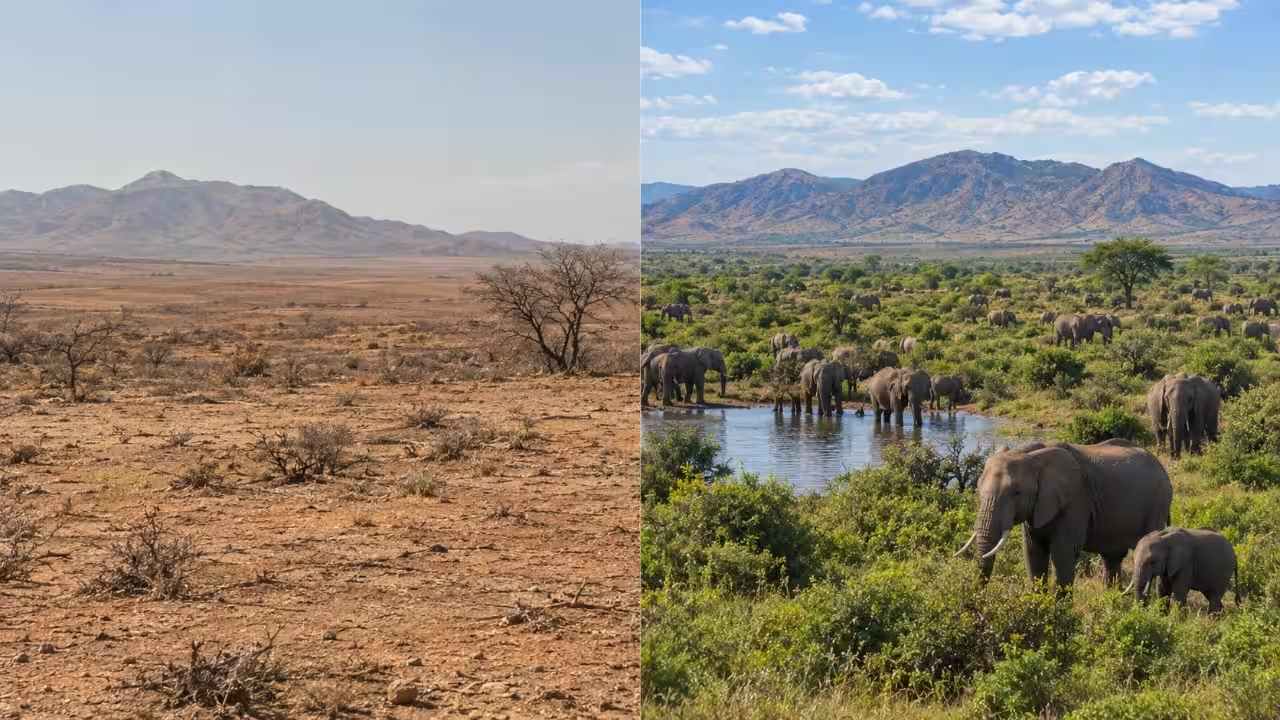
Namibia took an unusual approach to wildlife conservation by giving rural communities a direct stake in protecting the wildlife around them. Instead of treating wildlife only as a government resource, the country created communal conservancies where local people could manage wildlife and receive benefits from its use. The approach helped change the way communities viewed animals, particularly in areas where wildlife had once been heavily depleted.Over time, the results became clear. According to Visit Namibia, Namibia's elephant population doubled between 1995 and 2008, rising from about 7,500 animals to more than 16,000. More recent figures put the national population considerably higher, showing that the recovery continued beyond the period covered by that original comparison.Giving communities a reason to protect wildlifeThis system was introduced after Namibia became independent in 1990. Legislation was passed by the government in 1996, which allowed the formation of conservancies by communities living on communal land. Communities were entitled to conditional use of wildlife in designated zones. The first four communal conservancies were officially gazetted in 1998.These conservancies were supposed to be self-governing institutions. The residents selected committees, demarcated boundaries and created rules of resource management. This made wildlife part of the local economy through activities like photo tourism, hunting and collaboration with private tourism companies. The community would use the revenue, while conservancy game guards monitored wildlife and poaching incidents. Before the policy, people living near wildlife often received no economic benefit and still had to deal with damage to property.Wildlife began returningOne of the clearest signs of change was the return of wildlife to Namibia's communal lands, where poaching, hunting and other pressures had reduced animal populations. As conservancies expanded, local communities gained a greater role in managing wildlife outside the country's national parks. According to Visit Namibia, at least 45 per cent of Namibia's land area was under some form of conservation management by the end of 2019, including national parks, communal and commercial conservancies, private reserves and community forests.Research suggests that giving communities a greater stake in wildlife management helped make this expansion possible. A study published in Economic Affairs found that transferring certain wildlife rights to local communities had generated both economic and environmental benefits. At the same time, the researchers pointed to limitations, including incomplete rights transfers and ongoing human-wildlife conflict. This showed that community conservation was not without problems, but it had created incentives for people living alongside wildlife to protect it.The results could also be seen in individual species. Namibia's Community Conservation Programme was associated with recoveries in black rhino and other wildlife, while desert lions expanded their range in the country's northwest. Elephants showed a particularly striking increase, with one study estimating that their numbers rose from about 7,500 in 1995 to 22,800 in 2016. Together, these changes suggested that conservation was no longer confined to protected parks and reserves. Wildlife was increasingly being managed across the wider landscapes where people and animals lived alongside each other.A conservation model with challengesThe success of the conservancy system did not mean that living with wildlife became easy. More animals also meant more encounters between people and wildlife. Elephants could damage water infrastructure and crops, while predators could kill livestock. Research published in Geoforum found that increasing elephant numbers had created additional costs for some pastoral communities and raised questions about how fairly tourism revenues were distributed. This is a significant part of Namibia's conservation history. The model aimed to combine wildlife conservation with local governance and economic opportunity, but those benefits were not always shared evenly.Despite the challenges, the strategy changed how rural communities related to wildlife. Wildlife that was regarded as a natural resource of the government was integrated into local development and conservation systems. Namibia's example shows that wildlife conservation does not have to exclude local communities from access to wildlife. In some areas, involving communities in wildlife management helps encourage them to keep wildlife on the land.You use AI every day. Now get your AI Quotient. Take the AIQ test.
Topics in this story
Gathered from external sources. Rights to this text belong to whoever originally published it.