A stolen car left him with devastating leg injuries at 18, and he spent six months in a wheelchair; decades later, he deadlifted 285 kg and became a world-record powerlifter
An Irish powerlifter who suffered devastating leg injuries after being struck by a stolen car at 18 has turned a life-changing accident into an
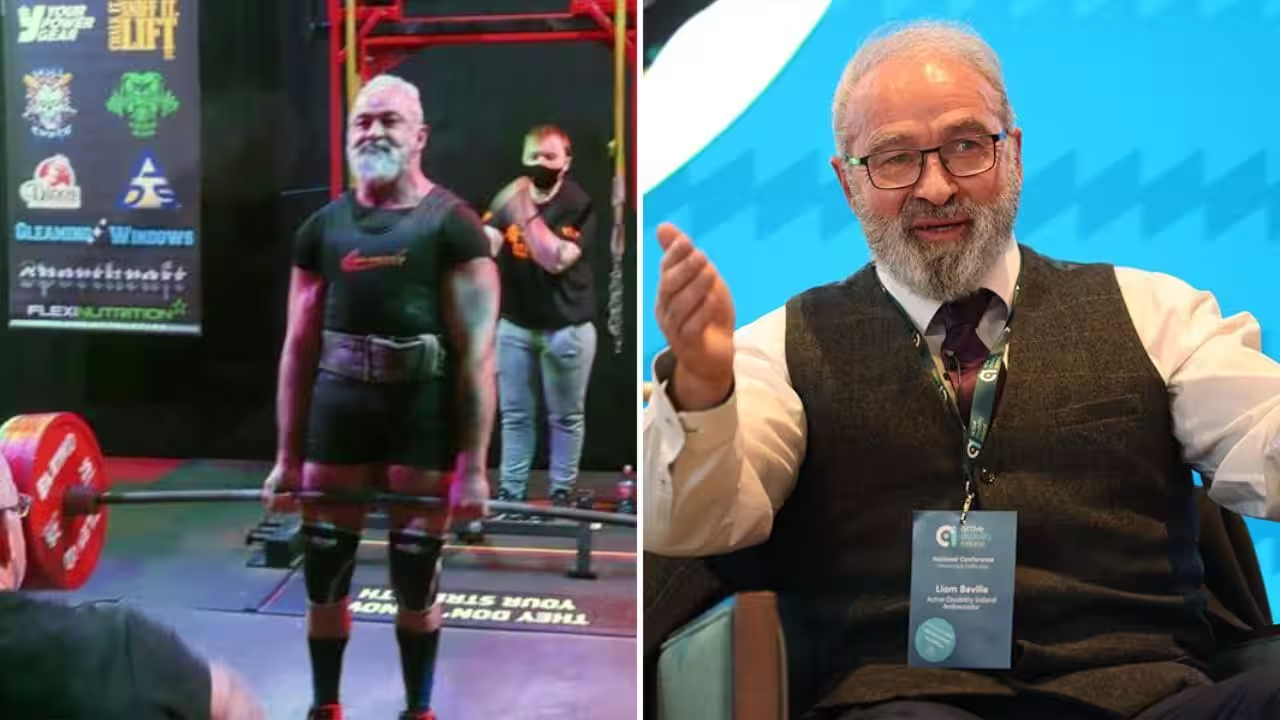
An Irish powerlifter who suffered devastating leg injuries after being struck by a stolen car at 18 has turned a life-changing accident into an extraordinary sporting achievement. Liam Beville spent 6 months in a wheelchair, underwent multiple surgeries and had to learn to walk again. Decades later, he lifted 285 kg to establish a Guinness World Records title, competing against able-bodied athletes despite his long-term disability. His journey from rehabilitation to international recognition has now inspired an autobiography, in which he recounts the determination, setbacks and years of training behind his record-breaking achievement.Liam Beville overcame devastating injuries to become a world-record powerlifterBeville's life changed on 3 June 1983, when he was struck by a stolen car in a head-on collision while walking along a footpath in Limerick, Ireland. According to Guinness World Records, the crash left both his legs catastrophically injured, with open compound fractures, extensive trauma and lasting structural damage.The injuries required extensive medical treatment and a prolonged recovery. Beville spent a year in plaster casts, six months in a wheelchair and underwent multiple operations. He also needed a hip replacement and a full knee replacement, consequences that continued to affect him long after the initial accident.His recovery involved learning how to walk again, a challenge that required patience and considerable physical effort. Friends helped him during the difficult period, even pushing him around in a pram while his legs healed.Weight training became the foundation of his recoveryBeville initially entered the gym as part of his rehabilitation while still relying on crutches. What began as an effort to rebuild his strength gradually developed into a lasting passion for weight training.The Guinness World Records explains that he began lifting weights after the accident and soon discovered an interest in powerlifting. His progress was remarkably quick considering the severity of his injuries.Just three years after the crash, he won the Limerick Powerlifting Championships and received the Best Lifter award. His early success demonstrated that his rehabilitation had developed into something much more than a recovery programme.In 1988, he broke his first national deadlift record. Four years later, he broke the Irish Powerlifting total record and established Irish and Celtic Nations deadlift records.These achievements marked the beginning of a competitive career that would continue for decades. Beville also worked in technology before retiring because of his disability and later developed a successful self-taught business in web development and digital marketing.What made his 285 kg deadlift a historic achievementBeville's most remarkable achievement came on 5 February 2022, when he was 57 years old. At the IrishPO National Single Lift Championships in Limerick, he lifted 285 kg, equivalent to 628.31 lb, to establish the Guinness World Records title for the heaviest deadlift by a male athlete in the MP4 impairment classification.The weight was comparable to an adult male alligator, a vending machine or a baby grand piano. Guinness World Records confirmed the achievement in its July 2025 article, describing how Beville had worked towards the lift for approximately three years.The MP4 classification refers to an impairment affecting the ability to generate full force for movement through the arms and legs. Despite his disability, Beville had always competed in mainstream powerlifting competitions rather than entering a separate disabled category.At the event where he established the record, he was the only disabled participant. Organisers also presented him with the Best Lifter award, recognising his performance among the competitors.Years of training helped him compete on his own termsBeville's record was not the result of a sudden breakthrough. His preparation involved training independently, using box squats, resistance bands and carefully planned deadlift cycles to gradually build strength.According to Guinness World Records, it took him around three years to reach the weight required for his world record. The accident left him with physical limitations, but he didn’t lower his expectations, instead continued pursuing his ambition.His decision to compete against able-bodied athletes was also central to his approach. Beville wanted his performances to be judged on their merits and believed that achievements should not be dismissed because of disability.His sporting career also extended beyond the single record. According to a report by Guinness World Records, by July 2026 Beville had broken multiple records in 4 different weight divisions in powerlifting, and was number 1 in the world in his age and weight category.The report also noted that 2026 marked 40 years since he first competed in a mainstream powerlifting competition.His autobiography brings decades of determination to a wider audienceBeville’s story has now moved beyond sporting competitions with his autobiography, Unbroken – The Liam Beville Story. The 61-year-old wrote the book to document his journey from the devastating accident to becoming a record-breaking powerlifter, Guinness World Records said.His journey has also been recognised beyond the sporting world. The former President of Ireland, Michael D. Higgins, praised Beville’s strength and bravery in a letter to Guinness World Records.You use AI every day. Now get your AI Quotient. Take the AIQ test.
Topics in this story
Gathered from external sources. Rights to this text belong to whoever originally published it.