During the pandemic, a US hospital worker paid $15.99 for a Goodwill painting and hung it above her bed; Antiques Roadshow later identified it as a Le Pho worth $60,000-$80,000 at auction
A painting bought for just $15.99 at a Goodwill thrift store turned out to be worth tens of thousands of dollars.
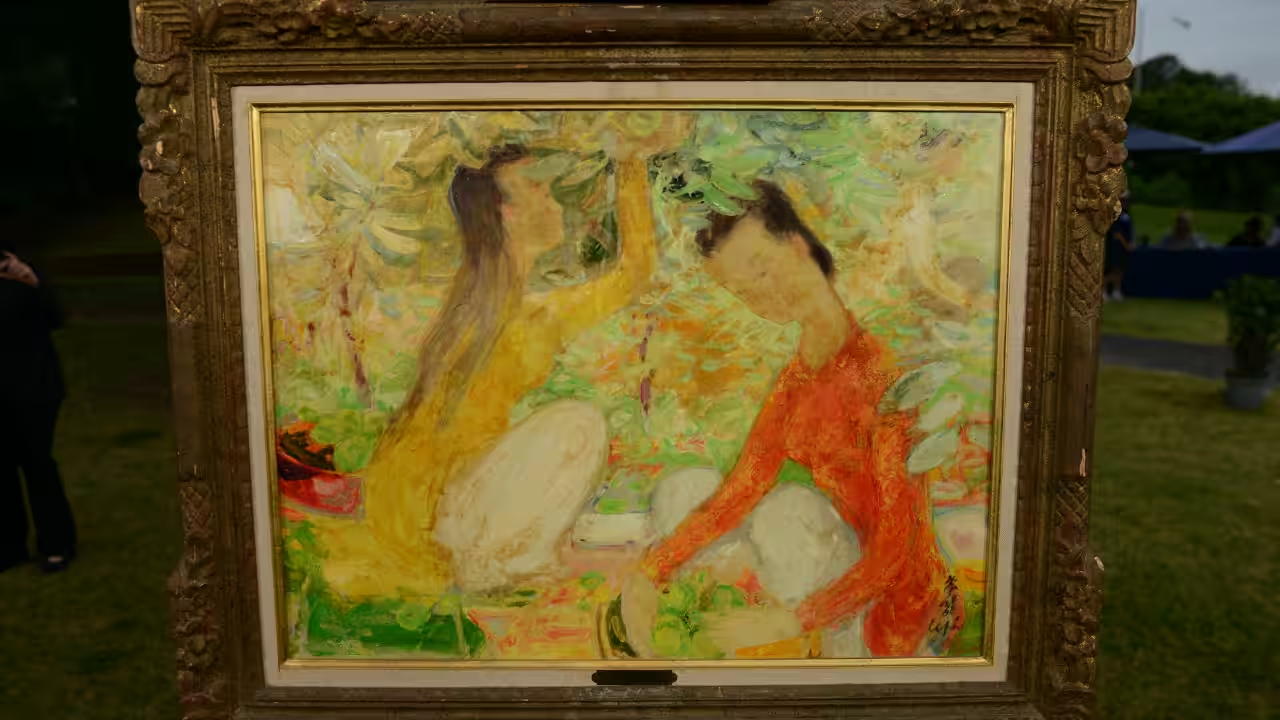
A painting bought for just $15.99 at a Goodwill thrift store turned out to be worth tens of thousands of dollars. The buyer, an occupational therapist at a Level I trauma hospital in the United States, had started visiting thrift stores during the COVID-19 pandemic to unwind after demanding days at work. According to PBS’s Antiques Roadshow, she spotted the artwork in the store’s painting section, noticed a plaque on it and decided to take it home. She eventually hung it above her bed, unaware of its potential value. When she brought it for an appraisal in Raleigh, North Carolina, in 2023, an expert identified it as a work by Vietnamese artist Le Pho.A routine thrift-store visit led to an unexpected discoveryThe woman told Antiques Roadshow that shopping at thrift stores had become a way to manage stress while working with patients recovering from serious injuries. On one visit to Goodwill, she noticed a painting that stood out from the other items on display. A small plaque caught her attention because it reminded her of the labels commonly seen beside artworks in museums. She decided to buy the painting for $15.99, without knowing much about its history or the artist behind it.After bringing it home, she hung it above her bed. It remained part of her bedroom decor until she took it to the television programme’s appraisal event at the North Carolina Museum of Art. The painting’s low purchase price made the eventual valuation particularly surprising. What had seemed like an ordinary second-hand find was connected to an artist whose work attracted considerable interest from collectors.The artwork was identified as a Le Pho paintingAt the Raleigh appraisal in 2023, fine-art expert Betty Krulik examined the painting and identified it as Cueillette des Pommes Cannelle, a title translated as “Cinnamon Apple Picking”. The PBS appraisal listing describes the work as an oil painting on board dating to around 1950. During the examination, however, Krulik suggested that it was probably created in the 1960s. The painting carried the artist’s signature in the lower-right corner. A gallery label on the back also provided a useful clue to its history.Krulik connected the work to Findlay Galleries, which had promoted Le Pho’s paintings. Krulik said Findlay Galleries still handled the artist’s estate at the time of the appraisal. The signature, gallery association, medium and size helped explain why the artwork was considered valuable. Le Pho was a Vietnamese-born artist who studied at the École des Beaux-Arts in Hanoi before continuing his artistic education in Paris. He later taught art in Vietnam before settling in Paris, where he developed a style influenced by both Vietnamese traditions and European art. Findlay Galleries helped introduce his paintings to American collectors. Born in 1907, he died in Paris in 2001, and his paintings continue to attract interest in the international art market.An auction estimate of up to $80,000The most startling moment of the appraisal came when Krulik discussed the painting’s potential market value. She estimated that comparable works could sell for between $60,000 and $80,000 at auction. For the owner, that represented an extraordinary difference from the $15.99 she had paid at Goodwill.Krulik also explained that the painting’s size was a positive factor. Although smaller works by Le Pho were available on the market, this painting was a standard size for the artist and belonged to a period that collectors particularly valued. The expert offered a separate figure for insurance purposes, suggesting coverage closer to $100,000 if the owner wanted to insure the work. These figures were estimates rather than a confirmed sale price. The painting was not reported as having sold for $60,000 to $80,000; the appraisal indicated what it might fetch at auction based on comparable works.Why the thrift-store find mattersThe discovery highlights how the value of an artwork can be difficult to judge from its appearance or the price attached to it in a second-hand shop. A signature, a gallery label and an expert’s knowledge of an artist’s career can reveal information that an ordinary buyer might overlook. In this case, the owner had purchased the painting for personal enjoyment and displayed it above her bed without knowing its potential significance. The appraisal gave her a very different understanding of the artwork she had lived with.The story also demonstrates the importance of provenance and specialist assessment in the art market. Even when an artist is established, a painting’s value depends on factors such as its authenticity, condition, dimensions and place within the artist’s career. For the hospital worker, a $15.99 purchase made during a stressful period became an unexpected discovery. What began as a way to unwind after work led to an artwork that an expert valued at tens of thousands of dollars.You use AI every day. Now get your AI Quotient. Take the AIQ test.
Topics in this story
Gathered from external sources. Rights to this text belong to whoever originally published it.