A £100 Japanese chest became a London engineer’s TV stand for 16 years; linked to Cardinal Mazarin, it resurfaced and sold for €7.31 million
A 17th-century Japanese lacquer chest, once a humble TV stand in London, has been rediscovered and sold for €7.31 million, linked to Cardinal Mazarin. Learn about its fascinating history and remarkable auction story.
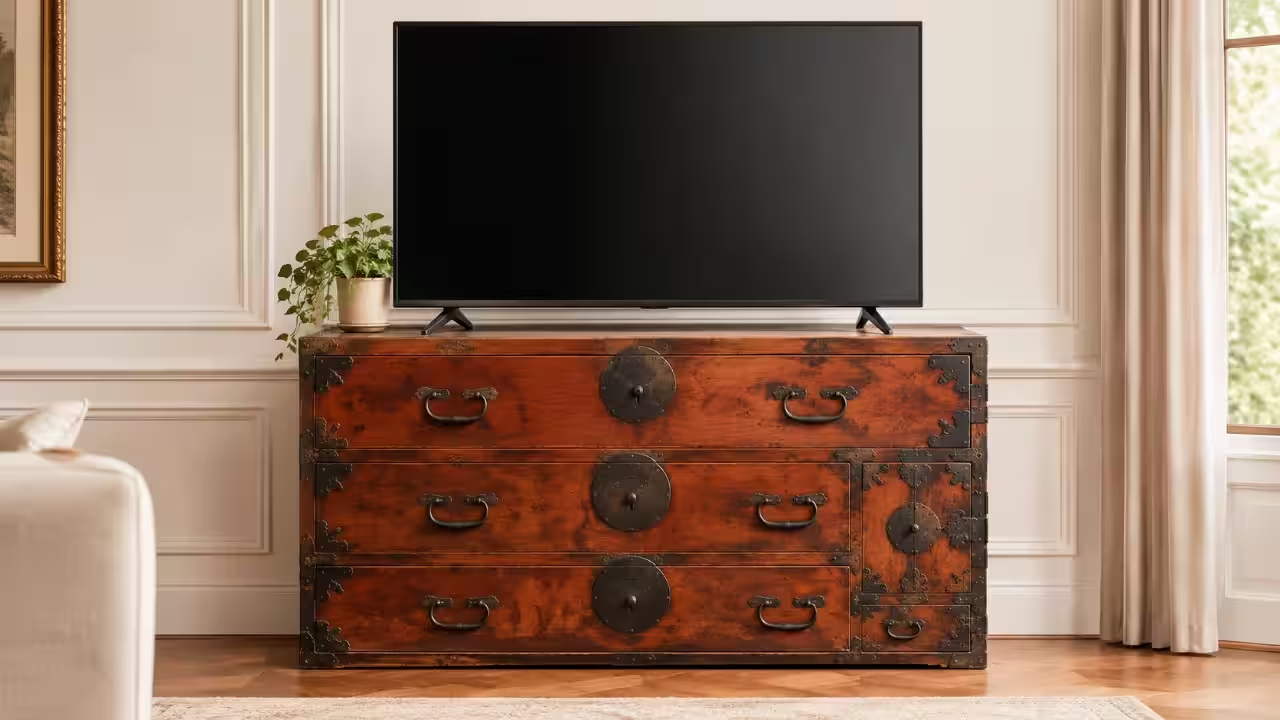
Few pieces of furniture have carried as much hidden history as the black-lacquered, gold-decorated chest that sat under a television in a South Kensington flat from 1970 until 1986, according to The History Blog. Its owner first used it as a stand for his television and later turned it into a bar for keeping drinks. No one in the room knew that the very same chest had once travelled from Japan to Europe and ended up in the collection of a French cardinal. That changed in 2013, when a French auctioneer entered a house in the Loire Valley and recognised the piece standing in the corner of a room. It was sold at auction that year for €7.31 million.A £100 purchase in South KensingtonA 17th-century Japanese lacquer chest, once owned by Cardinal Mazarin, was used as a television stand in a London home for 16 years before being discovered. It sold at auction in France in 2013 for €7.31 and went to Amsterdam’s Rijksmuseum. According to The History Blog, the flat’s landlord was Zaniewski, a Polish doctor and the tenant was an engineer who worked for Shell Petroleum. The Engineer kept the chest as a stand for his television for 16 years, from 1970 until he retired to the Loire Valley in 1986, where he turned it into a bar.From a Kyoto workshop to Cardinal Mazarin The chest dates back to 1640 and was manufactured in Kyoto, most likely in the workshop of Kōami Nagashige, who was the official lacquerer to the Tokugawa rulers, according to the Rijksmuseum. The History Blog says that these lacquer chests were ordered by François Caron, head of the Dutch East India Company’s office in Japan. The Daily Mail said the chest is about 4 feet 8 inches wide and that only about ten remain. Victoria and Albert Museum notes that the chest depicted scenes from the Tale of Genji and the Tale of the Soga Brothers.A ban on exporting such lacquered chests came into effect in 1641, but because Caron was grandfathered in, the items were exported in 1643. In the company’s records for that year, four extra-large lacquer chests are mentioned. The chest belonged to Cardinal Jules Mazarin, chief minister of France from 1642 to 1661 and an important art collector. He acquired the two largest chests in Amsterdam and shipped them to France aboard a warship. Mazarin’s family kept the chests until the French Revolution, when a haberdasher brought this one to a sale and passed the chest to the English collector, William Beckford.Seventy years out of sightThe trail went cold in 1941. In 1941, during the Second World War, an auction at Llantarnam Abbey listed it simply as a large Chinese chest and its link to Cardinal Mazarin and its Japanese origin was forgotten. From then onwards, the largest of the cardinal’s gold chests was deemed lost. The Victoria and Albert Museum, which owns another of these chests, kept searching and, in the end, another just turned up at the State Historical Museum in Moscow. As the Daily Mail pointed out wryly, the missing chest was actually under a TV, a few hundred yards away from the museum.The appraisal in Touraine In the wake of the engineer's death, his family approached the Rouillac auction house to value his Touraine property. Philippe Rouillac, the auctioneer, discovered that the bar was a 17th-century chest from Japan made of gold, silver, copper and mother-of-pearl. A late 19th-century photograph he compared it to helped confirm that it was one of the four chests purchased by Mazarin. The initial estimate with bidding set to open at €200,000.A winning bid and a Dutch homeThe sale took place at Cheverny on 9 June 2013 and the Rijksmuseum in Amsterdam won it. The Tokyo National Research Institute for Cultural Properties recorded the winning bid of €7.3 million for a chest found in a private house in France. The chest achieved a hammer price of €5.9 million, making it the highest auction sale in France that year. Additional buyer fees of approximately €1.4 million brought the final price to €7.31 million, the Antique Trade Gazette reported. It was purchased by the museum with the help of the Jaffé-Pierson Foundation, the BankGiro Lottery and Vereniging Rembrandt. The curator of the Rijksmuseum, Menno Fitski, referred to it as “the best of the best,” ArtFix Daily reported. The chest, which first reached Europe through Amsterdam, was back in Dutch public possession.You use AI every day. Now get your AI Quotient. Take the AIQ test.
Topics in this story
Gathered from external sources. Rights to this text belong to whoever originally published it.