A 3,400-year-old Egyptian dump yielded 40 pierced papyrus fragments; their burn marks reveal a curse ritual against the serpent Apophis
Discover the significance of 3,400-year-old papyrus fragments found in Egypt, revealing ancient rituals against the chaotic serpent Apophis and the sun god Re.
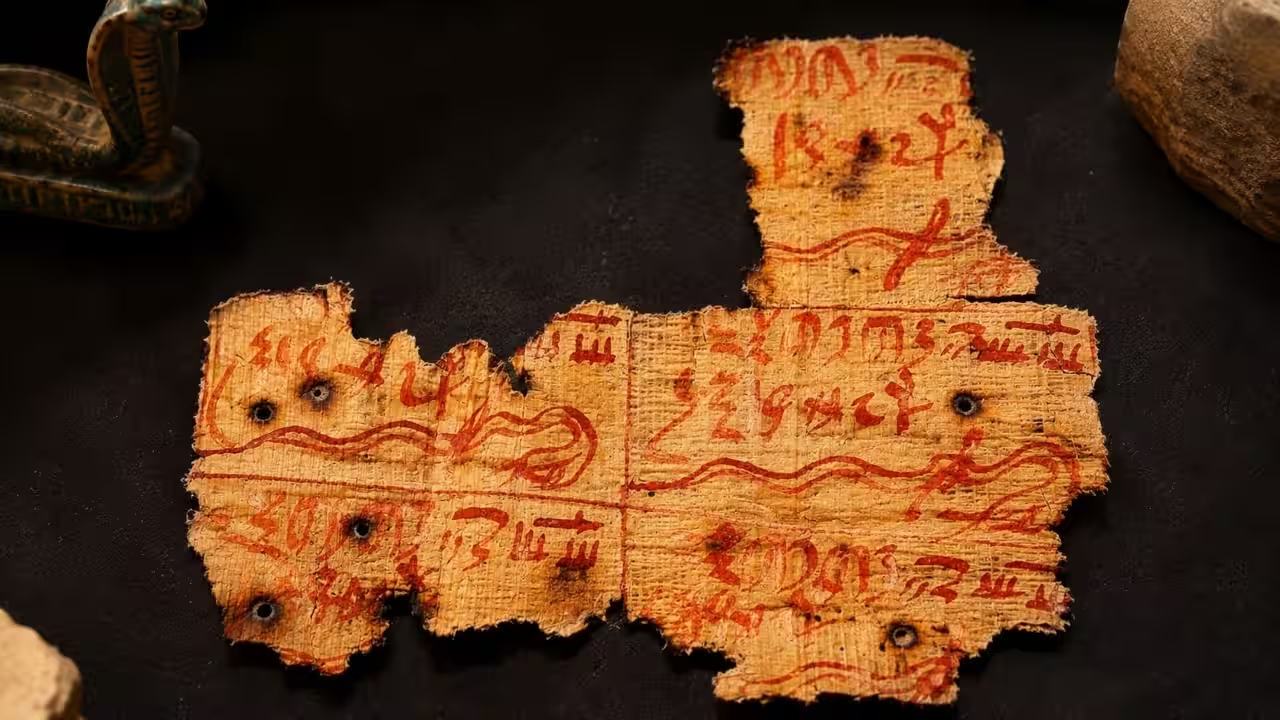
A collection of about 40 papyrus fragments was found in an ancient rubbish dump in Egypt. With the help of this recovery, archaeologists got rare physical evidence of a rite, which was intended to destroy one of Egyptian mythology’s most feared figures. These fragments could be dated back more than 3,400 years and had drawings and inscriptions which were linked with Apophis, the serpent of chaos. The Egyptian sun god, Re, was believed to be threatened by Apophis during his nightly journey through the underworld. With several pieces bearing the signs of piercing and burning, researchers believed that these were used in ceremonies which were designed to symbolically defeat the serpent of chaos.During an excavation at the mortuary temple of Pharaoh Thutmose III, these papyrus fragments were discovered. When the drawings and inscriptions were compared with descriptions of the ritual by the researchers, the significance of the findings became clearer. The physical damage matched the descriptions of the ritual that were preserved in a much later written Egyptian text. This implied that the practice was already there during the New Kingdom, meaning years before the surviving detailed instructions were noted down.What the collection found implies about the ritualIn Egyptian mythology, Apophis, who is also known as Apep, was seen as the representative of chaos and disorder. People at the time believed that the giant serpent attacked the sun god Re during his travels through the underworld at night. People believed that this threatened the continuation of the daily cycle of sunrise. Hence, rituals that were intended to repel or overthrow Apophis had a purpose; that is, they symbolically helped protect the sun god and preserve the original order of the world.The ceremony was reportedly known as Overthrowing Apophis. In the surviving materials, researchers observed two major groups: one containing depictions of Apophis himself and the other one containing figures who have been referred to as the “Children of the Rebel.” As per the University of Copenhagen’s research, out of the 40 fragments uncovered, 12 were identified as belonging to the Apophis group, and 14 belonged to the second category. The remaining fragments hadn’t been classified yet, as they were incomplete.Notably, the surviving fragments were written in ink, which was generally the colour used in Egyptian religious contexts to refer to dangerous or hostile forces. Some pieces even include red dividing lines, leading researchers to guess that possibly larger sheets of papyrus were divided into smaller sections before being cut up.Aside from this, some of the pieces indicate punctures that are similar to stabbing marks. Such traces were considered important because the later ritual text describes the destruction of representations of Apophis via actions which include piercing and burning,Why does the rubbish dump hold such importance?Fragments were recovered over several years. The earliest of them was found in 2014, while the latest was in 2025. As the pieces were found, a deposit outside the enclosure wall of Thutmose III’s mortuary temple, researchers believe that the ritual materials were likely present inside the temple before being discarded outside.Moreover, these Egyptian execration practices could have been used to counter other perceived personal threats. The University of Copenhagen’s research suggested that such rituals could also be associated with attempts to secure personal success or even cause harm to an enemy. Therefore, the papyri provide a direct connection between Egyptian texts and the physical actions that were likely carried out during the practices. Instead of simply relying on the written descriptions, researchers can now examine objects that appear to have been prepared, damaged and discarded as part of the ritual itself, thus offering a rare glimpse of how the Egyptians translated their belief in the struggle against chaos into repeated, material acts more than three millennia ago.You use AI every day. Now get your AI Quotient. Take the AIQ test.
Topics in this story
Gathered from external sources. Rights to this text belong to whoever originally published it.