Plumbers share the sink accessories that stop food scraps from becoming an expensive problem
One is a surprisingly simple, inexpensive buy that you may already have hiding in your cabinet.
Our experts independently review everything we recommend. If you buy through our links, we may earn commission.
You probably don't think too much about what's going on below your kitchen sink — at least until you're standing there, waiting for the water to slowly drain. Clogs have definitely left me staring at a pool of murky dishwater, wondering how a few crumbs here and there turned into what feels like a plumbing emergency.
Depending on the situation, your clogged sink might be a mere inconvenience or a much more costly problem. The good news is that preventing a clogged kitchen sink doesn't require anything particularly complicated, and some savvy habits and smart buys could head off a steep plumbing bill.
I'm guilty of leaving my sink strainer sitting on the counter because it's gross to empty, or I keep it out of sight because it's not the most aesthetically pleasing thing. After all, I have a garbage disposal, so if a few things slip down the drain, I'm not too concerned.
Well, plumbers have a message for me: Put the strainer back where it belongs. A simple strainer catches food scraps before they enter your drainage system, says Mike Winklejohn, a licensed journeyman plumber and regional operations manager at HomeServe . Plus it's easy to lift out, empty into the trash and put back in the sink.
Paul Abrams, a spokesperson for Roto-Rooter , agrees that a basket strainer is one of the simplest, most useful tools for preventing clogs. Many kitchen sinks come with one but plenty of homeowners, like me, don't actually use them. But you're not just stuck with the one you got by default; there are several different types, including deep-basket strainers, flexible mesh baskets, hanging sink baskets and disposable strainers. All can help make collecting food scraps and dumping them in the trash a little easier. If wet food in the sink makes you a little green, a strainer basket or a disposable option might be the better choice. Otherwise, a traditional strainer works just fine.
Of course, a strainer shouldn't be your only line of defense. Abrams recommends scraping leftover food off your plate and into the trash before rinsing, then letting the strainer catch whatever small bits remain.
Doncko Disposable Mesh Sink Strainers, 400-Pack
Sdefi Stainless Steel Kitchen Sink Drain Strainer
Use a garbage disposal — but don't treat it like a trash can
I have a garbage disposal, and it certainly makes kitchen cleanup a little easier when I'm dealing with small bits of food stuck to dishes and pans. But I'm terrified of putting anything bigger than a crumb down it. (I learned my lesson in the past, when I clogged the other side of my sink.)
Garbage disposals are probably the most popular sink accessory for preventing large food scraps from becoming a plumbing problem, Winklejohn says. And you've got plenty of options to choose from, depending on how finely you want one to grind your food, how quiet you want it to be and how long you want it to last (stainless steel is a better option for preventing rust).
But even the fanciest disposal can't make every food scrap disappear without consequence. "The best practice is to scrape food into the trash before rinsing dishes," Abrams says. A garbage disposal is meant to handle small food scraps left behind, not a sink full of last night's leftovers. Abrams also cautions that you shouldn't wait until the disposal is packed with food before turning it on, which can lead to clogs.
And there's another golden rule both pros agree on: Run cold water when the disposal is on, since it helps solidify any grease that's gone down the drain and makes it easier for the blades to break it up. (For years, I've been running hot water down my disposal, thinking it would break up any residue left behind — live and learn.) Abrams also says to leave the water running for at least 10 seconds after you shut off the disposal to ensure the ground-up waste is flushed through the drainpipe.
Waste Maid 1/2 HP Anti-Jam Garbage Disposal
Moen Prep Series Pro 1/2 HP Garbage Disposal
InSinkErator Badger 5 1/2 HP Garbage Disposal
Stop putting these foods down the disposal and drain
To me, the name "garbage disposal" feels a little misleading — especially if you're a first-time owner. You might think you can just shove an uneaten pile of pasta down it, but that's not the case. And the same goes for your sink drain. Abrams says the list of no-nos, whether or not you have a disposal, includes rice, pasta, potato peels, mashed potatoes, coffee grounds, eggshells, bones, seeds, poultry skin, pumpkin pulp, citrus peels, corn husks, meat drippings, cooking oil and grease.
Starchy foods are particularly troublesome because they can break down into a sticky paste that coats pipes and traps other debris — think of the residue left on your hands after cutting potatoes. But that doesn't mean you need to panic if a few grains of rice slip down. "Your disposal can process small amounts of these items, so there is no need to be paranoid, but your motto should be, 'All things in moderation,'" Abrams says.
Both experts are especially firm on this rule: Never pour grease or cooking oil down the sink. Grease can solidify in the drainage system, causing clogs, Winklejohn says. I personally wait for it to solidify and then scrape it into the trash, or pour hot oil into a silicone grease catcher. You can also use a cooking oil solidifier on hot oil, and once it's cooled down, scrape it right into the trash.
A small countertop compost bin is another option for larger food scraps. It's a great way to keep foul smells from festering in the garbage and protect your drain. Just make sure you're emptying the bin regularly to keep pests and unwanted odors at bay.
PrepSolutions Silicone Grease Strainer and Keeper
LaSyL Natural Cooking Oil Solidifier Powder
Sink already clogged? Don't make matters worse
If you're already dealing with a sink full of dingy water, it happens to the best of us. But before you reach for harsh chemical drain cleaners, here are a few tips to try first.
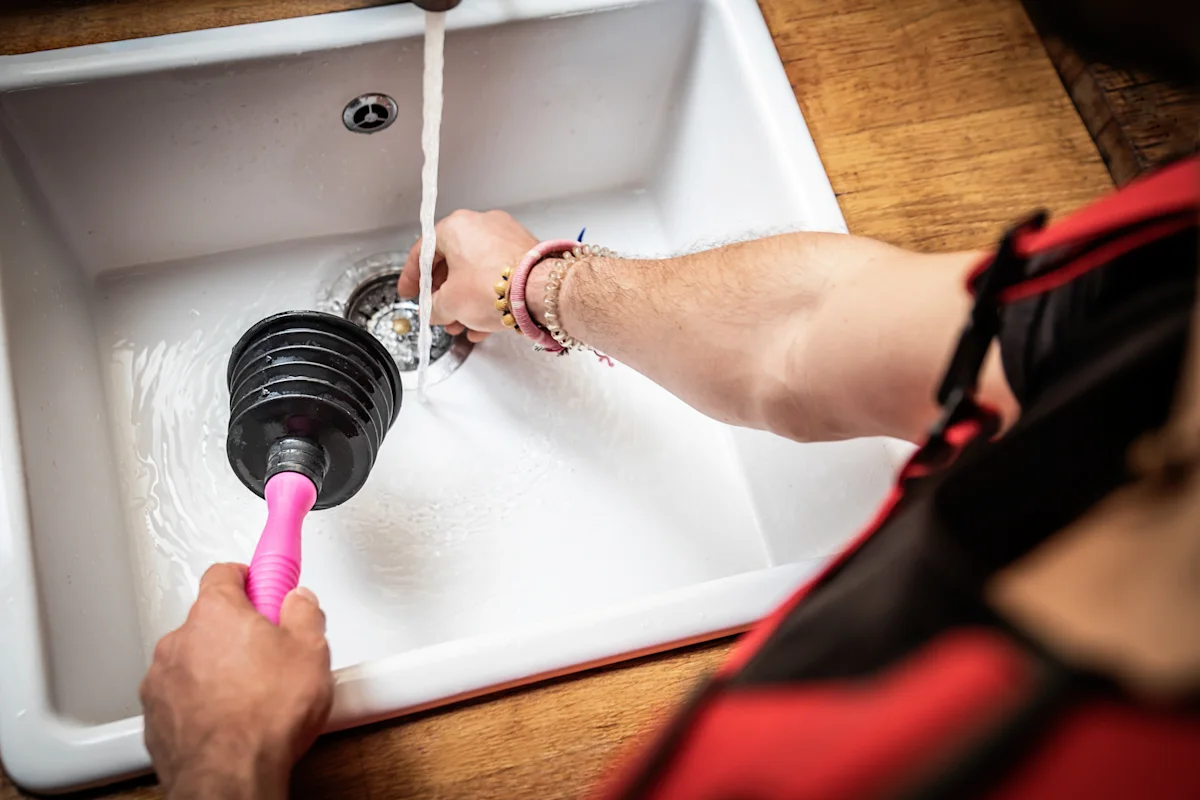
If you have a garbage disposal, run it to see if the clog clears. Next, try a short-handled sink plunger (and please don't grab the toilet plunger you keep in your bathroom). Abrams advises making sure there's enough water in the sink to cover the plunger. You should also seal any overflow openings, then cover the drain on the opposite side if you have a double sink. Next, give it six to 10 firm plunges, then repeat as needed. "Ideally, the pressure from the plunger will break up the clog and force it through the drainpipe," he notes.
You can also try baking soda and vinegar, but Abrams says the mixture is generally not effective on a complete blockage. Boiling water isn't always the miracle cure it's made out to be either. If there's already standing water in the sink, it probably won't do much to clear the clog. Plus, Abrams notes that it can warp acrylic sink tubs and crack some natural stone sinks, which can lead to another very expensive problem.
As for chemical drain openers like Drano, Abrams says they may work in some situations, but they can also damage pipes and drain finishes. And if you've already poured chemicals down the drain and your next step is to call a plumber, Abrams says you need to let them know so they can take the proper safety precautions.
If you're dealing with a truly stubborn clog, you may need to grab a bucket, place it under the sink and do a little investigation. Abrams says homeowners can start by removing the P-trap — it looks like a U- or P-shaped pipe and it connects your sink's drain to the sewer system or septic tank — to check for debris. This isn't for those who have a weak stomach, especially if the clog has been there for days.
If the P-trap is clear, Abrams says you can try a hand-crank drain auger (a plumbing snake), but advises against using powered augers if you don't have training. If the clog is beyond the reach of a household auger, it's time for the pros to take over. Let them know what you've already taken apart so they can check that everything was reassembled correctly.
Topics in this story
Gathered from external sources. Rights to this text belong to whoever originally published it.