In 2026, Arizona officials rejected a data-centre plan covering 3,000 acres near Eloy; the developer had already reduced the proposed campus to 11 buildings
Arizona officials were set to decide on a proposed data centre development covering more than 3,000 acres of rural land near Eloy, after developer
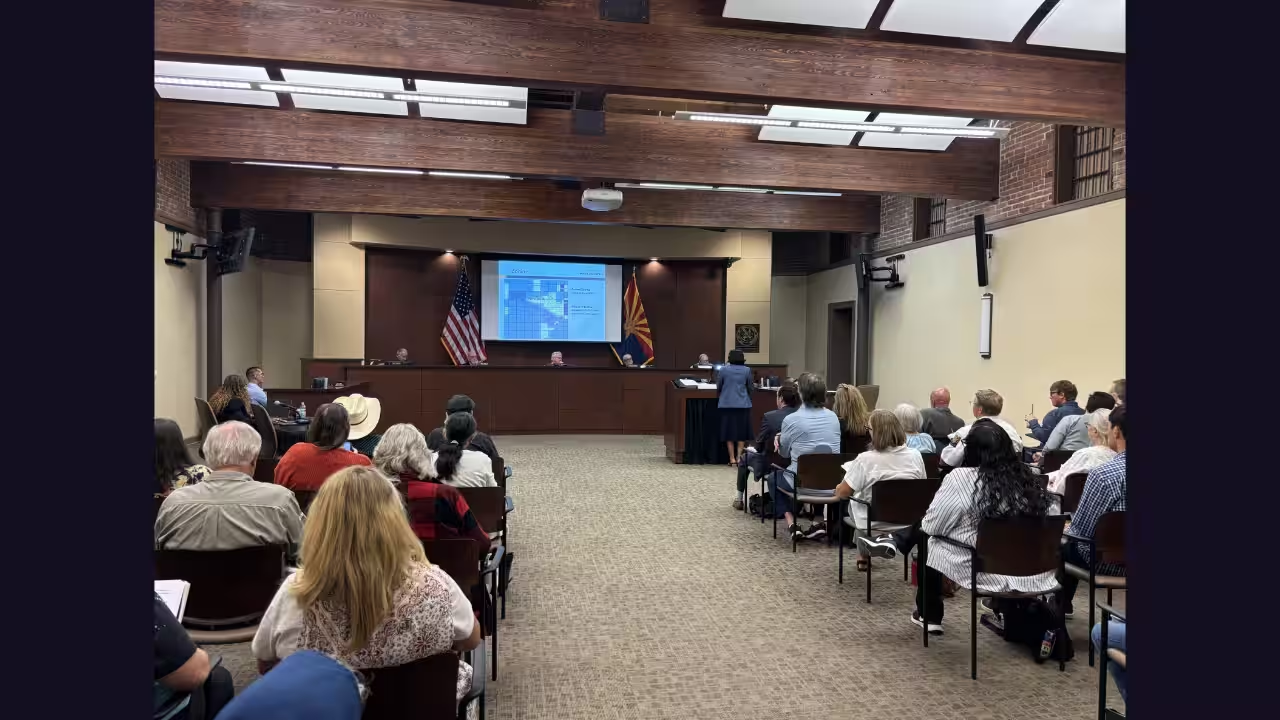
Arizona officials were set to decide on a proposed data centre development covering more than 3,000 acres of rural land near Eloy, after developer Vermaland reduced the planned campus by 80% following local opposition. The La Osa Energy Centre proposal includes 11 data centre buildings, an on-site gas-fired power plant and a battery energy storage system, with energy demand capped at 1 gigawatt. According to KJZZ, a National Public Radio (NPR) member station based in Phoenix, Arizona, the revised application also proposes limiting annual freshwater use to 600 acre-feet and introduces additional development conditions. The Pinal County Board of Supervisors was due to consider the rezoning request on 26 August 2026.Why was the Arizona data-centre plan rejected in 2026The revised proposal followed opposition from residents. At a public hearing in May 2026, Vermaland said it planned to reduce the scale of the development by 80% in response to community concerns. The revised zoning application specified that the company would not build more than 11 data centre buildings.KJZZ reported that, before the proposed reduction, La Osa would have been the largest planned data centre project in Arizona. The revised development remained among several large-scale data centre projects under consideration in the state. The developer also submitted 22 additional development conditions, which company officials said reflected feedback received during the lengthy May public hearing.What water limits applied to the La Osa data-centre projectThe revised application proposed limiting the site's use of potable, or fresh, water to 600 acre-feet annually. KJZZ explained that an acre-foot represents more than 300,000 gallons of water. The developer could seek to reduce or offset its freshwater consumption, including through the purchase of effluent water, but the county would not make such measures compulsory under the proposed conditions.The county would also receive annual reports detailing water use at the data centre campus and the on-site gas power plant. According to KJZZ, these reports could be shared with the public. The project's water use would additionally be subject to any conditions established by the final water provider. The revised proposal therefore included reporting requirements alongside the proposed annual limit on potable water consumption.How would the Arizona data centre meet its power needsVermaland stated that the development would generate its own electricity while waiting for a connection to the utility grid. The planned on-site gas power plant would have to comply with county-level emissions requirements. The developer also said it would pay the full cost of generating and delivering electricity to the site once the project was connected to the grid.However, KJZZ reported that enforcement of the commitment to cover those electricity costs would fall to the Central Arizona Irrigation and Drainage District, which was planning to serve the project. The application also included requirements for noise studies and provisions for decommissioning the battery storage facility after 24 months without use.What other data centre projects were planned in ArizonaLa Osa was not the only large data centre development being considered in Arizona. KJZZ reported that Maricopa County had approved more than 2,000 acres near Buckeye for a separate data centre project with a planned capacity of 1 gigawatt in 2025. The project was another example of the large-scale facilities being proposed in the state.In Page, residents were seeking to reverse the city council's sale of 500 acres near Horseshoe Bend to a developer planning another data centre with a proposed capacity of 1 gigawatt. The La Osa proposal, meanwhile, remained subject to the Pinal County decision on its rezoning and site planning request.KJZZ also clarified an error in an earlier version of its report. The original article had incorrectly stated that Pinal County had imposed dozens of conditions on the developer. The station subsequently corrected the report to explain that Vermaland had included the restrictions in its application.You use AI every day. Now get your AI Quotient. Take the AIQ test.
Topics in this story
Gathered from external sources. Rights to this text belong to whoever originally published it.