In 1960, Turnbull refuge workers began reintroducing trumpeter swans; 37 cygnets arrived over four years, and 21 years after losing his mate, Solo fathered a new brood
US News: Discover the inspiring story of Solo the trumpeter swan, who became a symbol of hope for conservation efforts at Turnbull National Wildlife Refuge in eastern Washington after an ambitious reintroduction program faced near failure.
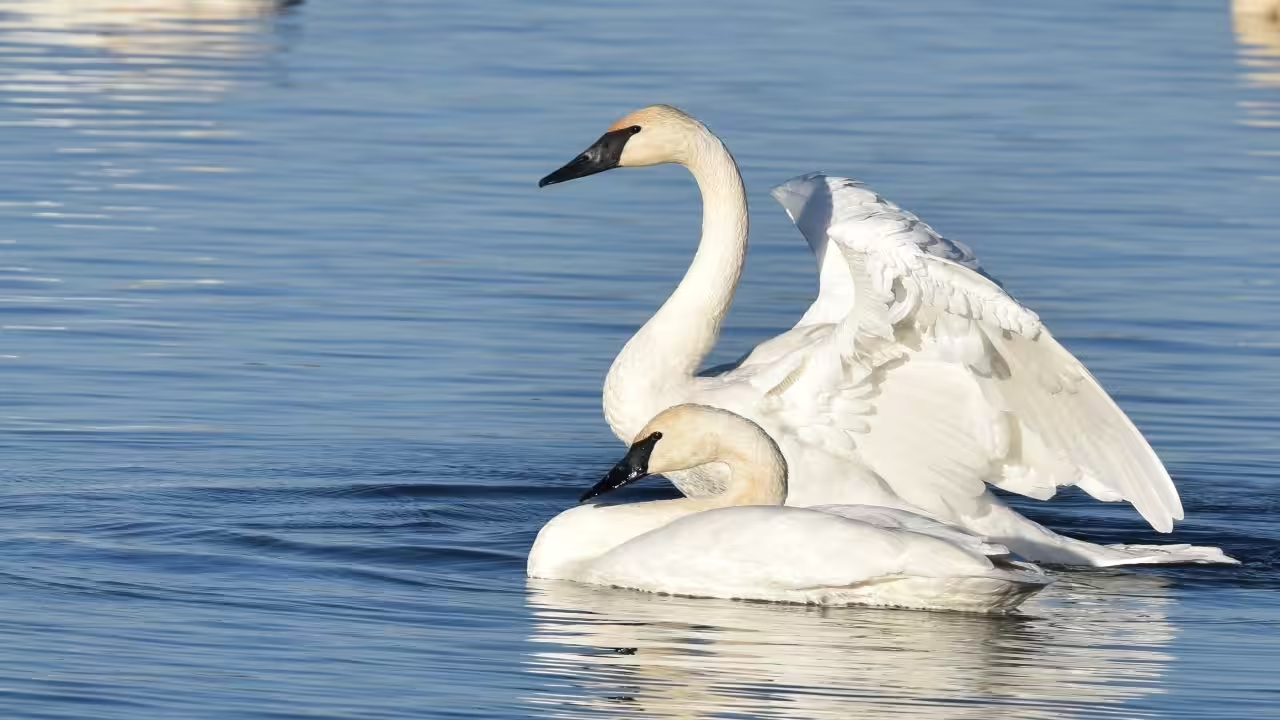
A single male swan spent two decades returning alone to the same lake every spring, long after his mate had been killed and his eggs destroyed. That bird, later nicknamed Solo, became a key hope for restoring trumpeter swans to eastern Washington after an ambitious reintroduction programme very nearly ended in failure. Wildlife managers at Turnbull National Wildlife Refuge had spent the 1960s carefully relocating dozens of cygnets to the area, only to watch the population barely survive for the next two decades. When Solo eventually found a new mate, the pair raised four cygnets in 2009, ending more than two decades without a successful brood at the refuge and renewing hope for the local flock. The story shows how fragile a reintroduction can be and how much can depend on a handful of surviving birds.Why the swans needed saving in the first placeTrumpeter swans, the heaviest native waterfowl in North America with a wingspan that can stretch past eight feet, were hunted almost to extinction across the continent by the early twentieth century. Their feathers were used for hats and their skins for powder puffs, and their large size and slow reproduction made them easy targets for unregulated hunting. According to the Audubon Society, the species had disappeared from most of its historic range by the 1930s, with only a small surviving population clinging on in remote parts of Montana and Wyoming.Recovery efforts began slowly through the middle of the century, relying on eggs and young birds collected from that last stronghold. Turnbull National Wildlife Refuge, tucked into the pine forests and wetlands of eastern Washington, was chosen as one of several new sites where wildlife managers hoped to establish a new breeding population far from the birds' last remaining stronghold.The reintroduction that almost did not workBeginning in 1960, refuge staff introduced 37 cygnets to Turnbull over a four-year period, hoping the young birds would establish a self-sustaining flock. By the mid-1980s, however, the population had dwindled to only a few breeding birds. In 1988, Solo and his mate were nesting at Winslow Pool when coyotes killed the female and destroyed the eggs before they could hatch. Her mate survived, but the loss left Solo without a partner. He spent the next 21 years mostly alone, occasionally attracting a passing female but never producing another brood at Turnbull.Throughout those years, refuge staff continued managing the birds, including supplemental feeding and pond aeration to keep winter water open. The measures helped maintain a resident flock, but the population still struggled with high mortality and eventually declined sharply. By the mid-1980s, when Turnbull's swan numbers had shown little growth since the original release, the effort could easily have been judged a failure.How one bird's patience turned the tideSolo's fortunes changed when he later found a new mate, but in 1988, the pair's nesting attempt ended when his mate was killed by coyotes and the eggs were destroyed. More than two decades later, in 2009, Solo successfully raised four cygnets with another mate, producing the first successful brood at Turnbull since 1987. The successful nesting renewed hopes that Solo's lineage could help sustain trumpeter swans at the refuge. Solo went on to sire cygnets for years afterward, effectively becoming the ancestor of the population that exists at Turnbull today. Every trumpeter swan currently nesting at the refuge descends from that one persistent bird, based on the Trumpeter Swan Society's long-running records of the species' restoration across North America.Solo continued returning to Turnbull each spring for decades, becoming something of a local celebrity among birdwatchers who tracked his annual arrival on the refuge's first patch of ice-free water. He was eventually found to have lead poisoning, a common hazard for waterfowl that ingest spent ammunition while feeding, and died in 2011 after being taken to Washington State University for treatment. Biologists estimated that he was between 34 and 47 years old when he died, making him an exceptionally long-lived trumpeter swan.Today, Turnbull typically sees two or three nesting pairs of trumpeter swans each year. That is modest compared with the ambitions of the 1960s programme, but it is still a genuine achievement given how close the effort came to failing. Lead ammunition for waterfowl hunting was banned nationally in 1991, habitat management has improved, and public education about the species has grown, all of which have helped reduce the mortality that nearly ended the Turnbull flock before it truly began. Solo's descendants continue to nest on the same lakes where their ancestor once waited for a chance that eventually came.Catch the latest World News and Live updates. Download the TOI app.
Topics in this story
Gathered from external sources. Rights to this text belong to whoever originally published it.