AI's growing energy appetite revives market for ageing turbines, jet engines
The race to dominate artificial intelligence is creating an unusual scramble in the energy market, with technology companies hunting for equipment that
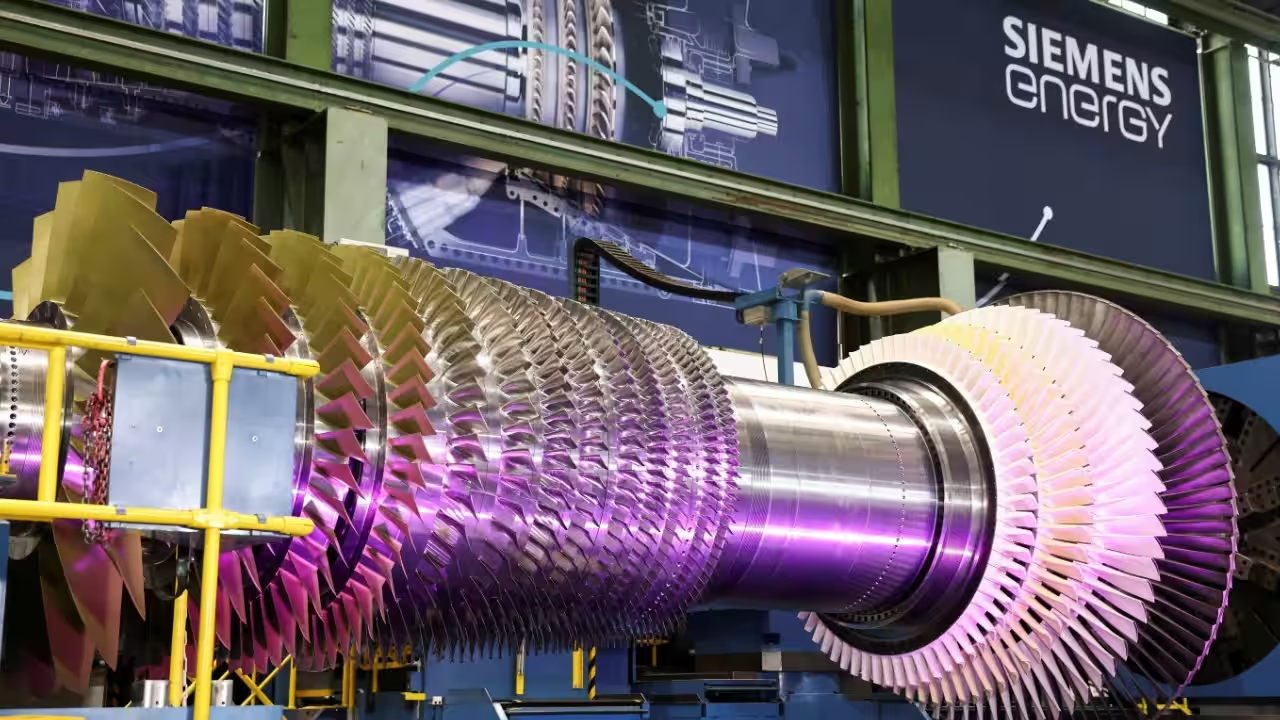
The race to dominate artificial intelligence is creating an unusual scramble in the energy market, with technology companies hunting for equipment that was never originally meant to power data centres.From second-hand gas turbines to retired aircraft jet engines, companies are exploring unconventional ways to secure electricity as the rapid expansion of AI infrastructure runs into a growing shortage of power-generation equipment.According to Reuters, the rush for turbines has intensified as manufacturers struggle to meet demand and delivery timelines for new equipment stretch to as long as six years. With AI data centres demanding enormous amounts of electricity, companies are increasingly looking towards the used equipment market to keep their expansion plans on track.Why are AI companies turning to gas turbines?The growing demand for artificial intelligence is creating an enormous appetite for electricity, with data centres requiring a continuous and reliable power supply to run thousands of high-performance processors.Unlike conventional office buildings, these facilities operate energy-intensive computing systems around the clock, while their cooling infrastructure adds significantly to their overall electricity consumption.As technology companies race to expand their AI infrastructure, securing enough electricity has become a major challenge. Waiting for new grid connections and conventional power infrastructure can delay projects, pushing developers to explore on-site electricity generation. Gas turbines offer a way to generate large amounts of power directly at or near data centre facilities, reducing dependence on external electricity networks.This growing demand is now putting pressure on turbine manufacturers, forcing companies to look beyond newly manufactured equipment and explore the second-hand market.The growing demand is benefiting some of the world's biggest turbine manufacturers, including Siemens Energy, GE Vernova and Japan's Mitsubishi Heavy Industries. These companies are facing a surge in orders as data centre developers and utilities compete for equipment, while their manufacturing capacity struggles to keep pace with demand.The surge in demand is exposing a widening gap between the global supply of gas turbines and the requirements of the power industry. According to Reuters, citing estimates from Wood Mackenzie, global turbine orders have crossed 100 gigawatts (GW), while annual manufacturing capacity stands at just 60-70 GW. The gap is expected to widen further as demand from AI data centres and conventional power projects continues to grow.The pressure is also reflected in delivery timelines. In the United States, companies seeking new gas turbines are facing waiting periods of up to six years. Estimates cited by Reuters suggest that global turbine demand could reach 129 GW in 2028, while manufacturing capacity is expected to rise to only 87 GW.This imbalance is pushing data centre developers towards used and refurbished equipment as they seek alternatives to lengthy waits for newly manufactured turbines.Why used turbines are becoming increasingly valuableWith new gas turbines becoming harder to secure, the second-hand market is emerging as an increasingly attractive option for data centre developers and power companies. Used turbines are reportedly selling for $1.5 million to $1.7 million per megawatt (MW), compared with $2 million to $2.5 million per MW for new equipment. Refurbished units are available for around $1.3 million per MW.The price difference is not the only attraction. Buying pre-owned equipment can also help companies avoid years of waiting for new turbines to arrive. Reuters reported that two 14.5 MW turbines were recently sold for $12.5 million, while comparable new equipment could cost around $35 million and take up to five years to be delivered.The growing competition for second-hand equipment is also creating a new business opportunity for companies that specialise in sourcing, repairing and reselling older power-generation machinery.You use AI every day. Now get your AI Quotient. Take the AIQ test.
Topics in this story
Gathered from external sources. Rights to this text belong to whoever originally published it.