In 1977, Los Angeles Zoo recorded the first mountain tapir birth in a zoo after successfully breeding three other tapir species
On June 4, 1977, the Los Angeles Zoo recorded a milestone in the history of mountain tapir breeding when a mountain tapir was born there, becoming the
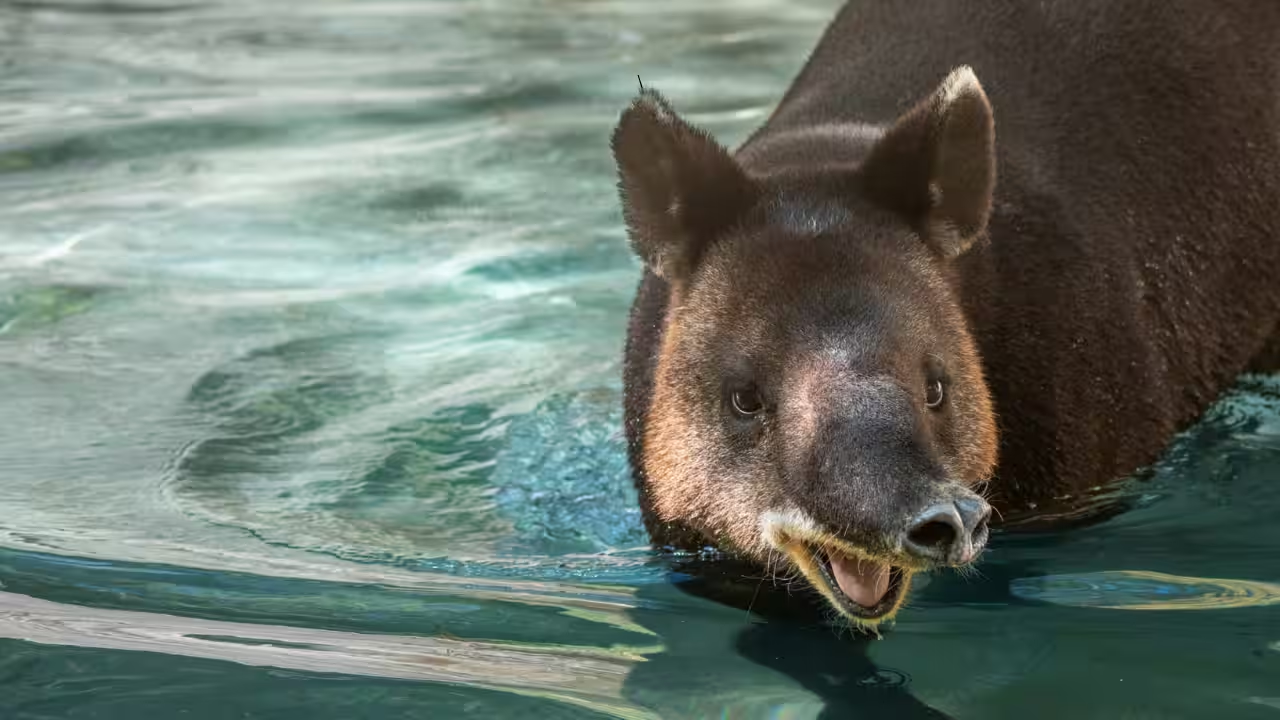
On June 4, 1977, the Los Angeles Zoo recorded a milestone in the history of mountain tapir breeding when a mountain tapir was born there, becoming the first of the species known to have been born in a zoo. The birth added to the zoo’s history of breeding tapirs and came as the species faced growing threats across its high-Andean range. Found in the cloud forests of Colombia, Ecuador and Peru, mountain tapirs are the smallest of the four tapir species. Their populations have declined in parts of their range, with hunting and habitat destruction identified among the threats to their survival.How Los Angeles Zoo bred the first mountain tapir born in a zooAccording to the Los Angeles Zoo, a mountain tapir was born at the zoo on June 4, 1977, marking the first mountain tapir birth in a zoo. This was a separate milestone from the earlier breeding of other tapir species. The zoo also records its broader tapir-breeding history, with Brazilian, Malayan and Baird’s tapirs included among the species it successfully bred.The mountain tapir had already disappeared from parts of its high-Andean range, and the remaining populations were threatened by hunting and habitat destruction. It gives a population of fewer than 2,500 individuals and describes the need for measures to secure the species’ future.How mountain tapirs survive in the high-altitude AndesAccording to the paper published by Cambridge University Press, titled ‘The mountain tapir, endangered ‘flagship’ species of the high Andes’, the mountain tapir has woolly, longer and thicker fur than the other tapir species. The coat helps the animal remain warm in the chilly conditions of its high-altitude habitat. Mountain tapirs live in cloud forests and subtropical regions of Colombia, Ecuador and Peru, according to the zoo.The species is also strongly associated with water. Mountain tapirs visit swift-flowing mountain streams to swim, wallow in mud and forage for water plants. They can remain underwater for several minutes and use their trunk-like nose in the water. The zoo lists grass, leaves and fruit among the foods they can grasp with their elongated lip.Why the endangered mountain tapir faces growing threats in the AndesThe mountain tapir is endangered, and fewer than 2,500 are estimated to remain in the wild. It lists habitat loss and fragmentation associated with poppy cultivation for the drug trade, armed conflicts in Colombia and cattle ranching among the threats facing the species. The reference list includes the 1979 International Zoo Yearbook paper by Bonney and Crotty on breeding Tapirus pinchaque at Los Angeles Zoo.You use AI every day. Now get your AI Quotient. Take the AIQ test.
Topics in this story
Gathered from external sources. Rights to this text belong to whoever originally published it.