Gen Z protests spread across Europe: Why thousands are taking to streets in 25 countries and what they want
A growing wave of youth-led demonstrations swept across Europe on Friday, bringing students, workers and trade unions together in an international day of
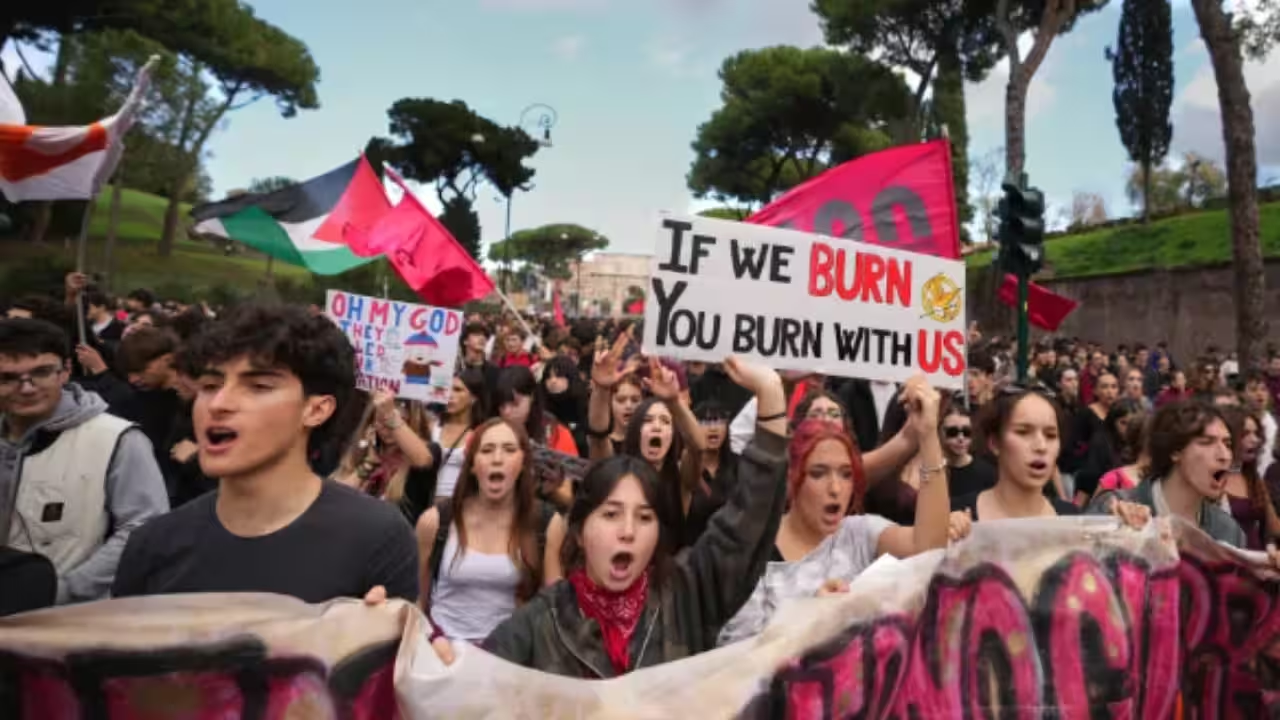
A growing wave of youth-led demonstrations swept across Europe on Friday, bringing students, workers and trade unions together in an international day of action spanning more than 25 countries.From London and Rome to Paris, Madrid and Berlin, thousands took to the streets, demanding action on the rising cost of living, soaring tuition fees, underfunded education systems and increasing military expenditure.The protests also brought attention to a range of political and economic grievances, including opposition to Israel's war in Gaza. Demonstrators questioned governments' spending priorities, arguing that greater investment was needed in public services rather than defence and rearmament. In Italy, the country's largest trade union, CGIL, called for a nationwide strike, with demonstrations reported in more than 100 squares. Transport workers also joined the action, threatening disruption to train services on Friday and Saturday, CNN reported.The demonstrations reflect wider concerns among Gen Z about economic insecurity, unemployment, climate change and the impact of artificial intelligence on future jobs. Protesters said governments were failing to address challenges that directly affect younger generations while continuing to increase military spending.What are the key demands?At the centre of the protests were calls for affordable education and living costs, better-funded schools and universities, higher investment in healthcare and other public services, and improved employment opportunities. Demonstrators in Italy, Germany and Britain also opposed increased military spending and rearmament, calling for resources to be directed towards public welfare. Opposition to Israel's military campaign in Gaza featured prominently, with protesters accusing European governments of complicity in the conflict. Other concerns included stagnant wages, the climate crisis and the potential impact of unregulated artificial intelligence on jobs and workers' rightsThe scale of participation varied across countries. CGIL chief Maurizio Landini claimed that more than one million people took part in demonstrations across Italy, although the figure could not be independently confirmed. In Britain, students from more than 350 schools, colleges and universities were expected to join the walkouts, according to Socialist Students.You use AI every day. Now get your AI Quotient. Take the AIQ test.
Topics in this story
Gathered from external sources. Rights to this text belong to whoever originally published it.