In 2016, carp overran Idaho’s 100-acre Bruneau Dunes Pond, outcompeting bass; rotenone cleared them, 2,200 fish were restocked, and a 2019 survey found no carp
Discover how Idaho Fish and Game successfully eradicated invasive common carp from Bruneau Lake, allowing for the restoration of a thriving fishing ecosystem. Learn about the methods used, the challenges faced, and the positive results of their measurements.
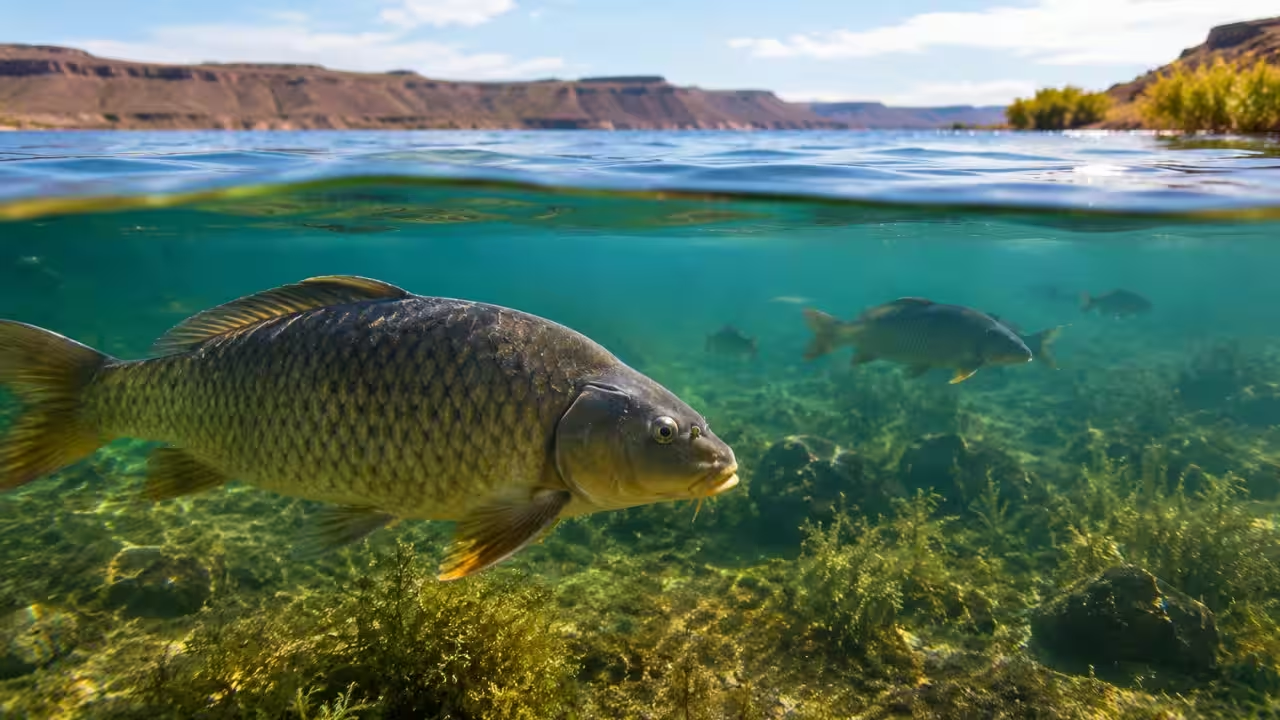
Common carp can take over a small fishing pond, muddying the water and outcompeting bass and bluegill. At Bruneau Dunes State Park in Idaho, managers decided the fix was to remove every fish and start over. In October 2016, Idaho Fish and Game treated the 100-acre pond with rotenone, restocked it and surveyed it again in July 2019.Common carp in Bruneau Dunes PondIdaho Fish and Game’s 2019 report describes Bruneau Dunes Pond, inside Bruneau Dunes State Park, as a popular fishing spot known for big bass and bluegill until it became infested with common carp. According to the report, the carp reproduced quickly and outcompeted the bass and bluegill. In a November 2016 press release, Idaho Fish and Game reported that most bass in Bruneau Dunes Pond were undersized, measuring around 8 inches, while only one reached 20 inches. This observation was taken by the agency to mean that carp is affecting their growth.Rotenone was applied from two crop-duster planesIdaho Fish and Game launched the operation in October 2016 by using the fish toxin rotenone on the surface of the 100-acre pond. The agency's 2016 release states that two crop duster planes from a Nampa company undertook the task. Hundreds of dead carp were removed and taken either to a landfill or a rendering plant in Hagerman. Because rotenone is nonselective, it also killed the bass and bluegill that remained in the pond. Before the operation, fish were electrofished in the pond and moved to another nearby pond. Doug Megargle, regional fishery manager, warned that a total kill cannot be guaranteed. Idaho Fish and Game further stated that rotenone rapidly degrades in sunlight and therefore, the pond will again be able to support fish within a week or two.Restocking with 2,000 bluegill in 2017 and 200 bass in 2018According to the 2019 report, the biologists restocked the pond with 2,000 bluegill in 2017 and 200 bass in 2018. This amounts to 2,200 fish altogether. The 2016 restocking estimate predicted that the pond would be restored in a period of three to five years and would contain plenty of bluegills and trophy largemouths.The July 2019 electrofishing survey and what it foundIn July 2019, regional fisheries biologist Joe Thiessen conducted an electrofishing survey, with the boat working the shoreline for 30 minutes at a time. The July 2019 survey observed no carp, bluegill that were growing well and spawning and signs that a bass population was re-establishing. That was a single survey three years after treatment and Idaho Fish and Game said it would keep monitoring the fishery. Thiessen said young-of-year bluegill from 2018 had grown 3 to 4 inches, exceeding growth rates reported in Midwest states. No bass above 20 inches were seen, though several between 14 and 18 inches were caught, so the bass population may still be limited.What research says about removing carpTwo published studies show what carp can do to aquatic plants and what removing them can and cannot fix. A 2016 study in Global Change Biology, Biological invasion by a benthivorous fish reduced the cover and species richness of aquatic plants in most lakes of a large North American ecoregion, found that submersed plant cover fell below 10 percent and species richness was cut in half in lakes where carp biomass exceeded 190 kilograms per hectare, a result from the lakes studied rather than a universal threshold. It estimated that carp biomass exceeded that level in a majority of Great Plains lakes and a large portion of Eastern Temperate Forests lakes.A 2015 study by Przemyslaw Bajer and Peter Sorensen, published in Hydrobiologia, tracked a thermally stratified lake while carp biomass was cut from 300 to 40 kilograms per hectare. Vegetation density and springtime water clarity rose, but summer clarity did not improve and carp removal had no apparent effect on total phosphorus.What the evidence suggests for waters like Bruneau Dunes PondThe findings suggest that keeping carp biomass below levels associated with ecological damage could support restoration, although the right target may vary with each water’s conditions. Idaho went a step further by removing all of the carp. The 2015 study is a reminder that removal does not fix everything, so water quality may recover more slowly than the plants.You use AI every day. Now get your AI Quotient. Take the AIQ test.
Topics in this story
Gathered from external sources. Rights to this text belong to whoever originally published it.