Trump picked a trade fight with Canada. US defense firms may pay the price
None of what Washington wanted on defense was ever going to be delivered by threat.
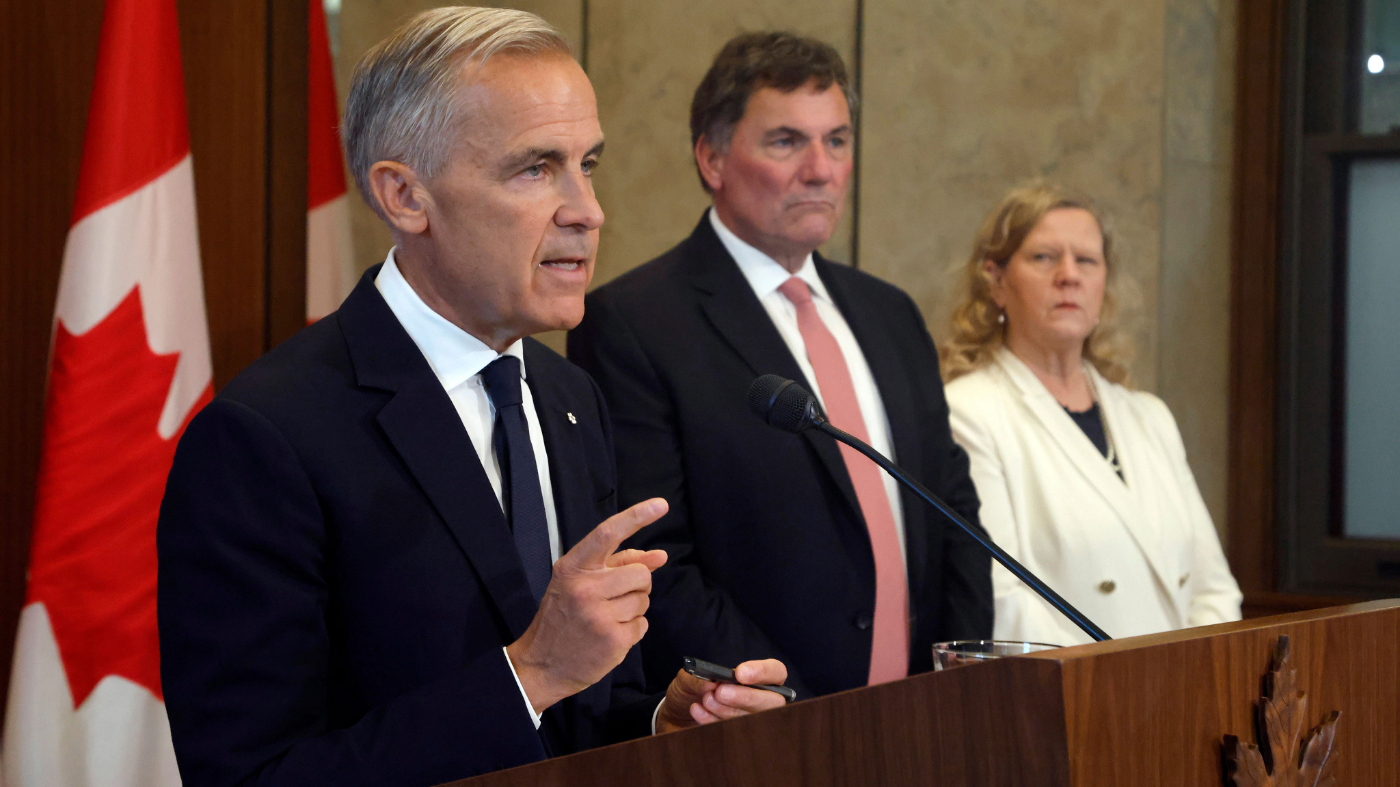
Washington went into last week’s trade talks with Canada looking for more than relief on dairy and alcohol. The administration wanted Ottawa to complete its F-35 purchase, buy American radar planes as part of joining President Trump’s Golden Dome missile defense project and grant the U.S. a right of first refusal on Canadian critical minerals.
By Saturday morning, the talks had collapsed . Fifty percent tariffs hit roughly $20 billion in Canadian goods, and Prime Minister Mark Carney says Canada will retaliate “ dollar for dollar ” starting Sept. 8. The bigger loss for Washington, though, may show up well after those tariffs stop making headlines.
None of what Washington wanted on defense was ever going to be delivered by threat. A tariff can be imposed and enforced at the border. Completing the F-35 order, joining Golden Dome, opening Canadian mineral reserves to American companies are different. No Canadian government can be forced into them, because each one requires Ottawa to keep saying yes, year after year, as contracts get signed and budgets get voted. Squeezing Canada on trade doesn’t make that yes more likely. It makes those choices harder to defend in Ottawa.
The administration has spent years telling allies to spend more on defense. Canada is finally doing it: Carney says his government will put half a trillion dollars into defense investment over the next decade. Until now, roughly 70 percent of Canada’s defense spending has gone to U.S. suppliers. Carney’s new defense industrial strategy wants Canadian firms to capture that same share instead. The trade fight didn’t start that pivot, but it has strengthened the case for it.
The F-35 is the clearest case. Canada contracted for 88 aircraft, but Carney ordered the purchase reviewed after Trump’s first tariff offensive last year. Washington wanted reassurance in these talks that Canada would finish the buy. It left without it.
The minerals dispute cuts the same way. The Pentagon has good reason to want secure North American supplies instead of Chinese ones. But demanding privileged access while punishing Canadian industries with tariffs was never going to produce a deal. Carney has already rejected exclusive access and called deeper minerals cooperation one of the casualties of the failed talks.
Since 1956, the U.S.-Canada Defense Production Sharing Agreement has tied the two countries’ defense industries together closely enough that more than 110 Canadian companies have taken part in the F-35 supply chain. Washington built that arrangement, and benefited from it, because Canadian procurement usually reinforced an American-centered continental defense economy. That was the quiet assumption behind seven decades of cooperation: it didn’t need to be re-earned in every budget cycle.
The defense relationship was already showing strain before the latest talks collapsed. In May, the Pentagon suspended the Permanent Joint Board on Defense , which had coordinated U.S.-Canada military consultation since 1940 , citing Canada’s slow progress on defense spending and its stalled F-35 decision. That happened three months before last week’s collapse.
Golden Dome exposes the same problem from the other direction. Canada is already investing in NORAD modernization with new radar and surveillance for the northern approaches that any continental missile defense system would need. Canadian participation still requires Canadian consent and Canadian money. Tariff pressure doesn’t make that participation more likely. It makes routine cooperation look like something Ottawa has to keep defending politically.
No serious Canadian government is going to withdraw from NORAD. Geography leaves both countries with too much at stake. The real damage will show up in the next round of choices: aircraft, sensors, industrial partnerships, as Canada decides where a much larger defense budget actually goes.
Trump wanted Canada to shoulder more of its own defense burden. He may get exactly that. What his administration hasn’t reckoned with is how much of that new Canadian money will still flow south, after a year of tactics that turned dependence on the United States into a political liability in Ottawa.
Andrew Latham is a professor of international relations at Macalester College in Saint Paul, Minn., a senior fellow at the Institute for Peace and Diplomacy.
Topics in this story
Gathered from external sources. Rights to this text belong to whoever originally published it.