In 1944, SS John Barry sank carrying 3 million Saudi silver riyals; salvors recovered more than 1 million, a 16-ton haul expected to fetch at least $20 million
US News: The SS John Barry sank in 1944 carrying 3 million Saudi silver riyals, and a salvage operation recovered over 1 million coins now valued at $20 million. Discover the captivating history behind the sinking and the ongoing search for the remaining treasure.
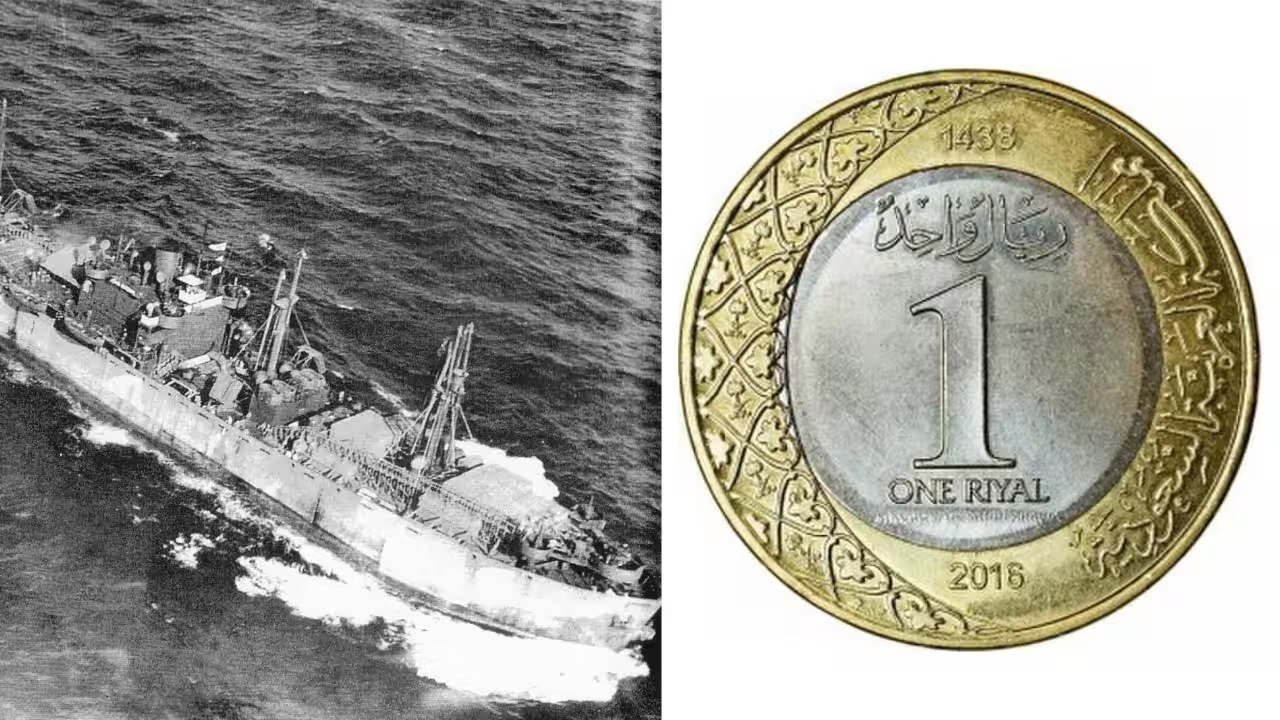
More than 1 million Saudi silver riyals were brought up from the wreck of the SS John Barry in 1994, roughly five decades after the American Liberty ship sank off Oman with 3 million of the coins in its holds. Nearly 16 tons of the recovered silver were headed for a Sotheby’s auction by the following year,, where the lot was expected to fetch at least $20 million.The ship had been carrying the coins to Saudi Arabia during the final years of World War II, and the riyals had been minted in Philadelphia at the request of Saudi Arabia and were intended to help pay workers who were involved in the rapidly developing oil industry. The cargo was kept secret enough that the crew was not aware of the coins, according to the 1995 Associated Press report published by The Christian Science Monitor. The John Barry was torpedoed by a German submarine in November 1944 and sank in the Arabian Sea. Most of its roughly 70 crew members were rescued, while two died. The ship eventually became the target of a specialized recovery operation that involved a modified drilling vessel and equipment that was capable of reaching the wreck on the seabed. The operation reached the cargo hold in late 1994, and the salvors began bringing silver coins to the surface.The coins stayed underwater for half a centuryA detailed account was published by AramcoWorld and records that the salvage operation began in October 1994 by making use of the modified drilling ship Flex LD and a 50-ton video-equipped grab designed by the French research organization IFREMER. The equipment was lowered through more than a mile of water to reach the wreck. In early November, the first silver was identified on the video feed, and over the next five days, about 1.3 million Saudi riyals were recovered, weighing approximately 17 tons.The operation reached only some parts of the wreck and cargo spaces, which left a large quantity of the original shipment underwater. The origin of the recovered coins gave them a historical value beyond the metal itself, and Sotheby’s planned to sell the recovered group as a single lot.The Christian Science Monitor reported in November 1995 that more than 1 million of the recovered coins, which weighed almost 16 tons, were expected to bring at least $20 million. Sotheby’s said the coins were being sold together because of their historical association with the wreck.The coins had been ordered for Saudi Arabia at a time when the kingdom needed currency to pay workers, including those involved in the construction of oil facilities. The shipment was therefore part of the financial infrastructure supporting Saudi Arabia’s emerging oil economy.The wreck remains tied to a second silver mysteryAnother claim that was linked to the wreck concerned a much larger quantity of silver bullion that was allegedly aboard the ship, and the existence and ownership of that bullion became the subject of later salvage disputes. A 2026 federal court opinion that reviewed litigation over the wreck records that the ship sank on August 28, 1944, carrying 3 million U.S.-minted Saudi one-riyal coins. The court record states that the first major salvage expedition in 1994 recovered about 1.4 million of the coins but found no evidence of the separate silver bullion that had been the subject of later claims. The recovered riyals are documented cargo, while the alleged bullion has remained disputed. The court record also shows that salvage rights to the vessel had been awarded in 1989, before the 1994 recovery effort.Heritage Auctions has sold salvaged examples described as Philadelphia-minted Saudi riyals from the wreck. The coins recovered in the 1990s therefore did not disappear into a single historical collection, since some have continued circulating among collectors decades after they were lifted from the seabed.The original cargo, however, remains only partly recovered. The 3 million coins that went down with the John Barry were divided between what was brought to the surface in the 1990s and what remains associated with the wreck. The ship that disappeared beneath the Arabian Sea in 1944 still has a portion of its wartime cargo on the seabed.Catch the latest World News and Live updates. Download the TOI app.
Topics in this story
Gathered from external sources. Rights to this text belong to whoever originally published it.