In 2000, Bill Clinton created California's Giant Sequoia National Monument after logging threatened groves; 328,000 acres were protected
Discover how President Bill Clinton established California's Giant Sequoia National Monument in 2000 to protect valuable sequoia groves from commercial logging. Learn about the monument's significance and the ongoing challenges facing these ancient trees.
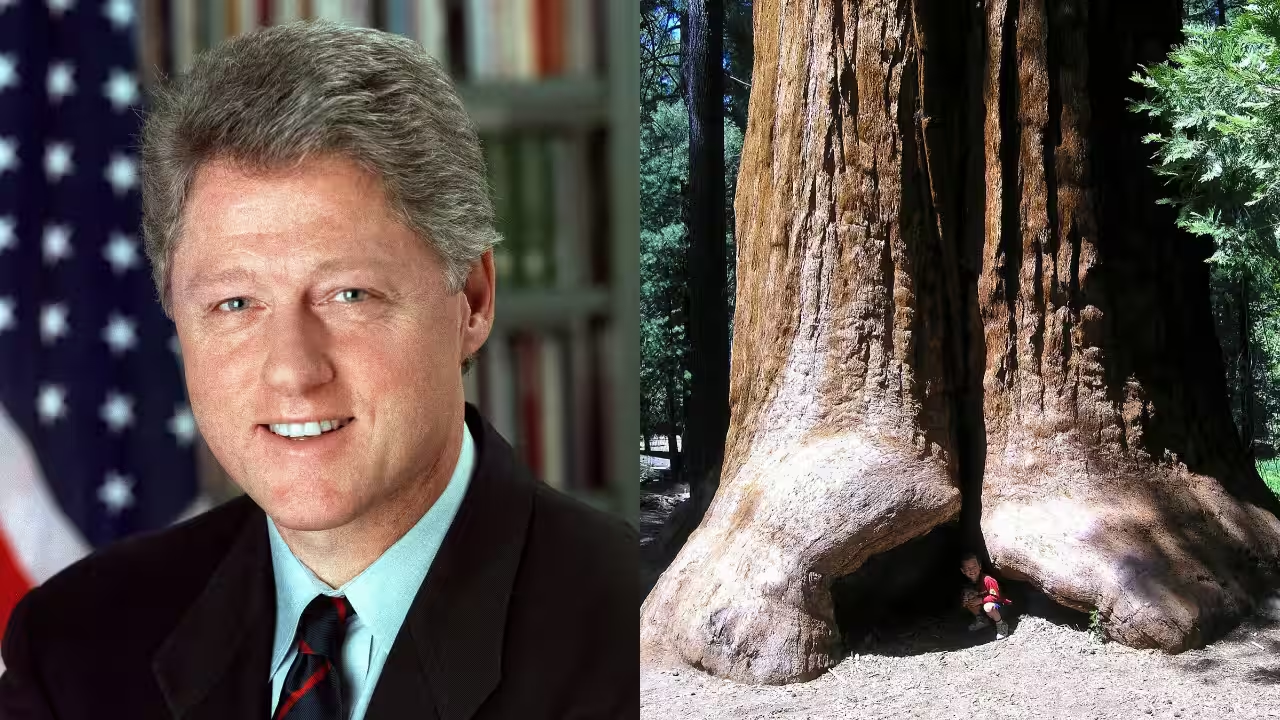
President Bill Clinton created California's Giant Sequoia National Monument on April 15, 2000, and protected approximately 327,769 acres of federal land in the southern Sierra Nevada. The monument included 34 giant sequoia groves and surrounding forest, at a time when many of the groves outside national parks were exposed to commercial logging.Clinton used the Antiquities Act to withdraw the federal acreage from activities including new mining claims and commercial timber disposition, and the proclamation said that the protected area was the smallest area that would be considered compatible with caring for the scientific, historic, and ecological resources identified in the order. Giant sequoias already had substantial protection inside Sequoia, Kings Canyon and Yosemite National Parks by 2000, and the problem was that many other groves stood on national forest land, where surrounding forest could still be managed for timber.Logging had already reached some sequoia grovesPBS SoCal's account of the monument's creation states that more than 9,000 acres of giant-sequoia groves had been logged before the monument was designated, and environmental groups and other advocates campaigned for stronger protection as timber harvesting continued in parts of the Sequoia National Forest.Giant sequoias grow naturally only along a narrow section of California's Sierra Nevada, and the U.S. Forest Service currently estimates roughly 65 to 75 natural groves, depending on how groves are defined. The species occupies a relatively small geographic range, with the larger concentration of groves in the southern Sierra Nevada, and Clinton's administration described the new monument as protecting 34 groves and the forest around them. At the time, the White House said those groves represented a substantial share of the remaining giant sequoia population.The monument did not close the forest to visitorsClinton’s proclamation directed the Forest Service to maintain public and recreational access, including hiking, camping, hunting, fishing, horseback riding, and other activities. Current grazing permits and special-use authorizations could also continue under existing rules, motorized vehicles were restricted to designated roads, and the proclamation barred new roads or trails unless they served the monument’s protective purposes. It also allowed a limited number of timber sales already covered by existing contracts to be completed, with the White House saying that those sales would provide a transition period of about two and a half years before commercial timber harvesting ended within the monument. The proclamation also required the Agriculture Department to prepare a management plan within three years and establish a scientific advisory board to guide on issues including fire management.The monument covered more than the trees themselvesThe 2000 proclamation included surrounding conifer forests, meadows, granite formations, caves and other ecological and geological features, with the monument stretching across elevations from roughly 2,500 to 9,700 feet and covering a varied landscape around the groves. Commercial timber harvesting was not treated as the primary purpose of the monument, and the Forest Service was directed to manage the area under the new protective designation, and existing recreational access and certain other uses could continue under the terms of the proclamation. Contemporary reporting described the protected groves as containing about two-thirds of the world's remaining giant sequoias, not two-thirds of all sequoia groves. The 34 groves themselves represented about half of the roughly 70 groves then identified in the Sierra Nevada. PBS SoCal account of the monument's creationGiant sequoias remain exposed to wildfire, drought and changing forest conditions, and the Forest Service continues to manage the monument as part of the Sequoia National Forest. The 2000 decision established the large protected area; it did not remove the need for ongoing forest management.You use AI every day. Now get your AI Quotient. Take the AIQ test.
Topics in this story
Gathered from external sources. Rights to this text belong to whoever originally published it.