As kids face school squeeze, lawmakers race to save recess and end ‘the loss of play’
Legislators and experts are running to save recess for American children after years of decline in the unstructured free time students are allowed during school hours. Pennsylvania is the latest state to codify recess into law, joining a handful of others that have mandated a certain amount of playtime for kindergarten through elementary school. Gov.…
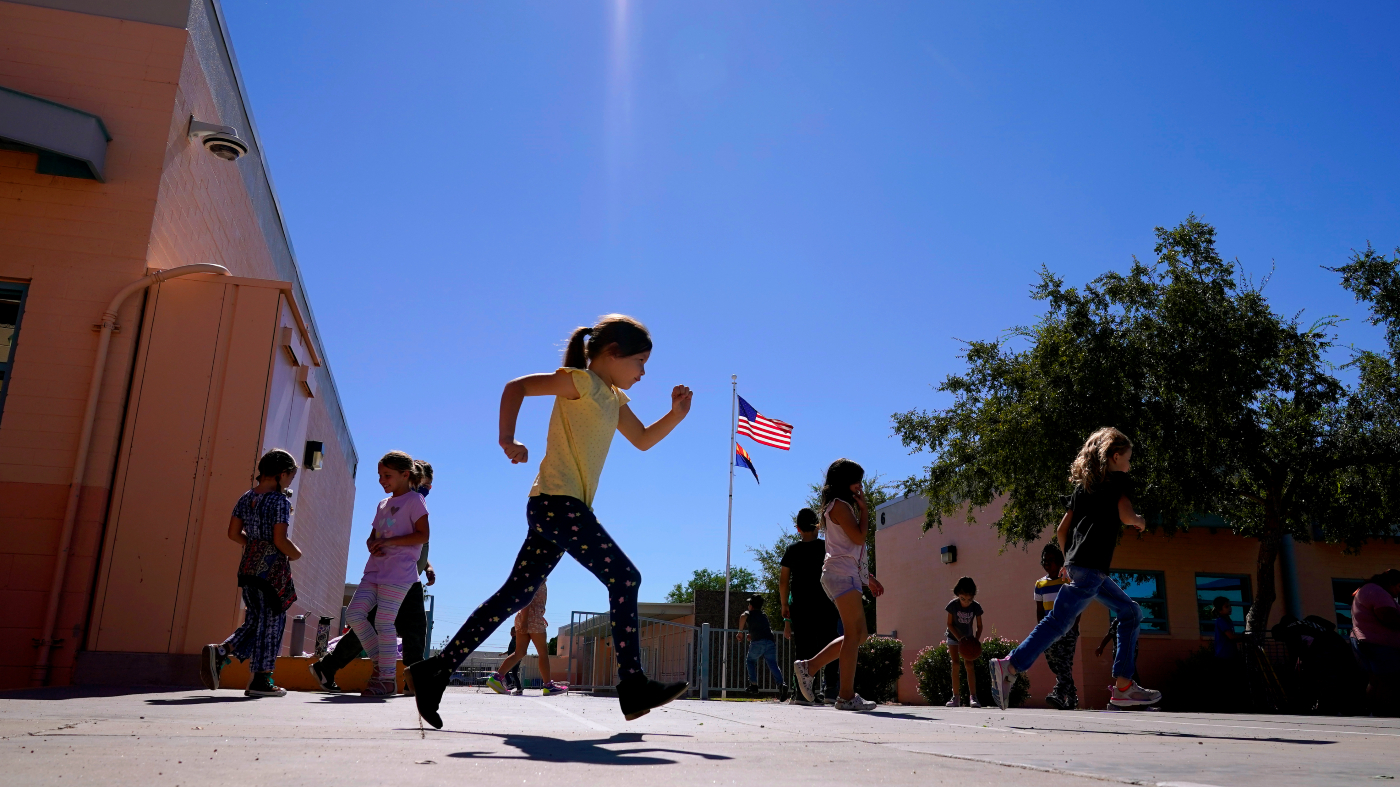
Legislators and experts are running to save recess for American children after years of decline in the unstructured free time students are allowed during school hours.
Pennsylvania is the latest state to codify recess into law, joining a handful of others that have mandated a certain amount of playtime for kindergarten through elementary school.
Gov. Josh Shapiro (D) said while touting the law that “recess is just as important as learning math, English, science, or history.”
“And now, we’re making sure our kids have the tools they need to succeed both inside AND outside the classroom,” Shapiro added.
According to 2019 data from the Springboard to Active Schools group and the Centers for Disease Control and Prevention (CDC), up to 40 percent of school districts nationwide have cut or reduced recess time.
“It is not surprising to us that post-pandemic, when families really experienced the loss of play, kids not being in school and not being able to play with their classmates, that it is largely parents who are driving the efforts to pass these new laws,” said Elizabeth Cushing, CEO of Playworks, which helps schools create youth programs and play environments for children during recess.
The American Academy of Pediatrics, which in May released an updated recess policy statement for the first time in 13 years, said 20 minutes of dedicated recess time is the minimum students should receive.
The national organization spoke out against a common policy to have lunch and recess as a combined time, pointing out children rush through their food so they have more time to play. The group is advocating for recess-before-lunch policies.
“Peer-reviewed studies indicate that multiple breaks with a minimum of 20 minutes every day is optimal to realize the full cognitive, physical, and social benefits of recess for students,” the statement reads.
Many states have official recommendations for recess time in public schools, but only around a dozen require time set aside for recess.
Oklahoma has doubled its amount of required recess time to 40 minutes a day for the 2026-2027 school year. And Tennessee also passed a law for students to have 40 minutes of recess each day last year.
Kathryn Truman, one of the founders of the nonprofit Say Yes to Recess, said her group’s first success came in getting Tennessee to require recess daily, and the grassroots movement has expanded to including chapters in 24 states.
“We’re just having these conversations across the country to reprioritize how it used to be, because there’s been a slow decrease in the amount of recess that kids are getting because there has been a focus on test scores ever since No Child Left Behind was passed,” Truman said.
“So, with that pressure to increase those reading and math test scores, has come this hacking away at these recess periods because there’s usually no fiscal note attached to them, right? So, it’s this free block of time that [educators] can just take from … [But] the child has a right to that time. They have a right to that that break, just like there’s … labor laws at the state level that protect workers,” she added.
The group ultimately would like to see 60 minutes of recess time for all grades.
But incremental progress seems to be the best option, as lawmakers in Ohio look to expand their required recess time to 30 minutes twice a day for grades K-8, doubling the current requirement for K-6.
“We especially like states like California that have included the expectation that teachers cannot take away recess as punishment,” Cushing said.
Experts cite a slew of benefits to recess, including helping to fight against childhood obesity and chronic absenteeism . The latest data from the federal government says 1 in 5 U.S. children are considered obese.
While advocating for the benefits of recess, some warn state law requirements should leave some flexibility or else educators could have a conundrum on their hands during days where temperatures are exceedingly hot or cold.
For example, in Tennessee, local outlets report recess requirements on days where the heat index is in the triple digits are difficult to manage as students have to stay inside. With limited space, WKRN reported schools turned to using gymnasiums, classrooms, hallways and other areas to get students the required 40 minutes of unstructured time.
“There’s big heat issues. What do we do with all these kids inside when they all need a break? We only have one gymnasium,” said Pat Endsley, the president-elect for the National Association of School Nurses.
“We need to establish a standard by which … school districts implement active school policies and programs, so youth can get the physical and also social emotional benefits of physical activity,” she added. “It’s one thing to mandate it, but I think it’s another thing … to do it well.”
Topics in this story
Gathered from external sources. Rights to this text belong to whoever originally published it.